Blog - foXnoMad

The Reichstag Building In Berlin, Germany

reichstag building berlin germany

The Reichstag building which has the words “Dem Deutschen Volke” (“To [or “For”] The German People”) engraved across the front has been an important part of German history for the past 100 years. Construction was completed in 1894 to house the German parliament and was famously (and arguably) set on fire in 1933 by Marinus van der Lubbe. The latest controversy about the Reichstag building was during the 1990s when a large glass dome (you can see in the picture) was erected atop the building. The dome gives visitors a 360 degree view of Berlin.

The Reichstag is a short walk away from Berlin’s Central Train Station (Hauptbahnhof) which catches the color from sunsets rather nicely, much like the Brandenburg Gate. Entry to the Reichstag, which is open until midnight, is free. You can see some of my other pictures from Berlin at sunset here.
Are Poor Places Any More Real Than Rich Ones?

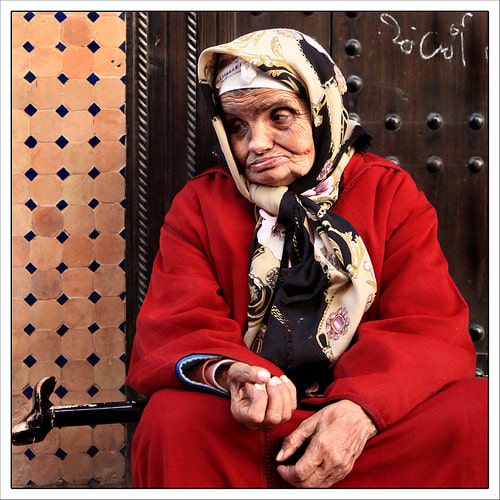
beggar in marrakechTravelers sometimes associate poverty with authenticity and seek those with less to see more. When you travel to a place, are you missing out on what is ‘real’ if you don’t see the poorest parts of a city or country? There is often the discussion over different types of travelers and “real travel”; but does seeing poverty bring you any closer to reality?
Talking About Real, Literally

Travelers by definition don’t stay in the same place for too long and the longer they do, the more of a local they become. It’s possible to travel slowly to capture the feel of a given place, but in essence you have to stop traveling to achieve that state.

Most people who travel to a place stay for a short period of time and attempt to unravel a culture in a few days or weeks, searching for an absolute truth about a city and its inhabitants. It’s as if the well off places are dreams and everything else is reality when in fact it’s all real.

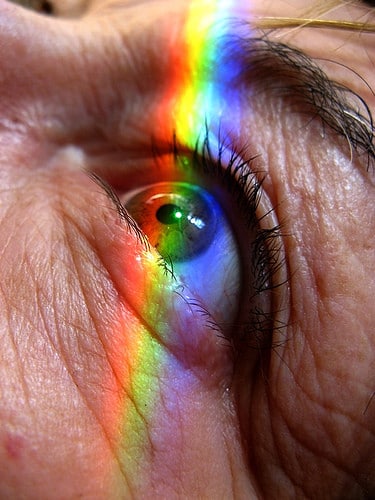
looking at rainbowSpectrum

To understand a people culturally you have to look at the spectrum of classes and lifestyles, not just a single one. Places and people that are poor (in terms of material wealth) aren’t any closer to an absolute truth than anyone else.

In many ways, culture is independent of wealth and income – poor and rich people adapt to an environment within a shared cultural context. You may see how hard the life of a porter is but the life of an accountant in that same city is just as authentic as anyone else’s.

The Human Condition

I’m living in the medina, or old city, of Marrakesh at the moment and everyone is telling me how much of the ‘real life’ I’m seeing although I’m not convinced. As a place, group of people, or individual improves their living conditions, they do so within the framework of their culture.

  • It’s all real – as the economic condition of Morocco or Thailand improves, it does so with an Arabic or Thai touch to it. When and if these (and other) places Westernize, they will in their own way partially because they view the West differently. The West isn’t incorporating those places, those places are incorporating the West in a very unique way.

The reality travelers are searching for consists of the human element. We want to know what makes us, Homo sapiens, at the core, human. We’re all human and real whether we’re rich or poor, which is something you can only see when you witness and live within both.

[photos by: Paul Alsop, PhOtOnQuAnTiQuE]

Tracking Crete’s Mysterious Minoans

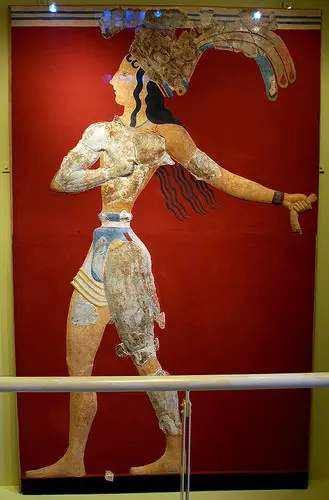
minoan princeThis is a guest post from Vera Marie, a free lance writer who blogs about books, movies and travel at A Traveler’s Library.
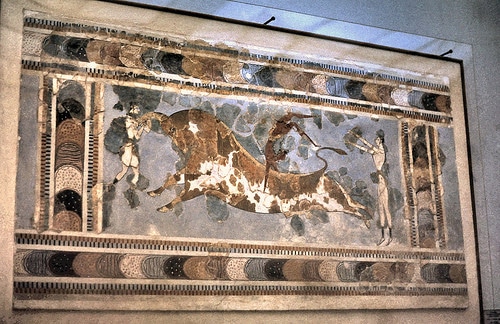
I was hooked on the Minoan culture, when I first saw their art. These beautiful creations had been conceived by an artist who lived 2000 years ago. As it turned out, that first Minoan painting I saw was painted in 1905, a recreation of the Minoan (1900-1500 B.C.E.) wall murals at Knossos.

My husband and I had put Knossos, near Heraklion, at the top of our must-do list for our visit to Crete. We had already gazed at the high walls and the Lion’s gate of the later-period Mycenaean palace attributed to Agamemnon in the northern Peloponnesus. Now we were following the Myceaneans’ path south to Crete for our own more peaceful raid.

The Aegean Sea laps the northern shore of Crete and the warm Libyan Sea caresses the south shore, making Crete the dividing line between Europe and Africa. Warm, sandy beaches lapped by turquoise waters, include the only palm-shaded beach of Europe. The appeal of lolling in the sun competes with the lure of trails wander over mountains and deep gorges. Or you can do as we did, and chase the Minoans all over the island.

Ghosts Of Knossos

We started with Knossos, a glorious site partially (and questionably) reconstructed by Arthur Evans, the man who unearthed the ruins from pieces that local farmers found to be a bit of a nuisance. From the many guides hanging out by the gate, we hired a young woman who explained Arthur Evans as well as what is known of Knossos.

bull leapers minoan museumLegends told of the land where the people worshipped the Minotaur—half bull, half human– and from this legend and stories of King Minos, Evans derived the name Minoan for the civilization. According to the myth, every year Minoans came to Athens (then a poor city state) and carried off a flock of young men and women to be sacrificed to the Bull-god. The young men performed in the bull-jumping—a ballet of beast and man illustrated on the Minoans’ art.
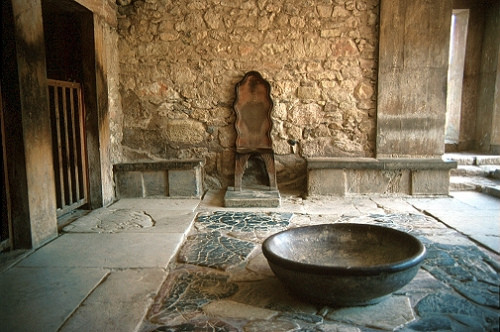
Because the Minoan palaces lack the tall walls that surround Mycenaean ruins, and their art subjects tend to fishing boats, fashionable young men and women, dolphins and flowers, Evans concluded that they were an idyllic and peaceful society.  You can see rooms full of this art at the Heraklion Archaeological Museum.

Today’s reconstructed and brightly colored walls of the Knossos palace irritate purists, but I found it helpful to see this partially restored site before exploring the un-restored sites.  Gradually, as I meandered across Crete, picking my way over stony paths, I began to recognize the pattern—the grand entry, the storerooms for wine and grain, the places of worship and tiring rooms for the priests.

Minoan Palaces

palace of knossosIn the mountains above Knossos, we followed a sign that said “Minoan palace.” The country lane led through a vineyard and ended just in front of a collection of rocks in the pattern of an ancient house. The Cretan farmer’s house, built of the same rock, sat a stone’s throw away.
We went on to stop at Minoan ghost palaces scattered across Crete. From every major or minor palace, glorious views greeted us—panoramas from the edge of a mountain or ocean views.

The Minoan outpost called Akrotiri on nearby Santorini stands as it was on the day a volcanic eruption buried it. (A roof over the excavation collapsed several years ago, and reopening has been delayed several times. You probably will not be able to enter it in 2010.) Strangely, unlike Pompeii, no bodies were found. The people must have escaped by boat before the final eruption.

The Mystery Of The Minoans

Although archaeologists discovered several samples of writing in two different scripts, one has only an inventory list and the other has never been fully deciphered. Although the bull figure dominates art, no concrete evidence of bull pens or the legendary bull jumping arenas were found. The lack of walls seems to indicate a peaceful kingdom, but some believe they practiced human sacrifice. Although it was long believed that the eruption of Santorini’s volcano spelled doom for the Minoans, new evidence disproves that theory. Akrotiri’s discovery led to theories that the Minoan settlement on Santorini was the true Atlantis—an intriguing set of speculations.

If you love a good mystery, take a trip to Crete and go in search of the Minoans.

See more information on the Minoans as part of this site about Ancient Greece. Don’t miss the site’s great maps of the topography of Crete, modern cities, and ancient Minoan as well as Greco-Roman settlements.

Thank you very much Vera for the guest post. You can read more of Vera’s writing at A Traveler’s Library, a blog about books, movies, and travel.

[photos by: agelakis, CanadaGood, GothPhil]

Nomadic Matt Shares His Secrets To Successful World Travel In New eBook

nomadic matts secrets to successful world travelNomadic Matt, the author of the very successful travel blog with the same name, has written his third eBook titled Nomadic Matt’s Secrets To Successful World Travel. The book is an overview of round the world travel and aims to help once you’ve made the decision to take an extended trip. Matt sent me the eBook a few days before its release for a review.

Matt Kepnes (aka. Nomadic Matt) certainly has the resume and experience to write an eBook about extended world travel since he’s been on the road for nearly 4 years. The eBook takes on a broad topic boldly and tackles what for most people is a huge undertaking. That’s where the book falters a bit; it is comprehensive about the topic but not excessively detailed on a specific point about traveling the world. Where the book does shine though is making sure you’ve got all of your bases covered before you embark on an around the world trip – and Matt does point out a number of things most new travelers tend to neglect.

What’s Inside?

Nomadic Matt’s Secrets To Successful World Travel covers budgets for the major global regions and advice on routes, where to go, and planning an itinerary. One of the best parts about the eBook is the section on banking where Matt covers a good number of ways to avoid fees and make the most out of your spending before, during, and after your trip. It’s in this section where I felt more detail would be useful to help travelers get the most out of their typically limited budgets for around the world travel.

The eBook also has some good information on maintaining your life back home while you’re away on an extended trip. Using a few free and low cost methods you can stay on top of your life in creative ways so it’s not like you’re ever too far away from ‘reality’. Many people who are planning round the world (RTW) trips end up obtaining this information as they plan but it’s well organized as a rough blueprint in Matt’s eBook.

Cost and Other Thoughts

Nomadic Matt’s Secrets To Successful World Travel would probably be better if split into several more detailed separate guides but has a lot of information for people who’ve decided to take an RTW but aren’t quite sure where to start. Nomadic Matt’s Secrets To Successful World Travel is 140 pages and available for download for $20.

The Best City To Visit Travel Tournament 2010: Elite 8

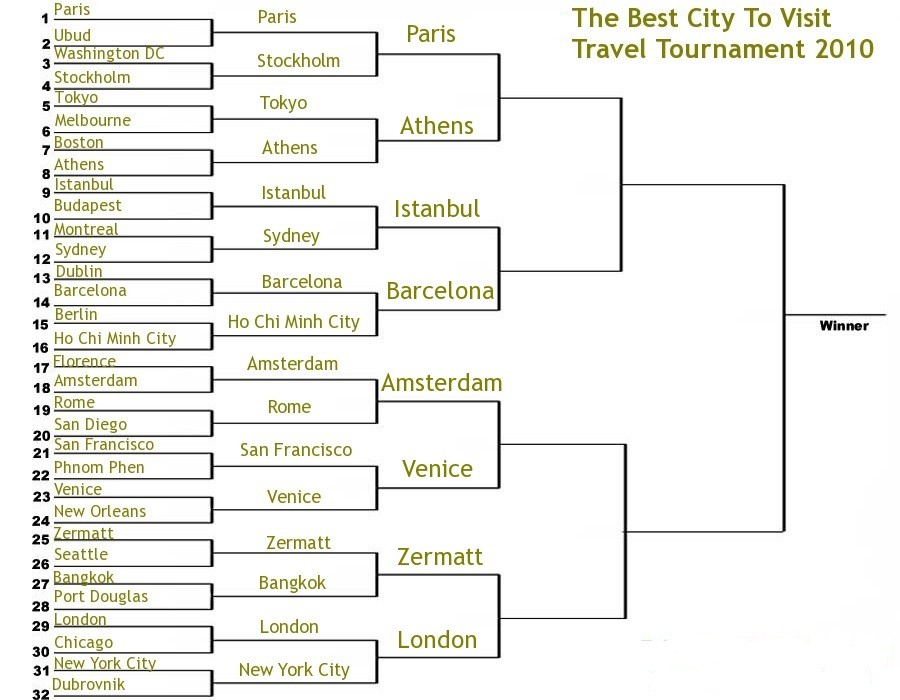
After a very strong showing last week in the Best City To Visit Travel Tournament Sweet 16, the remaining Elite 8 are all European cities. (Istanbul is technically in Europe and Asia, but close enough.) New York put up a good fight against London and Paris continues to dominate but this week things get interesting. Vote for your favorite cities – Istanbul vs. Barcelona, Amsterdam vs. Venice, and two other match ups that will be decided this week. Voting ends this Friday March 19th at 12 noon US EST.

number 8 on paper

best city 2010 elite 8

You can take a look at the entire bracket so far below (or see the larger version).

best city to visit travel tournament 2010 elite 8

The winner will be determined on Friday, April 2nd 2010. Missed this contest? I run a number of large and small contests throughout the year. Take a look at some previous competitions and prizes and find out about my next contest first by signing up to my bi-monthly newsletter.

Receive email updates:

[photo by: Kyle Slattery (top picture)]

Your Guide To Driving On The German Autobahn

Driving on the German freeway, better known as the autobahn, is an experience onto itself. While it is a practical way to get around Germany (even though the country has an excellent public rail system) it’s just fun to drive on. Contrary to what most people may think, the autobahn is an organized road that isn’t a lawless, dangerous, completely unlimited speed limit zone.

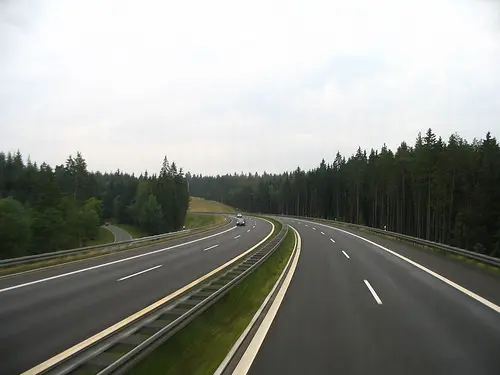
german autobahn

Some Ground Rules

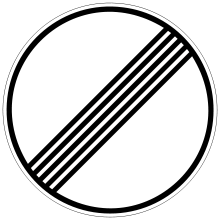
For starters, the German autobahn has speed limits. Sections of the road have speed limits based on their proximity to exits and towns – when you get further away from these areas the speed limit restrictions are lifted. The sign that indicates this is gray, with 5 diagonal lines you can see in the picture right, and lets you know you can go as fast as traffic (or your car) allows.

  • autobahn signThat means you can really go as fast as you want and better be careful to get out of the way if someone wants to pass. On the German autobahn passing on the right is forbidden and people take these rules seriously. Cars from behind don’t slow down as the approach someone ahead if that person can move to the right. In many cases, if you don’t move over to the left you’re libel to get into a car accident.
  • Stopping is also not allowed on the autobahn and you should use your emergency blinkers to let others know traffic ahead is slowing down.

Despite the fact that there are no speed limits in sections of the autobahn, most people don’t drive as fast as they can. Most cars manufactured in Europe have smaller engines than you’ll find in the US, the official recommended autobahn speed is 130 kph (~80mph) and driving close to top speed burns fuel very quickly in a place where a liter is around $2.

Who’s Can Drive On The Autobahn Legally?

European Union citizens, and American citizens from [36 of the 50] states can drive with their license from home in Germany for up to one year. Technically you’re supposed to have a translation of the license with you but for basic traffic violations most police won’t scrutinize a license too thoroughly.

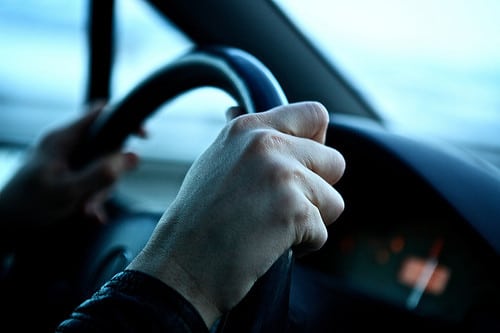
hands on the steering wheel

Go With The Flow

In many parts of the US, if you use your high beams to flash someone ahead of you they might simply slow down just to be a pain. On the German autobahn, this is a perfectly acceptable way to let someone going slower in front of you know you’re coming up and to get over. Cars don’t stick around in the left lane if there are others driving faster, like I mentioned above, it’s a good way to cause a major accident.

  • That also means if someone flashes you, don’t take it personally, just move over and let the faster car go.

You should also use your signal blinkers whenever you change lanes, especially in speed limit free zones.

Scanned and Straight

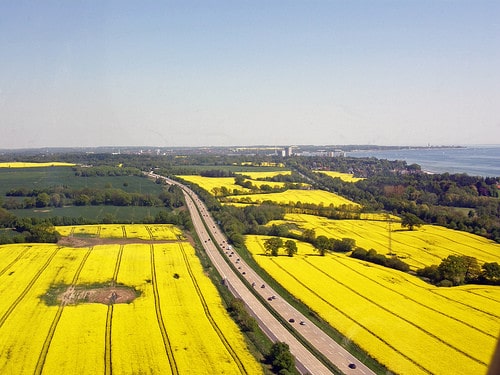
straight autobahnSections of the autobahn without speed restrictions are generally very straight with few slight curves and bends. To maintain their resilience, the roads are scanned up and down using a series of devices that look for any breaks, cracks, and debris in the roadway. Crews also drive up and down the road continuously and quickly close down lanes to remove any hazards.

  • The Germans also don’t simply patch up cracks and potholes; they just replace the entire section of roadway when needed.

Don’t fear laying on the gas, the road won’t suddenly shift left or right and changes in the speed limit will indicate places where it’s safer to drive slower.

Give It A Shot

The German autobahn was created in the early 1910s and greatly expanded during the 30s to give unimpeded, fast access between different parts of the country.

  • Between some cities it can actually be cheaper (and often easier) to rent a car and pay for a tank of gas rather than take the train.
  • There are no tolls along the autobahn for cars.

It’s fun to legally go 240 kph (~150 mph) particularly if you’ve got the need, the need for speed. Motorcycle enthusiasts can also rent a bike, enjoy some of the smooth open roads, and take that one motorcycle road trip. If you do decide to take a car or bike out for a spin on the autobahn, aim to go on a Sunday, that’s when most trucks are restricted from using the autobahn, leaving more of the pavement for your enjoyment.

[photos by: Jingles The Pirate, Kiluka, mwboeckmann]

About Anil Polat

foxnomad aboutHi, I'm Anil. foXnoMad is where I combine travel and tech to help you travel smarter. I'm on a journey to every country in the world and you're invited to join the adventure! Read More

YouTube Twitter Instagram Facebook

Image Map

Image Map
10 Shares
Share
Tweet
Pin