
Blog - foXnoMad

How American Expats Can Lower (Or Eliminate) Their Taxes Back Home

This is a guest post by Olivier Wagner, a Certified Public Accountant, U.S. immigrant, expat, and perpetual traveler who preaches the philosophy of being a worldly American. In his new book, U.S. Taxes for Worldly Americans, he uses his expertise to show you how to use 100% legal strategies (beyond traditionally maligned “tax havens”) to keep your income and assets safe from the IRS. Oliver has also written recently what you need to know about taxes if you’re an American who moves abroad.

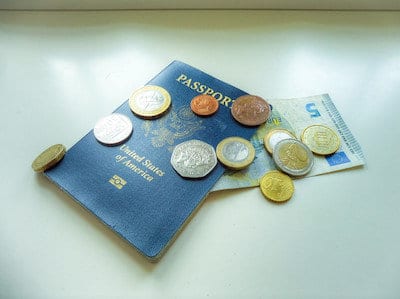
us passport money

Most Americans living abroad today know about the Foreign Earned Income Exclusion (FEIE) (Form 2555). The FEIE lets you remove up to $101,300 of foreign income from your taxable income when filing taxes back home. This is great news for U.S. citizens who stay outside the country all year and don’t make six figures annually; as it legally allows you to avoid paying any taxes to the United States. However, to take advantage of it, you must be careful to claim things the right way on your tax return.

Choosing Between The FTC And FEIE

You can also claim a credit for any taxes you have paid to foreign governments through the Foreign Tax Credit (FTC) (Form 1116). This is very useful if you are a resident or worker in another country. However, you have to choose between using either the FTC or the FEIE to lower your taxes – you can’t take advantage of both.

  • Generally, if your foreign tax rate is greater than your U.S. tax rate, the FTC will save you more.

If you have children who are also American citizens, you can get a refundable tax credit of $1,000 per year per child with the Additional Child Tax credit. To qualify, you must have at least $3,000 of income and not use the Foreign Earned Income Exclusion.

U.S. Taxes for Worldly Americans U.S. Taxes for Worldly Americans

amazon buy now

My friend Laura from Ohio used to work as a self-employed English teacher in Milan. Because she would spend the entire tax year in Italy (and made much less than the $101,300 FEIE limit), she qualified for the Foreign Earned Income Exclusion each year when she filed her American taxes.

However, there is one other requirement you must meet in order to use the FEIE. You must pass either the Bona Fide Residence Test or the Physical Presence Test. Although you only need to qualify using one of the two, having both provides a safety net. If you are ever audited and you fail one test, you can simply provide another Form 2555 using the other test.

How To Pass The Bona Fide Residence Test

This is a somewhat fancy phrase that explained Laura’s situation perfectly. A bona fide resident is someone who has legitimately established residency in a foreign country. Although she was abroad in Italy for an undetermined, potentially indefinite period of time, Ohio still saw her as a resident for tax purposes until she proved otherwise.

In order to use this test to qualify for the FEIE, she just had to remain a tax resident of Italy for an uninterrupted tax year. Even if a country doesn’t have an income tax system, so long as they would otherwise have authority to tax you, you qualify as a “tax resident”. She also must not have submitted a statement to Italy that she was a non-resident there. She could not be living in Italy as a tourist.

lisbon portugal

Every other tie to the country counts and the Bona Fide Residence test is inherently subjective. If you are unsure, I would not recommend claiming it. I advise that you use the Physical Presence test or the Foreign Tax Credit instead.

How To Pass The Physical Presence Test

Alternatively, Laura also could have qualified for the FEIE using the Physical Presence Test. To pass this test, a person must spend at least 330 days outside the US in any 12-month period.

Each of those 330 days must be an entire 24 hours. I once had a client of mine tell me, “Well, of course I can use the Physical Presence Test. I live in Canada year-round.” Then he said, “I only return to the States once a week to fill up on gas.” Oops. Those quick little trips meant he was only out of the country for 6/7ths of the year, or 312 days – not quite enough to pass the Physical Presence Test.

Additional Exceptions To The 24 Hour Rule

  • Being in the U.S. for less than 24 hours while in transit between two foreign countries.
  • Being in international waters for less than 24 hours in transit between two foreign countries. International waters do not count as a foreign country (hence, time spent there does not count toward the 330 days). Likewise, time spent in Cuba in violation of the embargo does not count toward the 330 days.

Since Laura was living in Italy for the entire year, she passed these tests as well.

Filing The FEIE On Your Tax Return

The FEIE can be claimed on either Form 2555-EZ or Form 2555. As a tax professional, I usually use Form 2555, but if you’re preparing your own return, you might enjoy the simplicity of Form 2555-EZ.

Requirements For Form 2555-EZ

  1. You must be a U.S. citizen or resident alien.
  2. You must earn wages or a salary in a foreign country.
  3. You must have a total foreign earned income of $101,300 or less.
  4. You must file a calendar year return that covers a 12-month period.
  5. You must not have self-employment income.
  6. You must not have business or moving expenses.
  7. You must not claim the foreign housing exclusion or deduction.

While the 2555-EZ is an enticing option, it is not applicable to people who receive self-employed income, claim moving expenses, or claim the foreign housing exclusion or deduction. This becomes a problematic area for many English teachers who give private courses outside of a structured work environment, and are therefore considered “self-employed.”

Another Option, The Foreign House Exclusion

My friend Laura also considered claiming the foreign housing exclusion. The foreign housing exclusion is useful for those whose earned income exceeds the limit of $101,300. (The first $44.28 per day is not deductible.) The Foreign Housing Exclusion is called the Foreign Housing Deduction for self-employed people, but the concept is the same.

american flag kansas

Many expats get extremely frustrated with the U.S. tax-filing process, with its seemingly never-ending pages of questions followed by the massive crunching of numbers. I have met many of those people, worked with them, and assured them that we would be able to comply with all the tax requirements so long as we were detailed in our approach.

As you probably already know, the Affordable Care Act (ACA), otherwise known as “Obamacare”, imposes tax penalties on American citizens without health insurance. Fortunately, anyone who qualifies for the Foreign Earned Income Exclusion is not subject to the penalties of the ACA.

In Laura’s case, we managed to successfully file her taxes and her Foreign Earned Income Exclusion. We also managed to receive a tax credit for the income taxes taken out by the Italian government.

Thank you very much Oliver for sharing some of your expertise with the many expats who may be paying taxes they don’t have to. Oliver goes further into detail in his highly rated book, U.S. Taxes for Worldly Americans. For those of you Americans living abroad, it’s probably a good idea to know how your tax situation changes – and doesn’t – which Oliver has covered previously on foXnoMad in his post, How Taxes Change When Americans Go Abroad.


The Best City To Visit Travel Tournament 2017 Is Down To A Sweet 16

best city 2017 sweet 16

This has been a weird tournament so far. The Second Round of Best City 2017 last week resulted in 3 ties (the most ever in a round and second most in a tournament) giving me tough tie-breaking decisions. Vancouver, Taipei City, and Kuala Lumpur’s excellent street food move to the final 16 cities. For those of you who nominated cities, you’re only 2 rounds away from earning prizes.

Readers, it’s time to vote! Click your favorite cities before this Sunday, March 19th, 5pm US EST. You will need to enter your email address, then click to verify your vote from an email that comes from Poll Daddy. Your email address is not used for anything other than verifying your vote. Emails aren’t used in any other way. Your privacy and personal information are important to me, always. Votes may not be visible until after the polls close. Good luck to all the remaining cities!

On a side-note, I’m planning to expand the tournament a lot next year. I want to give more of you prizes (because you’re awesome and your support of this site makes my crazy travel life possible) so vote, share, and let me know if you have any suggestions in the comments below!


Remember, the next round of Elite 8, begins next Tuesday, March 21st, 2017.

How To Protect Your Phone And Privacy When Traveling Across International Borders

phone edinburgh

You are traveling in a world that’s getting smaller while at the same time carrying more information about yourself than at any time history. As international travel becomes easier, more and more travelers are confronting the legal reality that many rights you may have in a country don’t apply at the border. Earlier this year, Sidd Bikkannavar, an employee of NASA’s Jet Propulsion Lab (and a US citizen), was detained in Houston’s George Bush Intercontinental Airport and his NASA-issue phone searched.

Such cases are more common than you may realize. In the United States in 2015, an estimated 4,444 phones were searched or seized at the border. It’s important to understand your digital rights as a traveler and protect your personal information from unwarranted searches and seizure.

What Are Your Rights At A Border?

Not all borders are the same but broadly speaking borders don’t have to be lines on a map either. Sea and airports are considered borders themselves, which is why you haven’t technically entered a country until you pass the immigration line. The United States Supreme Court, for example, has repeatedly ruled that the American 4th Amendment to the Constitution doesn’t quite apply at the border, even if you’re a U.S. citizen.

Your phone, all the social media accounts its logged into, photos, and other personal information can be searched, confiscated, or downloaded without probable cause in most countries. There are however, some measures you can take to protect yourself faster than you can say, “I have nothing to hide.”

Tactics From Simple To Drastic

First of all, know your rights depending on where you are going. Not bringing your phone with you is the first, most drastic option. Leaving your smartphone which serves as camera, GPS, fitness tracker, and more isn’t feasible for most people. Many companies (not to mention journalists and lawyers) whose employees travel with sensitive company information on their devices, opt for a less drastic maneuver. To protect their proprietary information, sources, etc. they back up their phones to a hard drive, cloud service, or somewhere else; then wipe their phones before traveling. Once they arrive at their destination, they simply restore their phones from the backups.

Other tactics include getting a “burner” phone, one you only use while traveling that’s not logged into your social media or email accounts. (Maybe a new Nokia 3310?) Obviously, you’re shifting your data elsewhere and inconveniencing yourself to varying degrees depending on how concerned about your privacy you are.

Digital Resistance Band

In many countries, it’s legally more difficult for border agents to compel you to give up a password, than a fingerprint. Some privacy advocacy groups recommend removing fingerprint unlocking capabilities from your phone; or turning the phone off so you can legally refuse to give up your passwords. (Be careful though, in Canada for example, this can get you charged with obstruction.) And in pretty much all cases, resisting is going to get you a lot of hassle.

Ultimately, this is an issue that will continue progress (or not) in the various legal systems around the world. In the meantime here’s how to boost the privacy of your iPhone, improve privacy settings on Android, and come up with your own personal travel security plan.

Slash This Group Of 32 Cities Into 16, By Voting In Second Round Of Best City 2017

best city 2017 second round 32

The first round of The Best City To Visit Travel Tournament 2017 last week was an interesting one of big wins and close losses. Vancouver defeated Quebec by a vote and a tie between Reykjavik and Rio de Janeiro meant I got to tie-break. I gave the victory on to the second round to Rio, mostly because South America isn’t as well represented as Europe in this year’s tournament.

How It Works

All you have to do is vote by clicking your preferred city in each of the match ups below before this Sunday, March 12th, 5pm US EST. Votes may not be visible until after the polls close. You will need to enter your email address, then click to verify your vote from an email that comes from Poll Daddy. Your email address is not used for anything other than verifying your vote. Emails aren’t used in any other way. Your privacy and personal information are important to me, always. Good luck to all the remaining cities!


Remember, the next round, Sweet 16 begins next Tuesday, March 14th 2017.

It’s Time To Vote In The First Round Of The 2017 Best City To Visit Travel Tournament

best city 2017

The Best City To Visit Travel Tournament is an annual month-long contest here on this site, where 64 cities nominated by readers are cut in half by your votes every week in March. Until there is only one left. The person who chose the winning city will get a $600 gift card to one of several online stores, plus this year, for the first time, there will be prizes for second place and getting to the Final Four. Not to mention, I’m planning some big events around the winning city – if you all tell me it’s the best – I’ll make sure everyone else knows too.

How It Works

All you have to do is vote by clicking your preferred city in each of the match ups below before this Sunday, March 5th, 3pm US EST. This is by far the shortest round of the entire tournament, but if you follow the steps of previous winners, early votes here can easily advance your city to the next round. Votes won’t be shown until some time after the polls close. I’m the tie-breaker throughout the contest should any cities be tied at the end of a contest round. The next Round of 32 begins Tuesday, March 7th, when you can see if your favorite cities advanced or were eliminated.


Additional Prizes

As I mentioned above, this year for the first time I’m giving away prizes for second place in the Championship and making it to the Final Four. The person who nominated the second place winner will receive a $50 gift card and those in the Final Four who don’t advance to the Championship will each get a $25 gift card. The cards can be used at a number of online stores, including Apple, Amazon, and others. (More details here.) Good luck everyone!

How Taxes Change When Americans Go Abroad

This is a guest post by Olivier Wagner, a Certified Public Accountant, U.S. immigrant, expat, and perpetual traveler who preaches the philosophy of being a worldly American. In his new book, U.S. Taxes for Worldly Americans, he uses his expertise to show you how to use 100% legal strategies (beyond traditionally maligned “tax havens”) to keep your income and assets safe from the IRS.

washington dc plane flying

More people are renouncing their U.S. citizenship now than ever before. Each has their own reasons for doing this. Some are worried about the changing political landscape of today. Others pay attention to new rules and restrictions on freedom of travel, or (for better or worse) how the rest of the world views Americans. Mostly, they want to avoid all the complicated tax burdens that come with the territory of being a U.S. citizen. It’s not necessarily difficult to get rid of your American citizenship, but it does warrant a lot of deep thought, planning, and a bit of money to pull off properly.

U.S. Citizens Always Have Tax Obligations

Many Americans living abroad have never even filed their taxes, or else haven’t filed in many years. Some have been abroad so long that, aside from their passports and the occasional trip back home to see family, they have no real ties to the United States (not even a Social Security number). In their minds, they’ve long ago sworn off the idea of getting involved with U.S. taxes and would be completely financially unable to get caught up on them anyway.

Some of these people have been very lucky to coast under the radar this long without any consequences. It’s very important that they get tax compliant as quickly as possible, and that they utilize every tool available to minimize their expenses. There are very large consequences to continuing to ignore this, yet so many people don’t pay any attention to it at all because it seems so overwhelming to consider. They may even take personal offense to having to pay anything at all.

Foreign Banks Talk To The IRS About US Citizens

Things are only getting more complicated for Americans living abroad as time goes on. Starting in 2015, a new law went into effect across the globe requiring foreign banks to identify which of their clients are American citizens and report their name, address, and account balance to the IRS back home (although litigation between the Department of Justice and Swiss banks caused the trend to start in Switzerland as early as 2012). It’s called FATCA, and it stands for Foreign Account Tax Compliance Act.

Additionally, anyone holding an equivalent balance of more than $10,000 in foreign bank accounts must file an FBAR report. When the IRS receives this data, they will try to match that to the taxpayer on record as reported by the foreign banks directly. The penalty for willfully failing to file an FBAR could be up to 50% of the account balance per year, giving serious caution to anyone interested in holding even some of their money offshore (or $10,000 per account if the failure to file was not willful, and possibly zero if the taxpayer had a reasonable cause).

Some Taxes Can Be Avoided By Expats

Some Americans living abroad today know about the Foreign Earned Income Exclusion (FEIE), which allows them to exclude up to $101,300 (as of 2016) of foreign income from their taxable income. Nomads and expatriates who don’t make a ton of money will typically use this to avoid paying taxes at all in the US, but only if they know how to claim things on their tax return correctly. One can claim the FEIE by being an actual resident of a foreign country (a “bona fide resident”). There’s also a physical presence test for people who spend at least 330 days in any 12-month period outside the U.S. This is fine for those who have truly relocated outside the states, but what about others who still return frequently to visit friends and family, or split their time equally between multiple homes?

american flags washington dc

It’s important to understand that your tax situation will never be the same once you start traveling, yet so long as you remain an American you will always have some kind of tax obligation. The IRS will always be checking up on you, no matter where you live or work. But that’s okay so long as you can keep up with the new rules that apply to you, and learn to (legally) work the system to your advantage. You may even be able to reduce your tax obligation to nothing at all.

Thank you very much Oliver for sharing some of your expertise with many who might not know they owe taxes. Oliver goes further into detail in his highly rated book, U.S. Taxes for Worldly Americans.

About Anil Polat

foxnomad aboutHi, I'm Anil. foXnoMad is where I combine travel and tech to help you travel smarter. I'm on a journey to every country in the world and you're invited to join the adventure! Read More

YouTube Twitter Instagram Facebook

Image Map

Image Map
10 Shares
Share
Tweet
Pin