Blog - foXnoMad

How To Protect Your Laptop From The Effects Of Traveling

After a few days or weeks of traveling it can be relaxing to take a day off and pop open your laptop lid – except when you find it’s sluggish, screaming incomprehensible warnings, and in a general state of crankiness. Traveling can be rough on a laptop, especially since we tend to neglect their needs until our bouncing backpacks finally come to a halt.
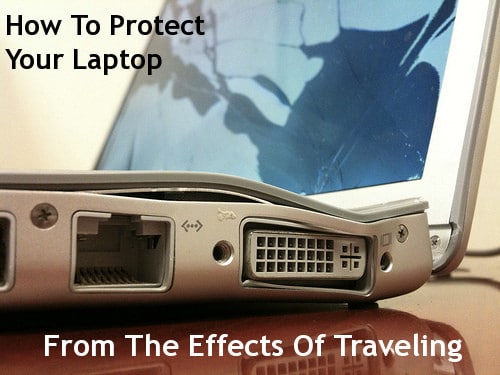
smashed laptop

You can avoid a bad case of travel laptop by getting your computing companion prepared for the road and giving it a bit of tender care along the way.
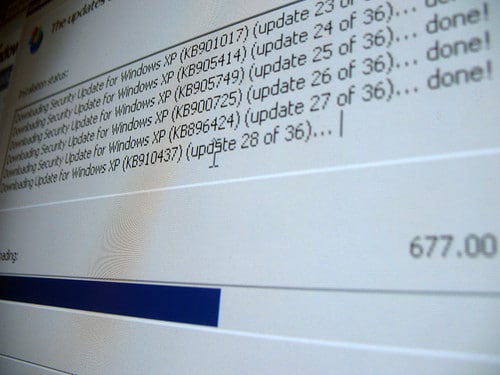
windows updateUpdate Before You Leave Home

Most people, whether traveling or not, tend to put off software updates as long as they can; a big cause of computer sluggishness. You can get away with it for a while, that is, until all of your programs are begging for their latest versions in unison, leaving you with a frustratingly slow machine.

  • Focus On The Operating System – Make sure to install the most critical updates at a minimum. Both Windows and Mac OS X are good about differentiating between important and optional updates.
  • Update Domino – Often when there is an update to an operating system like Windows, other software developers issue updates to keep up. (You may have noticed with updates, when it rains it pours.) It’s best to keep everything on the same page for optimal performance.
  • A Few Days Before Departure – There is a perception that updates are more trouble than their worth, which isn’t true most of the time. Just to be on the safe side however, install your operating system updates (here’s how on Windows and Mac) a few days before leaving home.

The first thing you should do with your laptop when returning from a trip is to run major software updates. I know you’re excited to email, Twitter, and Facebook your friends about your trip to Germany but the longer you hold off on software updates, the further they’ll accumulate to make your laptop feel like its from 1998.
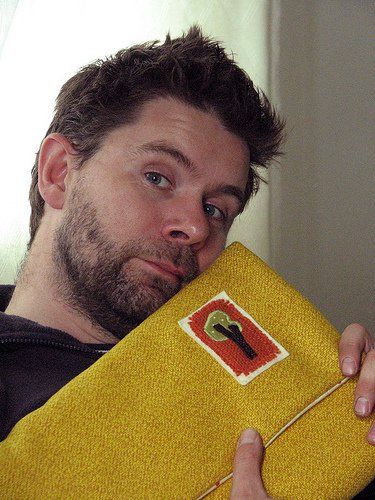
man holding laptop caseGet A Second Laptop Case

Even a good padded day-pack isn’t sufficient insulation for your laptop. Between the bouncing around in your backpack and the touch of the floor each time you set it down, a traveling hard drive takes a soft but sustained beating. A laptop case that fits around your portable device inside of your backpack will prolong its life and the little bits of data in the hard drive as well.

  • Look For Specifics – Cases built for a particular laptop model tend to be more snug making them easier to pull out and put back into your travel bag.

Also, don’t forget that you’re carrying around a sensitive, albeit portable, piece of technology. Be gentle when stuffing your laptop back in your bag after a long security line, and when running through the airport to catch a flight.

Be Weary Of The Weather

Extreme heat can not only shorten battery life, it can also reduce your laptop’s longevity by causing internal parts to expand, potentially damaging them.

  • woman enduring heatDon’t Keep Your Laptop On Your Lap – Ironic I know, but your thighs don’t allow for the best airflow and transfer heat.
  • Monitor The Temperature – Try iStat for Mac or Real Temp for Windows; both free downloads.
  • Cold Can Actually Be Worse – Low temperatures make moving parts (like those inside your hard drive) much more rigid and breakable.
  • Stay Within The Recommended Range – Temperatures between 10-35 Celsius (50-95 Fahrenheit) are acceptable for most laptops.
  • Dust, Sand, And Smoke – The tiny particles of these elements can easily make it into the crevices of your laptop, accumulating over time. Dirt tends to get stuck around the vents (reducing airflow) and optical drives causing them to die well before their time. Avoid using your laptop outside in dusty environments, on beaches, or in smoky rooms.

Ideally you want to wait to use your laptop until you’re somewhere near room temperature and you’ve given it a chance to adjust before turning it on. Don’t use your laptop in extreme temperature conditions or when the relative humidity is above 75%.

cat sleeping on laptopShutting Down And Other Travel Protections

Most newer laptops have sleep modes that let you power up your laptop quickly after opening the lid. They work by keeping memory (RAM) chips running at low power which increases heat and may require your hard drive to be accessed from time to time.

Your data is most vulnerable when your hard drive is spinning so when transporting it, shut it down or use hibernate mode (built into Windows and can be enabled on Mac).

  • Never Carry Your Laptop When It’s On – Before jumping around to a better table in a coffee shop, close your laptop lid and make sure it’s either shut down, in sleep mode, or hibernating. Remember, your data is most vulnerable to knocks and bumps when in use.
  • Turn Off Offline When OnlineGoogle Gears lets you use Web tools services like Gmail, Google Calendar, and Google Docs when you don’t have an Internet connection. It’s a great tool, except when you’re back online – Google Gears often gets confused and sync-crazy – to calm it down turn offline mode off, then back on.
  • When In Doubt Reboot – A clean slate clears up many wonky-laptop issues, even on Mac.

Perhaps the best precaution is having a good backup of your data offline somewhere physically separate from yourself. One of two free online backup options is Crashplan, a personal favorite. (Here’s how to create a free offline backup system with Crashplan.) Those of you who might need to recover quickly from a dead laptop or are working from the road should consider cloning your system. Finally, take special care to protect you digital photos and physically lock down your laptop to keep it secure while traveling.

[photos by: ismh_ (smashed laptop), lunchtimemama (Windows update), welshkaren (man holding laptop case), SashaW (woman enduring heat), notemily (cat sleeping on laptop)]

The Walled Obelisk In Istanbul’s Hippodrome

walled Constantine obelisk Istanbul hippodrome

The Walled Obelisk has many names including, “Walled Column” and “Constantine Obelisk”. Located in the former Byzantine Hippodrome, what is now a beautiful park was once where fierce chariot races were held. After the Ottomans conquered the city in 1453, the importance of the Hippodrome wavered yet this column built around the 10th century survived. I happened to stroll through the (now) Sultanahmet Park around sunrise, making my way to the metro stop of the same name a few weeks ago.

Sultanahmet Park, also known as “At Meydani” (in English “Horse Square”), is ground zero for tourism in Istanbul, Turkey. The park is right next to the Blue (Sultan Ahmet) Mosque and Hagia Sophia (Ayasofya) with the underground Byzantine Cistern on the northern edge. Within the park itself and across from the Walled Obelisk is the Obelisk of Theodosius (over 3,000 years old) and the Serpent Tower. Of course my favorite feature of At Meydani is a much more modern addition – the free wi-fi available throughout the park.

The Best Comments Of The Month: August 2010

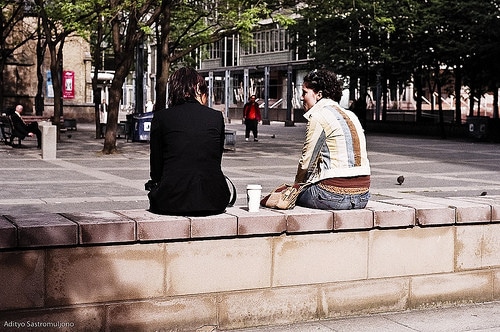
Despite being a very popular month for vacations and travel, many of you have still made the time to drop a comment or two on foXnoMad and I can’t thank you enough. These are just some of the best comments left by your fellow readers from the past month.

two people chatting

  • If you’ve had experience with Kathmandu backpacks Joe would love to get your opinion on them. (Thanks Dave for chiming in!)
  • There are lots and lots of useful opinions and recommendations about a variety of travel luggage including this one from Darren.

Have a random travel thought you’re just dying to post somewhere – or perhaps can’t wait to write about your incredible August vacation? Now’s your chance, leave a comment and get your own conversation started.

[photo by: Batara (two people chatting)]

Turning Ankara Turkey Into A Tourist Town

Travelers heading to Turkey often skip through or over the country’s capital city Ankara. The big attractions most people come across when researching are hardly enticing to most – a whitewash of quiet museums that look stale against the live historical backdrop of Turkey itself. What Ankara lacks on the surface it makes up for in depth, and you can dig a little deeper to look into Turkey’s past and beyond.

ankara turkey

Anitkabir

anitkabir ankara turkeyModern Turkish history and culture is inseparable from the nation’s founder Mustafa Kemal Ataturk. Anitkabir is Ataturk’s mausoleum and his symbolic tomb there is impressive, but you’ll learn much more in the unglamorous halls to the right of it. Strolling through the narrow corridors you can read many of his philosophies on a wide range of topics, end up in a collection from his personal library, and see why Ataturk’s image is everywhere in Turkey.

  • If you want to go for a walk or jog while staying in Ankara, the several kilometer stone path around Anitkabir is an easy one to follow.
  • Almost directly across the the entrance to Anitkabir there is also a free outdoor running track with free weights, workout benches, and pull-up bars.

A smaller memorial to Ataturk can be found in the Ankara’s Ethnographic Museum, where he was buried during the construction of Anitkabir. It’s 3 Turkish lira (TL) to enter but art lovers can go next door to visit the free Ankara Resim Heykel Muzesi (Painting and Sculpture Museum) instead which features art from the Ottoman Empire through the present.

The Best View Of The City For Free – Ankara Citadel

Also known as Ankara Kale or Hisar, the walls of this ancient Hittite castle are free and offer the best 360 degree views of Ankara. It’s over several hundred stairs to the top, and much like the path to top of La Basilica in Quito will test any fear of heights. You’ll also wind your way up through a small town and if you get lost the shopkeepers will give you good directions (don’t ask the kids playing the streets though).

ankara kale ankara citadel

  • Unless you’re mortified of heights, don’t stop and go all the way up along the edge of the highest wall. There you’ll be able to see all of Ankara from its highest point. See if you can find Anitkabir and Atakule, two of the most recognizable features on the landscape.
  • You can get to the Citadel either by getting off at the Ulus metro stop (a ~1.5 kilometer walk) or by taxi. (Tell the driver “Ankara Kale”.)

Speaking of Atakule, it’s a popular tourist attraction but the restaurants at the top are expensive and the view not nearly as impressive as the Ankara Citadel.

roman statue ankara turkeyFind The Ancient Romans

Located near Ulus Square, in the same area as the Citadel, you’ll find remnants of Ankara’s Roman past. Within short walking distance of the square you’ll find the Temple Of Augustus And Rome, which is free to visit. Also close by is the Column Of Julian, erected in 362 A.D. in honor of the Roman emperor of that same name.

There is also the Museum of Anatolian Civilizations with a recreation of the neolithic site Catalhoyuk. I find this popular museum to be overrated; for a special historical treat visit Konya, one of 5 Turkish cities to add to your itinerary. From there you can take a local bus or rent a car to visit the actual Catalhoyuk, a treat since hardly anyone visits the best preserved and largest Neolithic site in the world. (It is also on the way to Tasucu, a major port for the ferries heading to the Turkish Republic Of Northern Cyprus.) Guides are available at the site open year round and admission is free (although small donations are encouraged).

catalhoyuk turkey exhibit

Many of these places have varying names in Turkish making a good map and the metro the most straightforward approach to finding them. By taxi however, the best way to situate yourself is to tell the driver to go to the “Belis Minaresi” (local name for the Column of Julian) near the “Ulus Meydani”.

pazar shoppingGo Pazar (Bazaar) Hopping And Shopping In Ankara
The pazar (bazaar) is an integral part of Turkish tradition and Ankara has its fair share of them although they are slowly losing their relevance in daily life. The bazaars are finding it difficult to compete with modern supermarkets and malls who can deliver more good often for cheaper prices.

  • Cikrikcilar Yokusu (Weaver’s Road) – As the name suggests you can find handmade crafts in this area of Ulus at good deals…if you bargain your way to a good price. Up the street there is more shopping at Bakircilar Carsisi.
  • Organik Pazari (Organic Bazaar) – Go grocery shopping for a healthy hostel meal at this market which sells locally grown organic produce in the Ayranci district.

There are also two other bazaars worth stopping by if you love markets, the Maltepe Pazari (near the Maltepe Mosque) and the Bahcelievler Pazar. Keep in mind that Mondays are reserved for fresh produce and food products only. Ankara is also booming with modern shopping malls like Armada (with good movie theaters) and stores in Kizilay. All are easily accessible from the Ankara subway system or by taxi.

Pictures And Pitchers

ankara museum ceilingThe Kocatepe Mosque‘s confident exterior and elegant interior design is a photographers dream. It also happens to be free as all the mosques in Ankara are. Just remember you’ll have to take off your shoes when entering and be sure to ask if photography is allowed.

  • Of course, after a long day sightseeing in Ankara you can enjoy the vibrant local bar scene. There are plenty of places in Cankaya, Ulus, and Kizilay to grab a pint or drink Raki like a Turk.
  • Most people begin their trips to Turkey with a stay in Istanbul. Here’s what you can do with 48 hours in Istanbul.

Ankara often gets lost in the bright lights of Istanbul and the shimmering waters of the best beaches in Turkey, but don’t let them prevent you from uncovering the heart of Anatolia.

[photo by: slolee (pazar shopping)]

A Ride And Review Of La Bicicleta Naranja In Buenos Aires

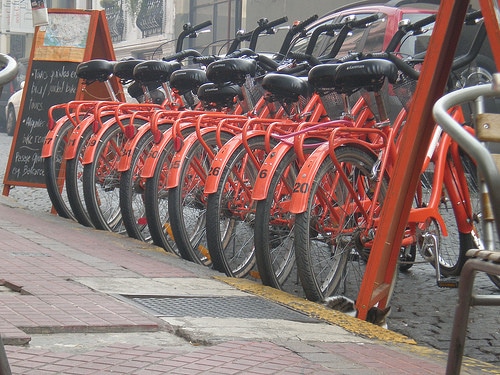
Heavily advertised around hostels in Buenos Aires, Argentina, La Bicicleta Naranja offers bicycle tours and rentals from several locations around the city. Their bike tours are a good way to break down the somewhat overwhelming and certainly sprawling Buenos Aires. La Bicicleta Naranja’s scenic routes and informative guides are a wonderful introduction, or reunion, with Argentina’s capital city.

la bicicleta naranja

Breaking Down The La Bicicleta Naranja Tours

The company offers four basic tours each lasting around 4 hours. The tours, known as Buenos Aires to the North, Buenos Aires to the South, Lakes and Woods, and Aristocratic Buenos Aires all cost the same price of 105 Argentinian pesos (~$25 USD) and includes a safety helmet and bottle of water or soda. Reservations can be made online and most of the routes are available at least once a weekday.

What To Expect

buenos airesThe atmosphere upon arrival at the La Bicicleta Naranja office is very laid back although they fail to mention that you’ll need to be a fairly confident rider in good shape. Also, the tour routes tend to take you to near busy roadways (difficult to avoid in Buenos Aires) and often right into heavy traffic. Pedaling through rush hour in Buenos Aires on a bicycle might be a bit more adventure than some people are willing to handle.

  • Saturday tours groups are usually larger, but there is less vehicular traffic to contend with.
  • The guides stop the group in quiet spots along the way to show you important sites and explain the history behind them.
  • Groups are typically 8-14 riders.
  • To do either the Buenos Aires north or south tour you’ll need to stop by the San Telmo office. For the lakes and woods and aristocratic Buenos Aires tours, make reservations with the Palermo office.
  • Tours are usually in English but can be requested in Spanish as well.

The guides do a good job of making the ride a fairly easy one by directing traffic and often flanking the group, particularly in the busier parts of town. The pace is a bit quick although the guides make an effort to keep a tempo everyone is comfortable with – and yes, there is plenty of time to take pictures along the way.

la boca buenos aires

Seeing Buenos Aires By Bike

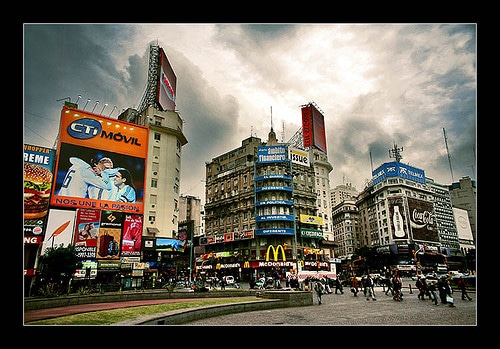
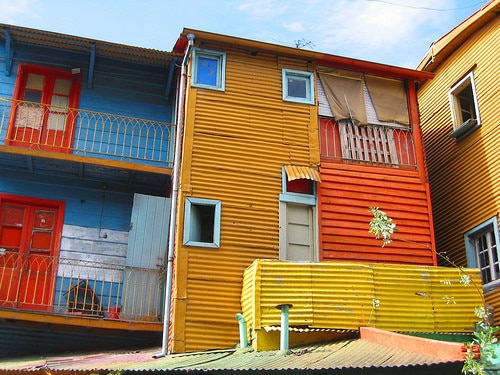
You can create your own mental map, see the popular sites, and learn a bit of history along the way by zipping through town. Most of the major parts of the city (i.e. La Boca) are covered in La Bicicleta Naranja’s tours, which subtly show you the stark contrasts of class and development between the various Buenos Aires barrios (neighborhoods).

Burning And Learning

Having never taken a bike tour before I somewhat skeptical of the 105 Argentinian peso (~$25 USD) investment for a 4 hour tour of the south side of Buenos Aires. La Bicicleta Naranja‘s thoroughly tiring tours on their bright orange bicycles (hence the company name) were complimented by the tour’s enthusiastic local guides making me not regret the decision. The knowledgeable guides were able to convey a feel for the various parts of the city and infuse a passion for Buenos Aires’ history for visitors new and returning.

[photos by: Pat Pavanelli (La Bicicleta Naranja), GustavoBuriola (Buenos Aires), paula moya (La Boca in Buenos Aires)]

Add Dollar Signs To Foreign Prices To Trick Your Mind Into Spending Less When Traveling

Converting foreign prices into your home currency and adding its symbol (i.e. $, €, £) to menu prices, bar tabs, and grocery bills may be enough to trick your mind into spending much less money.

dollar sign glasses

People tend to spend significantly more, no matter what the currency, when prices are displayed without symbols and even more when prices are rounded off or don’t have decimal points. This effect is amplified when the symbols you do read aren’t local to you (like seeing Euro signs when visiting France from the United States).

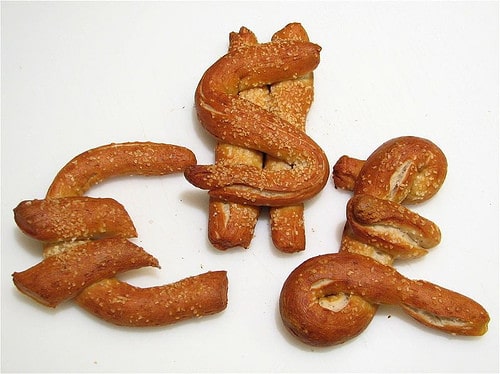
pretzel money symbolsHow To Trick Your Mind With Your Local Currency Symbol
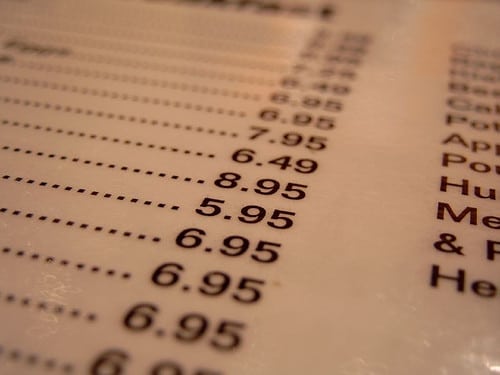
Even travelers who are conscious of their budgets tend to spend more money when doing quick conversions in their heads. To best overcome the symbol effect discovered by Cornell University, it’s best to accurately convert a given price down to the decimal in your home currency, and write it with the appropriate symbol preceding it.

For example, 12 for a salad on a menu might be easy on the eyes, but try writing it as $12 or even better $12.00.

Useful Tools To Converting Prices On The Spot

These are some tools you can use to get accurate currency conversions close to real time so you can save yourself from the “dollar effect”.

For those of you who don’t have smart phones or dislike carrying them on you, a simple pen and paper with common conversions may help you when ordering a meal that’s “not too expensive.” When all else fails, simply adding a dollar sign next to the prices on any menu (or handy napkin nearby) is likely to subconsciously make you spend less.

Working Against You At Home Too

While the added layer of operating with foreign currency will increase your tendency to spend, the lack of dollar signs has the same effect for you at home too. Hotel and restaurant owners are keening aware of this and manipulate their advertisements and menus to nudge you into spending a few extra bucks. So next time you see a nice rounded off price, convert it into the currency you grew up with (or get paid in) and add the appropriate symbol. Also, don’t forget to add two decimal points over to save even more on your simple travel budget.

[photos by: deltaMike (dollar sign glasses), oskay (pretzel money symbols), cheap eats (menu prices)]

About Anil Polat

foxnomad aboutHi, I'm Anil. foXnoMad is where I combine travel and tech to help you travel smarter. I'm on a journey to every country in the world and you're invited to join the adventure! Read More

YouTube Twitter Instagram Facebook

Image Map

Image Map
10 Shares
Share
Tweet
Pin