Blog - foXnoMad

A Local’s Guide To 2 Days In Kyoto, Japan
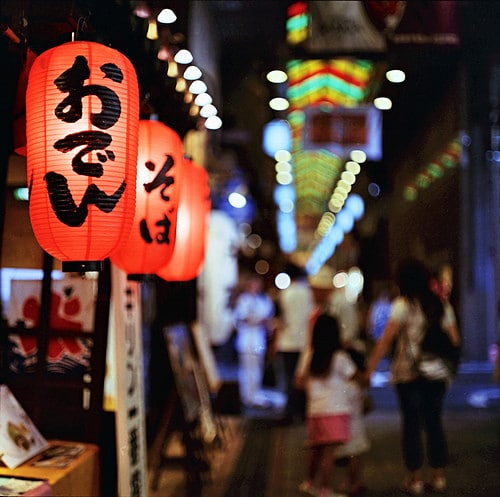
nishiki market kyotoThis is a guest post by Todd. A writer, blogger, and conflict resolution specialist; he blogs about his travels and adventures at Todd’s Wanderings. He currently lives in Kosovo, and lived in Japan near Kyoto for over five years. He’s working on his first book about walking the 900 mile Japanese Shikoku Pilgrimage, twice.

2 Days in Kyoto- Navigate the City Like a Local

Kyoto is one of those magical cities that every person should visit. However, like all proper Japanese maidens its secrets take a long time to discover. Its beauty lies in the glimpse of a geisha as she flirts around a corner, the hidden alleyway sheltering a 400 year old noodle house, or the tiny garden hidden from view but tended to as honestly as a member of the family. All of this is hidden amongst the disaster of post WWII urban planning and the waves of ugly concrete and electrical lines that spread out from city’s center.

It takes commitment to experience the elegant Kyoto, time the typical visitor doesn’t have. For those looking for rare glimpses that have delighted travelers for centuries here is list of my favorite places that can be experienced in any two day trip.

Walk Through Higashiyama(Takes a full day so start early!)

The bastion of cultural protection, Higashiyama (literally “Eastern Mountains”) has maintained the feeling of old Kyoto with its massive temples, narrow alleyways, quite gardens and tiled wooden houses. Start your walk towards the Buddhist temple Kyomizu-dera, where you’ll find spectacular views of Kyoto from the main veranda supported by hundreds of pillars. DON’T approach the temple from the main road, instead find the small road just south and follow it through the ancient hillside cemetery, perhaps the most scenic and ignored area of Kyoto!
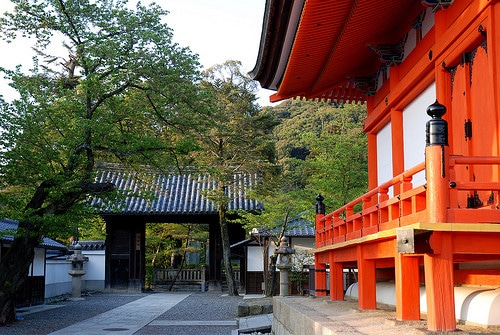
kiyomizu-dera temple

Continue your walk north and take a tea break in the traditionally restored neighborhood of Sannen-Zaka. Move on hitting any shrine or temple you see (there are tons) and you’ll end up in Gion, the famous entertainment and geisha district. Remember this area as you’ll want to come back in the early evening for your best chance of catching a glimpse of a geisha or maiko (apprentice geisha). Stay for dinner and drinks on Pontocho-dori, a small road where hundreds of little restaurants compete for your taste buds.

The northern section of Higashiyama starts from Kaege Station on Tozai subway line. Hit the massive, ancient and delightful Nanzen-ji. Don’t forget to explore all of the sub-temples. Continue north and find your own favorites, with 2,000 temples and shrines in Kyoto I’m sure you will find something. Pass through the Tetsugaku-no-michi (path of philosophy), a pedestrian path along a canal lined with cherry blossom trees. Complete your walk at Ginkaku-ji, temple of the silver pavilion. There is no silver pavilion but it boast one the most impressive tea gardens in all of Kyoto and is often overlooked by most visitors.

Kinkaku-ji and Ryoan-ji Temples

Located near each other in Northwest Kyoto these two temples can easily be combined in a morning session, which is probably better as they can become packed with visitors quickly. Kinkaku-ji with its famed “Golden Pavilion” is an impressive ostentatious temple originally built as the retirement villa of Shogun Ashikaga Yoshimitsu. The Zen temple Ryoan-ji with its austere rock garden stands in stark contrast to affluence in the neighborhood. Arrive early before the crowds and the annoying loudspeaker.
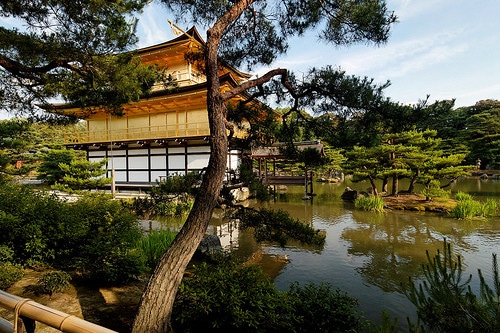
kinkaku-ji kyoto

Arashiyama

Located in the western mountains of Kyoto this is a busy tourist town, but the delight is in the temples and quite areas up the hill. Experience shojin-ryori, the vegetarian cuisine developed by Zen monks, at Tenryu-ji. Explore the temple before exiting by the north gate to wander through the amazingly green bamboo forest. This is the most beautiful part of the area so walk slowly and enjoy it.
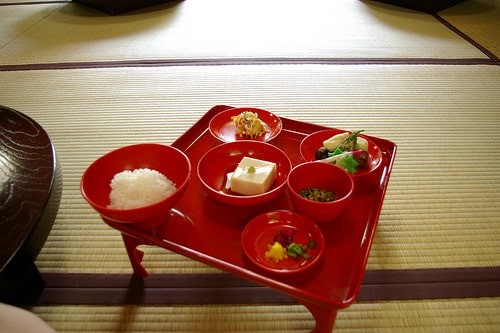
shojin ryori

Fushimi Inari Taisha

One of the most mystical places in Kyoto, this Shinto shrine is dedicated to the god for rice and business, Inari. Located on a hillside, over 10,000 red tori gates line the paths transporting any visitor into another world. Come during the early evening just before sunset for a heightened sense of the other side as you get lost within the winding paths and statues of sly foxes, Inari’s messengers. The shrine is just a 5 minute train ride from Kyoto station on the JR Nara line.
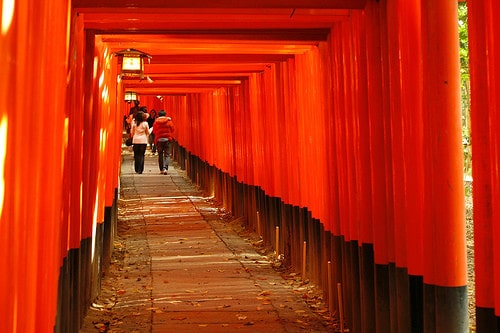
crimson paths

Drinks

What guide would be complete without advice on drinking and eating with the locals? There is not a huge club scene in Kyoto (head to Osaka instead) but small bars are everywhere. Visit Kiyamachi between Nijo and Sanjo for an area teeming with small bars and restaurants. No suggestions here other than find a random place and enjoy. Oh, and good luck finding your way out of the side streets afterward! If you want to drink with the younger crowd, buy yourself an oversized beer (or three) at a convenience store and head to the Sanjo bridge nearby and grab a seat on the banks of the Kamogawa river. There is sure to be some group jamming to an acoustic guitar.

Many thanks to Todd for this insightful post about Kyoto, Japan. You can read more from Todd on his blog, Todd’s Wanderings and follow him on Twitter (@toddwassel).

[photos by: rawheadrex (Kyoyo market), Jaime Perez (Kyomizu-dera), syvwich (Kinkaku-ji), eyspahn (shojin-ryori), Paco Alcantara (crimson paths)]

The Best Comments Of The Month: April 2010

cat listeningI hope you’ve all been paying attention to the comments (and hopefully leaving some of your own!) There is a lot of good information below each article in the comments section submitted by readers like you. I appreciate all of you who’ve left a comment over the past month, here are some of the best from April.
  • Some information changes suddenly and some so gradually over time we don’t take notice. It can be hard to keep up, especially when you plan well in advance as Nico mentions.
  • There are many good free online sources to learn new languages and Carrie adds some advice on using a computer to help learn that next language.

Thanks to all of you who left a comment this month – I’ve got some prizes and few little treats for commenters coming up in the next few weeks. I’ll announce them in a post soon so if you haven’t before, practice here with your first comment!

[photo by: fofurasfelinas]

Interview With Dave Fox About Globejotter Tours, Combining Writing And Travel – [Part 1 of 2]

Dave Fox is the founder of Globejotter Tours, and the author of Getting Lost: Mishaps of an Accidental Nomad and Globejotting: How to Write Extraordinary Travel Journals (and still have time to enjoy your trip!) He lives in Seattle, Washington. Dave took a few minutes to answer a some questions about Globejotter’s tours which incorporate writing into each trip. Once you’re finished reading Part 1 here you can follow up with Part 2 on my other website, Travel Blog Advice.

Also, if you’d like to join Dave on his next tour to Vietnam and happen to mention you heard about it from foXnoMad or Travel Blog Advice, you’ll receive a $200 discount.

What is the idea behind Globejotter Tours?

We’re different from other tour companies in that all of our tours include a series of journaling and travel writing classes along the way. We explore foreign cultures and learn to write about our travels as we go. Some of the people on our trips are journaling for themselves, and want to learn how to write more lively and meaningful travel diaries. Others want to write more polished travel tales they can share on blogs or publish in books or magazines.

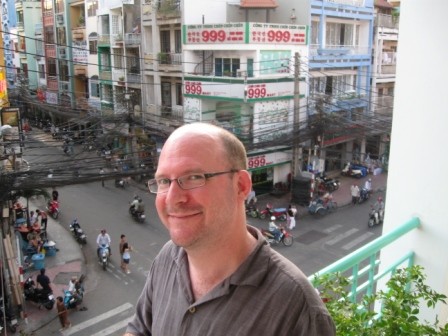
dave fox in saigon

Our emphasis is always on the journey —  getting out and exploring, absorbing as much of the local culture as possible. We’re careful to not let the writing classes overshadow the overall travel experience. If you spend too much time writing during your trip, you miss out on other experiences, so I teach people how to journal more efficiently, and I teach techniques that enhance not only their writing, but their overall travels, by helping them be more aware of their surroundings.

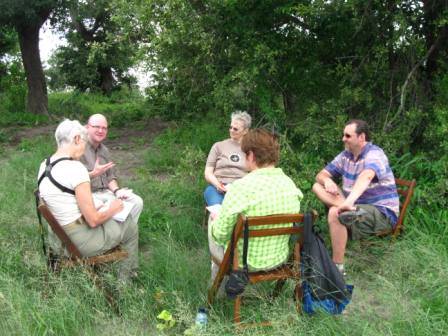
Our groups are small compared to most tour companies – never more than 12 participants on a trip. The main reason for that is to maintain high-quality writing lessons, but this comes with the added bonus that we can be spontaneous and find cultural experiences you won’t have in a larger group. On our recent Botswana writing safari, for example, we stopped at a village that had never been visited by tourists before. An elderly chief invited us to sit down with him under a tree. He told us all about his life and how the tribe’s lifestyle is changing due to environmental issues. It was a fascinating chat, and it was completely unplanned. We could never do that sort of thing with a big busload of tourists.

On our Vietnam tours, we include a fair amount of free time. You need that in order to get out and find your own unique stories. We hit some sightseeing highlights as a group and get people oriented in each place to help them feel comfortable wandering on their own. Then, we give them time to go discover their own travel tales. It makes for fun conversations when we get back together for writing sessions or group meals.

dave fox botswanaWhat style of writing do you focus on?

Travel storytelling. Every tour begins with a crash course in how to write a great travel journal, and how to collect the details in that journal that you need to create exciting travel tales. From there, we move on to crafting a compelling story.

To some extent, it’s up to each person what sort of writing they want to work on. We get people with a wide range of skill levels, from beginning journalers to experienced freelancers. I schedule one-on-one time with each of them, both during the trip and afterward (via e-mail, phone, or Skype), to help them focus on their individual writing goals. If people are journaling for themselves, we work with techniques they can use not only on the journey in progress but in future travels as well. If they want to get published, I help them fine-tune their stories and we talk about the professional side of travel writing. If anyone wants to work with a different genre – fiction or travel journalism, for example – they’re welcome to. We don’t cover those things in the classes, but I’m happy to help them during our one-on-one time.

How are the tours organized and kept entertaining?

Our primary focus is always on diving as deep as we can into the cultures we visit. In each new place, we start out with an orientation walk, some sightseeing highlights, and usually a group meal at a fun, local restaurant. From there, it varies from tour to tour.

On our upcoming Vietnam trip, we’ll take motorboats out to floating markets in the Mekong River. We’ll have a morning to run around in some sand dunes, and maybe organize an evening bike ride to a local fishing village. We’re also going to have a half-day cooking school. We’ll tour a village market with a local chef to learn how to shop for the freshest ingredients. Then we’ll head back to a special kitchen where everyone will cook their own lunch.

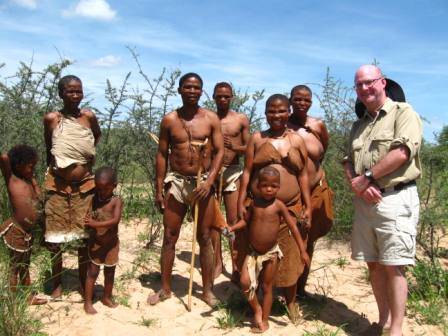
dave foxThe African safaris are a little different. We can’t offer as much free time for safety reasons. We don’t want anyone to get trampled by wildebeest or munched on by lions. So we’re together as a group more, but we have some fantastic local game experts who take us on game drives. On our recent Botswana trip, we also met a group of Kalahari Bushmen. They showed us how they survive out in the desert and taught us some of their games. And we taught them how to play Frisbee. The Frisbee game happened almost by accident. We were having a lot of fun learning a spear-throwing game that they play and I wanted to offer something in return. I suddenly remembered I had a Frisbee in my backpack. The cool thing about it was that their lives were as different from ours as anyone’s could be, but we connected in spite of the cultural differences and language barriers.

Then, there are the writing classes. We have a class roughly once every two days. Whenever possible, we have the classes someplace fun so people don’t feel cooped up inside. In Vietnam, we’ll have a class as we cruise down the Mekong River on a private boat, and another on the beach along the South China Sea.

These really are trips for independent-minded travelers – the sort of traveler who might not normally take a tour. Anyone who needs their hand held 24 hours a day, or can’t carry their own bag, or needs a chocolate on their pillow at night, probably won’t like what we do. The group dynamic is important. We encourage people to be laid back and spontaneous, and we have more fun together that way.

You can catch up a bit more with Dave and learn where the tours go, some misconceptions about travel writing, and his advice for travel bloggers in Part 2 on Travel Blog Advice. Thanks Dave!

3 Free Language Social Networks Travelers Can Use To Learn And Converse With Others

There are a number of free online resources for learning new languages, which are great ways to learn the foundations of a given language, but most of them lack the ability to put your skills to use with other people. These 3 language social networks are ways to meet other travelers who are native speakers or at the same level as you are in that second, third, fourth, etc. language. It’s an excellent way to practice and put your skills to the test to improve upon what you’ve learned.

LingoMatch

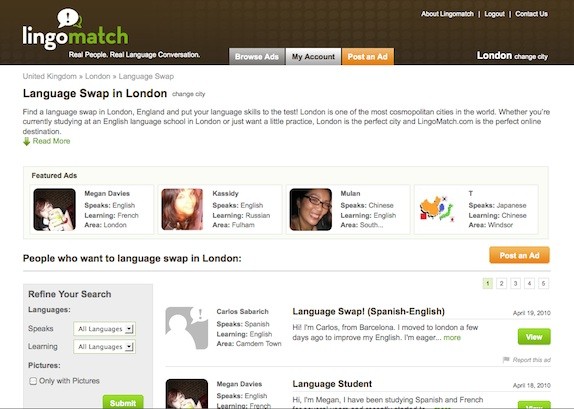
Last week I took a look at the language exchange network LingoMatch. A fairly straightforward interface, you can post ads to teach, learn, or exchange language skills with others across the LingoMatch network. There are no set rules to engagements which can be face-to-face or over Skype.

lingomatch ads

Busuu

Busuu is primarily focused on the Romance languages, English, and German. Busuu not only lets you connect with other travelers but has free online courses and integrated video chat as well.

SharedTalk

A language exchange community run by Rosetta Stone, the most useful aspect of SharedTalk is its forums and text chat. SharedTalk would be so much more useful if it could integrate with existing social networking platforms like Skype but is a good place to find the answer to that obscure Spanish grammar question.

sharedtalk

More Free Language Resources

Since I last wrote about these free online language resources, I’ve come across a few others. None are particularly social but teach each language with different methods, some of which may work better for you than others. Also, they’re all free as well.

Use The Variety

These online language social networks all give you different levels of sociability, whether you want to meet people in person or just practice your skills via chat. It’s important to converse with native speakers as well as other students to feel comfortable speaking when you’re actually traveling and pick up on cultural context and slang. As travelers you shouldn’t neglect the strong connection between language and culture, and despite the fact that English is the universal language it’s not used everywhere. Besides, it will make it that much easier to order danishes in Denmark.

Stephen Colbert Ponders What More Can Airlines Charge For?

The Colbert Report Mon – Thurs 11:30pm / 10:30c
Ryanair Charges for Toilets
www.colbertnation.com
Colbert Report Full Episodes Political Humor Fox News

This clip from The Colbert Report I came across on one of my favorite travel blogs, Upgrade: Travel Better, brings up an interesting point besides being pretty funny. It seems that many of the airlines are in the midst of a feeding frenzy, charging for things like carry-on luggage and going to the toilet. I think most of us would rather see fares go up a bit and include some basic amenities (is carry on luggage a luxury now?)

I’d like to hear your opinion on airline fees – are they justified additions in a tough economy or simply an underhanded opportunity to increase profits from travelers?

Leave your thoughts in the comments below in addition to whether or not any of these fees will actually change your travel habits.

A Swedish Dala Horse: Scandinavian Heritage Museum Minot, North Dakota

swedish dala horse

This is a large Dala horse, or Dalecarlian horse, outside the Scandinavian Heritage Museum in Minot, North Dakota. While I’m not in Minot at the moment (I’m headed to Quito, Ecuador later this week), I happened upon this statue two years ago during the month of December. I had read about the small museum here which has several monuments to its Scandinavian ancestors including a Norwegian stabbur, statue of Hans Christensen Anderson, and this approximately 10 meter (30 foot) Dala horse. Most Dala horses are tiny wood carvings given to children as toys and have become symbolic of Sweden in general.

The Scandinavian Heritage Museum is an interesting place to visit in a small town where there isn’t much else. Aside from the museum, Minot has the distinction of being (by far) the coldest place I’ve ever been. Here are a few more pictures from Minot and the museum that have been up for a while but I’ve never posted.

About Anil Polat

foxnomad aboutHi, I'm Anil. foXnoMad is where I combine travel and tech to help you travel smarter. I'm on a journey to every country in the world and you're invited to join the adventure! Read More

YouTube Twitter Instagram Facebook

Image Map

Image Map
10 Shares
Share
Tweet
Pin