Blog - foXnoMad

How To Bargain Like A Ferengi And Get A Good Deal Anywhere On Earth

The Ferengi are the Star Trek universe’s greedy, mischievous, and crafty aliens whose entire culture is based on accumulating wealth. They are so dedicated to money that their holy book, “The Rules Of Acquisition” are a set of guidelines by which to conduct business. While the Ferengi world may be fictional, their rules can help you bargain your way in and out of most markets anywhere on Earth.
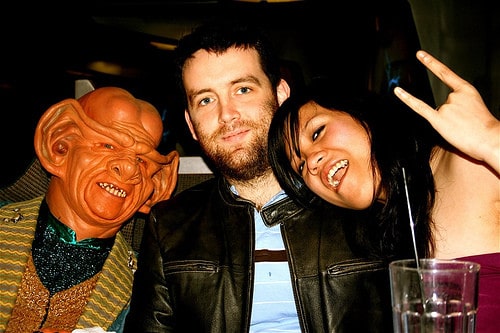
ferengi

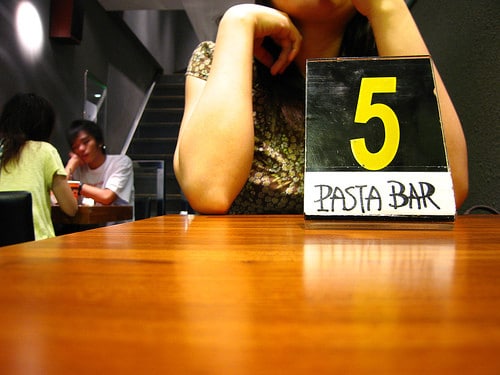
Rule # 214 – “Never Begin A Negotiation On An Empty Stomach”

Bargaining takes time and if you’re in a rush you won’t get the price you want and likely get frustrated in the process. Don’t start bargaining when you’re hungry, hurrying to make that tour bus, or when you’re bladder is telling you otherwise. Limited time means you’ve got less wiggle room to get that price down to what’s fair.
empty dinner table

Rule # 7 – “Keep Your Ears Open”

You’ll stand a better chance of bargaining your way to a good price if you listen carefully to the person you’re negotiating with. You’ll notice when bargaining for anything, the seller is usually adept at picking up clues about their potential customers (Rule # 194 by the way – it’s always good to know about new customers before they walk in the door). Do the same, ask questions and have a conversation – and make sure to keep in mind all of the prices you’re quoted too.

string telephone

Rule #3 – Never Spend More On An Acquisition That You Have To

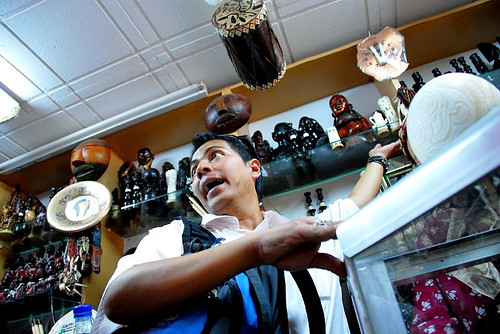
People who aren’t comfortable bargaining often feel “bad” about asking for a lower price. During any negotiation in a shop, the prices are already inflated and the shopkeeper has a number in mind (Rule # 98 – “every man has his price”); a hard and soft point. The soft point is where you’ll get with a bit of negotiating, often the big initial drop in price. The hard point takes longer (recall Rule # 214 above) and is the lowest price the owner is really willing to accept.
bargaining

Rule #74 – Knowledge Equals Profit

In addition to keeping your ears open (Rule # 7) you should keep your eyes open too. Shop around to get a feel for the local prices of an item or similar things you may want to buy (like shoes for example). Get a good number in your head and research how bargaining works in a particular area so you know both how to negotiate on local terms and what prices to begin with. For example, in Morocco your initial price should generally start with 1/4 of the quoted price.

one dollar bill

Rule #16 – A Deal Is A Deal

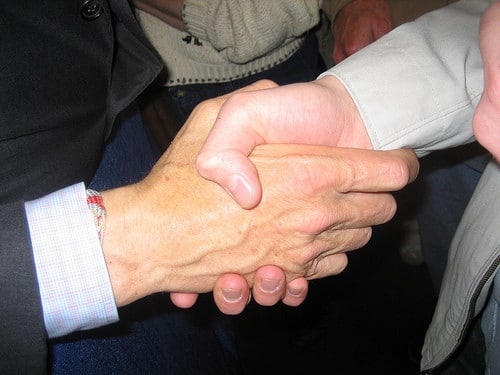
An unofficial Ferengi rule is to “always inspect the merchandise before making a deal.” Then, once you agree to a price, that’s the end of negotiations, a rule that hopefully the person you’re dealing with will follow as well. After both sides agree (and don’t agree if you feel ripped off!) and are happy with the final price, relax. Assuming nothing extremely out of the ordinary happens, a deal is a deal. Bargaining isn’t a competition and more important than the best price is that you leave feeling good about the transaction.
handshake

Be Savvy And Enjoy The Process

Negotiating is a process you can learn to love. Bargaining is like a game and an integral part of many cultures here on Earth. The process is about forging relationships – locally it’s how shopkeepers can earn repeat business – and for you it can be a good way to learn about an individual in the society you’re visiting. You’ll most always be asked an initial price or what you think is fair for something, so have a number in mind. The lower the better (it can’t hurt if in doubt) and be sure to engage the person.

It’s what the Ferengi would do – well, they’d also do a lot of unethical and illegal things – but if you stick to these select Rules Or Acquisition you should be able to bargain like an intergalactic pro even if you don’t know the local language.

[photos by: karenchu121 (drinks with Ferengi), Socwind (empty table), dotbenjamin (string telephone), benjuni (bargaining), Gerwin Filius (dollar bill), Litandmore (handshake)]

Playing With The Language Exchange Network LingoMatch

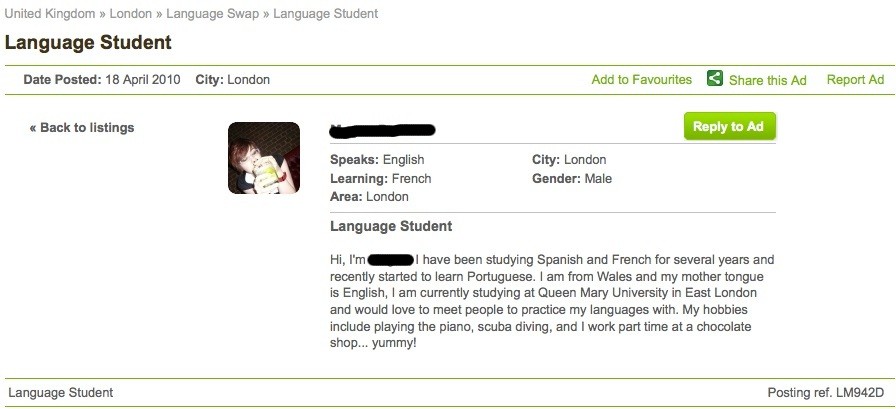
lingomatch logoYou can connect with others in your local area to exchange language skills, have conversations, and practice that next language you’re learning using LingoMatch. The free social network lets you create and search through ads for local meet-ups with native speakers. In exchange that person can practice with you adding another dimension to the process of learning a new language. It’s another free online tool to learn new languages and I recently gave it a test spin.
How It Works

Signing up for LingoMatch only requires an email address and password – it’s your fairly standard double-opt in that doesn’t require a lot of information.

  • If you don’t want any marketing emails make sure to un-check the box during sign-up or send them an email through their contact form.

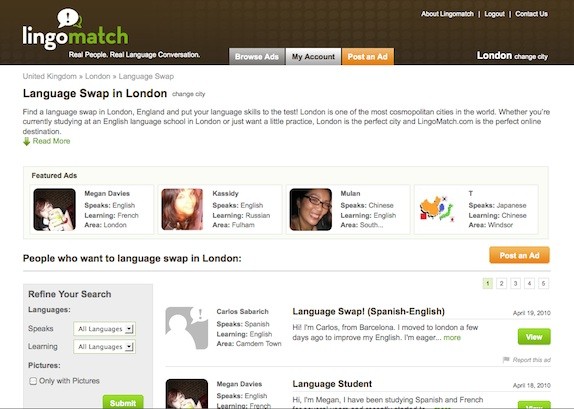
Once you’re signed up you can browse through various ads to exchange language skills. LingoMatch seems to have most of its users in the UK, Europe, US and South Africa but you can search for others. I should clarify that although they’re called “ads” there isn’t any selling or buying going on. The exchanges are for the mutual benefit of both parties – sort of a CouchSurfing for languages.

lingomatch ads

Language Exchange Ads

The ads last 180 days and include profile pictures, but tend to be very short with just general location information along with what languages the person knows and what languages they want to learn. The ads don’t say much and it’s up to you to message the person and arrange the meeting. There also isn’t any standard for the meet up, it’s really designed as a way to set up conversations really. More detailed ads (or requiring users create them) would make the site easier to navigate and encourage more meetings I suspect.

lingomatch ad closeup

Social Network For Language Learning

I didn’t actually meet up with anyone using LingoMatch but think it’s an interesting way of leveraging a social network for learning. It’s a good concept that needs some work with better ads and perhaps integration with existing networks like Facebook or Twitter to harness the power of tweetups. (I’d also prefer a more straightforward approach to opting out of marketing emails and a clearer privacy policy.)

Since most of you take the time to learn a few words of the local language before a trip LingoMatch could add a helpful hand before, during, or after. In a few days I’ll take a look at some other ways to get social while learning languages but if you’re on limited time, these are 4 word combinations you shouldn’t neglect to look up.

6 Crowd Intensive Festivals In Mumbai

This is a guest post by Priyank, who keeps a detailed account of his travel stories and pictures on his blog: Final Transit. Having moved to Toronto from Mumbai, the greatest thing Priyank misses about his hometown are celebrations such as these.

Visiting Mumbai (India) this year? Looking for some crowd, chaos and color? Here are six wonderful festivals that will leave you overwhelmed.

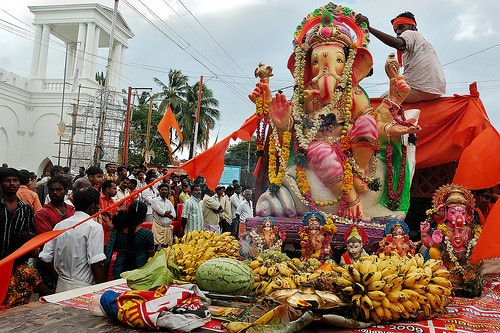
Ganesh Chaturthi: When Gods Visit The Earth

ganesh chaturthi

For this festival, people bring clay idols of Lord Ganesha, the patron God of arts and sciences, to their homes and community centers for consecration. The priests symbolically invoke life into the statues, and for the next ten days Ganesha is given the most generous treatment a guest could ever receive. Its time to eat delicious food, exchange gifts, visit friends and family and celebrate the presence of the divine guest. On the 11th day of the festival, people bid adieu to the deity. The statue is taken through the streets in a procession accompanied with dancing, singing, and fanfare to be immersed in a river or the sea symbolizing a ritual see-off.

Dates: Between August 20th and September 15th

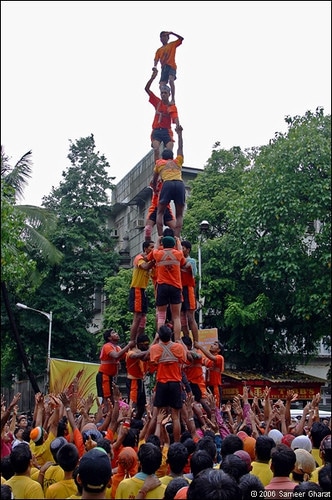
Dahi Handi: Human Pyramid

dahi handi

This festival, dedicated to the childhood antics and mischief of Lord Krishna, is about how tall of a human pyramid can you make before you are able to grab that pot of goodies hanging as high as 15m above ground. The higher the pot, the more valuable it is, and thus a number of teams vie for the prize. The highest I have seen is 8 levels, but that’s normal!

Dates: Between August 10th and September 5th

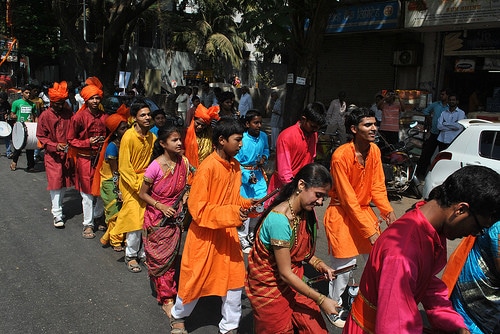
Gudi Padva: Marathi New Year

gudi padva

Welcoming the Marathi new year in a traditional style. This new year parade starts at sunrise (traditionally the day begins at sunrise, not at midnight!), travels through the main arteries and breaks into street parties.

Dates: Between March 5th-20th

Navratri: Nine Nights

navratri

The festival of worship and dance, dedicated to Shakti, the feminine energy, lasts for nine nights. Public areas are demarcated for festivities that begin with worship, followed by two particular forms of dance.

Dates: Between October 5th-20th

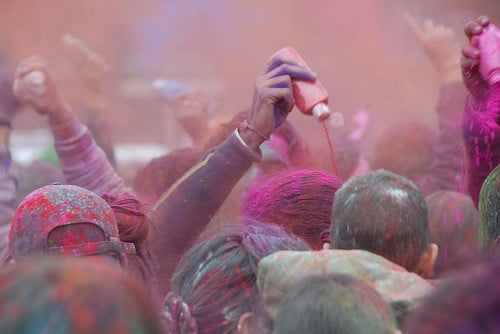
Holi: The Festival Of Colors

holi

Welcoming spring on a full moon day, the festivities start the previous night with a bonfire, symbolizing the burning of hatred, evil and misdeeds. Fun begins the next morning when people dressed in white clothes throw colored water and powder on each other. Symbolizing the arrival of spring, and celebration of life, Holi brings a cheer to everyone, young or old.

Dates: Between February 20th and March 5th

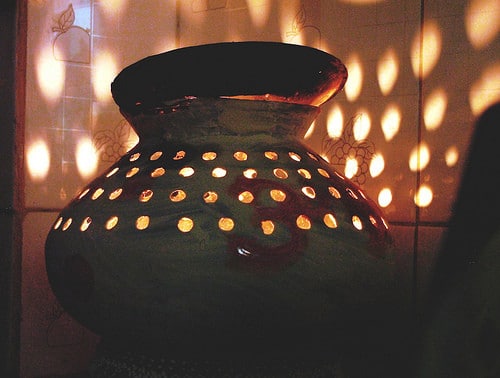
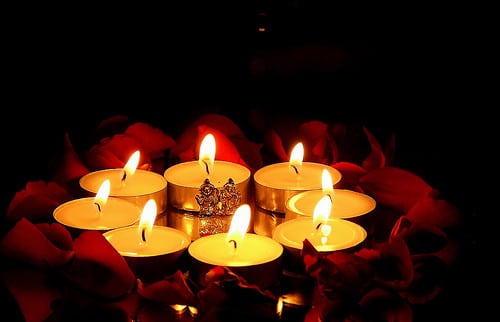
Diwali: The Festival Of Lights

diwali

By all means, Diwali is the biggest, busiest, loudest and most colorful festival in India. Celebrations last from few days to a couple of weeks, depending on one’s beliefs. Diwali is celebrated this through festive fireworks, lights, flowers, sharing of sweets, gifts, visits by family and friends, etc. While its easy to get lost in these extravagant celebrations, the philosophy of Diwali is essentially to raise the awareness within – by rejoicing in one’s inner light and the underlying reality of all things and beings.

Dates: Between October 20th and November 10th

Why Does It Matter To The Traveler?

Festivals and their significance varies from state to state. All the ones listed above follow the Hindu (lunisolar) calendar, hence their dates on the Gregorian calendar might be off by few days. This is especially important to know if you are traveling on a day when a large number of roads are closed for celebrations, or if your sleep schedules are potentially disturbed by firecrackers and street parties. In any case, for travelers interested in doing something more than just sightseeing, these are some excellent opportunities to mingle with the locals and soak the real festive charms of India.

Thank you for the enlightening and colorful post Priyank. You can read more about Priyank’s travels and see his photography on his travel blog, Final Transit.

[Photos by: thejasp (Ganesh Chaturthi), supersam5 (Dahi Handi), Preshit (Guda Padvi), vaidyarupal (Navratri), FaceMePLS (Holi), m4r00n3d (Diwali)]

Information On Traveling To Iceland Under The Ash Cloud: Interview With Jeanine Barone

Jeanine Barone is a travel and food writer whose work appears in numerous publications, from National Geographic Traveler to Travel + Leisure. Iceland is one of her specialties. Jeanine was kind enough to take a few moments to answer a few questions I had about traveling to Iceland and I think you’ll find it very useful no matter when you may be visiting. You can read more from Jeanine on her travel blog J The Travel Authority, I hope you’ll take a minute to check it out.

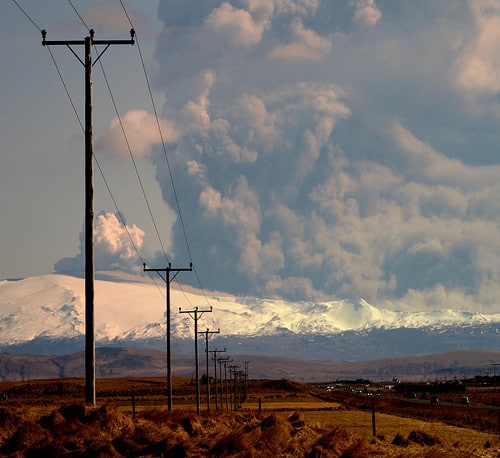
Eyjafjallajokull ash cloud

From what you’ve heard, what are things like in Iceland itself – aside from the delays, how has Eyjafjallajökull affected travelers in the country?

There don’t seem to be any worries for travelers in Iceland, unless you are right in the area that’s erupting. Life is basically going on as usual, especially in Reykjavik which is west of the volcano whose ash plume is blowing east. In fact, the Reykavik tourism people are providing a very cool Welcome Card that gives you access to all their museums, geothermal pools, buses and much more. Here are some videos of how travelers are enjoying their stay in Reykjavik. Interestingly, some say that they always wanted to see Iceland so the flight delays are now allowing that.

Plus, a lot of people may not realize that flights to and from Reykjavik and the U.S. are running normally. And, in fact, flying to Reykjavik from the U.S. is a “secret” way of getting to Europe, since Icelandair has flights to various Scandinavian cities right now — Stockholm, Copenhagen and Oslo, for example.

To keep track of the delays on various flights, check out Icelandair’s website and also follow them on twitter @Icelandair.

Other than [jet] air travel, what are some of the alternative ways to visit Iceland?

Smyril-Line runs a small cruise ship between Denmark and Iceland. But it’s only a once-a-week route and this Wednesday’s sail is full.

ranga hotelDo you have any best guesses on how the eruption might (if at all) actually benefit travelers in the coming weeks?
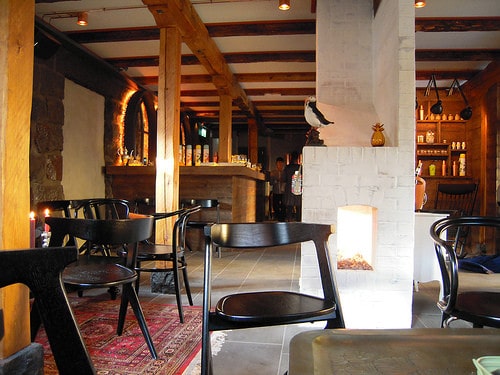
Aside from these disruptions in air travel, I think a good thing for travelers is that it puts Iceland on the tourist map for those who don’t think about this lovely, picturesque country all that much. There is a boutique hotel (Hotel Skogar) at the foot of the volcano that will be a prime place to lay your head once things simmer down. Plus, their sister luxe property, Hotel Ranga, is outside of the evacuation zone, so it’s up and running and offering helicopter tours over the volcano. You can see the volcano from the dining room windows!

fish company restaurant icelandAny recommendations for someone who might happen to be stuck in Reykjavik now?

If I had to be “stuck” in a city, I would love it to be Reykjavik. Most tourists only come here as an all-too-brief stopover on their way to Europe, so all they ever see is Kevlavik Airport or the Blue Lagoon. And that’s it. Reykjavik will delight anyone who loves art — they have some amazing exhibits from notable painters and sculptors (Reykjavik Art Museum) – and cuisine, among other things. (Their chefs are some of the best around, regularly garnering awards for their creative dishes.)

I’m particularly fond of these restaurants: The Fish Market, Dill, Vox, the Fish Company. Plus, if you’re still stressed out about your delayed flight despite all this entertainment, I’d check out Blue Lagoon’s downtown spa — not the one everyone ventures to that is closer to the airport. Here you can enjoy some of their signature silica mud treatments and even get a day pass for the health club that’s in the same building. Not a bad way to spend your time while being “stuck” in one of my favorite cities.

This is the official tourist website for Reykjavik and it’s chock full of information regarding the volcano as well as everything you’d want to know about fun things to do in Iceland’s capital city.

Jeanine, thank you again very much for taking the time and getting back to me so quickly for this timely interview. Once you’re done reading this interview you can learn more about this fascinating country by reading Jeanine’s posts on Iceland at J The Travel Authority.

[photos by: Sverrir Thor (ash cloud), jasper wiet (Hotel Ranga), Mark Dalzell (Fish Company Restaurant)]

Watch Iceland’s Volcanic Ash Spread Via Satellite

You may be wondering how volcanic ash from Iceland erupting from underneath the Eyjafjallajokull glacier could be shutting down airports across northern Europe. Here’s 18 hours of satellite footage from April 14-15, 2010 that shows just how much ash is being produced and spread over European skies.

Thousands of flights have already been canceled due to this second eruption of the volcano. Apparently volcanic ash, which being mostly invisible to the naked eye from the ground in Europe, can disrupt jet engines. Scientists aren’t sure how long the eruptions will last but the last time in 1821, the volcano was active for over a year.

The Changing Face Of Berlin’s Immigrant District, Kreuzberg

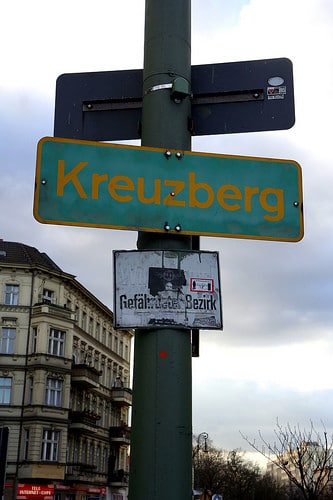
kreuzberg berlinKreuzberg is a section of Berlin located in the center of the city and is well known for it’s large immigrant population. The German relationship with it’s immigrant populations – especially the large number of Turks in Germany – is a complex one to say the least. For years Kreuzberg has been the focus and reflection of how choppy the integration of these communities has been.
From One World To The Next

Hopping off the Kreuzberg metro station from any other part of Berlin you are thrust into a cosmopolitan world that instantly looks and feels different. There are international restaurants, cafes, and stands everywhere (the food is excellent by the way). Kreuzberg is a colorful place in a country where monotone shades seem to dominate the architecture. The harmony isn’t completely on-key but there are small signs all around that on some levels the cultures here are learning to share a part of themselves with each other.

kreuzberg signBlends On A Small Scale

You’ll find Germans ordering doner kebabs in Turkish with local vendors, cafes creating unique tastes between Indian and German foods, along side Japanese markets. Where there are small signs of integration there are also stark differences that are make for an interesting look at the changing face of Kreuzberg. I recall seeing a young punk rocker girl of 15 or so, covered in tattoos and piercings drinking a beer; a moment later an elderly lady in a headscarf sits directly across from her. The looks the two exchanged was priceless – both in complete shock at the sight of one another – it’s a picture I really wish I could have caputred. On so many levels that is Kreuzberg.

Not Completely German, Berlin, But Kreuzberg

Kreuzberg has it’s fair share of problems, including having one of the highest rates of poverty in Germany. Despite the differences between its communities both past and ongoing, Kreuzberg has something I haven’t seen in any other part of Berlin or Germany. The communities here may fall into the categories of German, Turkish, Russian, or otherwise, but they’re all a part of Kreuzberg. That culture that transcends national titles, a unique mixture that defines its inhabitants, and may be slowly bringing them together.

[photo by: CDrewing (Kreuzberg sign)]

About Anil Polat

foxnomad aboutHi, I'm Anil. foXnoMad is where I combine travel and tech to help you travel smarter. I'm on a journey to every country in the world and you're invited to join the adventure! Read More

YouTube Twitter Instagram Facebook

Image Map

Image Map
10 Shares
Share
Tweet
Pin