Blog - foXnoMad

The Best Credit Card For Travel Perks? Chase Sapphire Reserve Review

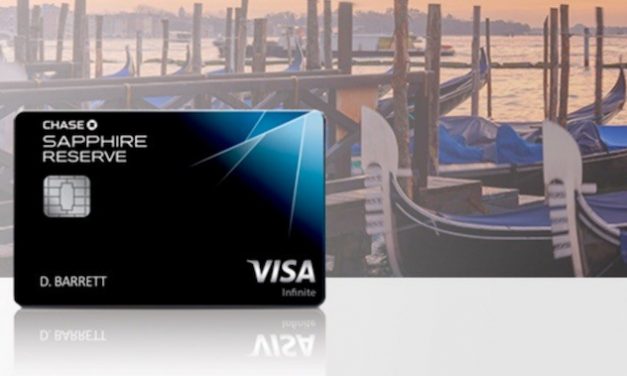
chase sapphire reserve

Writing about a specific credit card offer isn’t something I thought I would ever be motivated to do but the Chase Sapphire Reserve card is an incredibly enticing offer for travelers who take as little as one flight per year. In other words, you don’t need to be a very frequent traveler to get some serious travel benefits that will save you money, get you free flights, travel insurance, plus a lot more.

What you do need is to be a resident of the United States; so although I am generally hesitant to post an offer that omits 95% of the world’s population, if you can get this card and travel occasionally, here’s why you should seriously consider the Chase Sapphire Reserve.

Points, Miles, Or Both If You Choose

Before I get to the upfront travel perks, let’s start with the Sapphire Reserve’s big hook, 100,000 bonus points. To claim them, you’ll have to spend $4,000 within the first three months of being approved for the card. $1,333.33 dollars a month goes pretty fast especially if you live in the U.S., eat, make car payments, pay an electrical bill, or exist in general.

Travel points can be a confusing system but Chase’s is relatively straightforward. Your first bonus points are equivalent to about $1,500 in the Ultimate Rewards store where you can purchase airfare plus shop at the Apple Store, Amazon, for hotels, and more. Those points can also be converted, one for one, directly into frequent flyer miles for most programs as well. (You should really be using these 3 programs to maximize your earning.) As an example, 100,000 miles with Untied Mileage Plus gets you two round trip tickets from the U.S. to Europe or three, one way tickets, if you use multi-city flights to see more for less.

Points can also be used to put cash back into your account, the first 100k being roughly equivalent to $1,000. Once you get the Sapphire Reserve card, you continue earning points by spending: 1 point per dollar on most purchases; 3 points per dollar on travel and dining related expenses. Like the bonus points, you can convert any points into cash, miles, or for use in the Ultimate Rewards tore.

Fees And No Fees

Let’s get Chase’s Sapphire Reserve card fee out of the way because it probably puts a lot of people off at first sight. The annual fee is $450. Although you may balk at first, if you travel at all, $300 is offset by a credit on any travel or dining costs. Essentially, the first $300 you spend on travel every year is credited back to your account – effectively making the annual fee $150.

prague view

On the other side, the Chase Sapphire Reserve has no foreign transaction fees, which can add up quickly if you travel internationally often.

Now The Coverage Perks

There are a few benefits the Sapphire Reserve has that really make it a unique offering, starting with the travel and purchase coverage:

  • Included Travel Insurance – (Outside of the U.S. only.) This coverage includes medical (up to $100,000) for you and any immediate family members traveling with you.
  • Car Rental Insurance – (Worldwide) So long as you use your Sapphire Reserve card to pay for a car rental, you can turn down the rental companies collision and theft insurance (up to $75,000 protection).
  • Small Item (Electronics) Coverage – Anything you buy with the Sapphire Reserve card is insured against damage or theft for the first 6 months (up to $50,000 per year).

iphone 6s charging case

You really shouldn’t be traveling without insurance but many people neglect to do it because it can cost $60 a week or more depending on where you’re traveling. When you book with the Chase Sapphire Reserve it’s a cost you no longer have to consider. There is also other coverage, you can see all that’s included here.

Priority Pass Into 900 Airport Lounges Worldwide

On its own, an unlimited Priority Pass membership costs $399. You’ll be able to enter over 900 lounges in at these airports (and hopefully remember to share wifi details with your fellow travelers). Also, if you decide to sign up for Global Entry or TSA Pre, you’ll be credited back $100, effectively making them free.

The Chase Sapphire Reserve is a travel credit card with a lot of benefits (no, nobody paid me to write any of this) but isn’t the credit card you want to use if you carry any balance from month to month. Interest rates are high (16-23%) plus there are cards without annual fees. In case you’re not eligible or interested in the Chase Sapphire Reserve, remember there are plenty of ways to earn frequent flyer miles without getting more credit cards.

Use This Tip To Save Yourself Up To An Hour When Landing At Havana’s International Airport

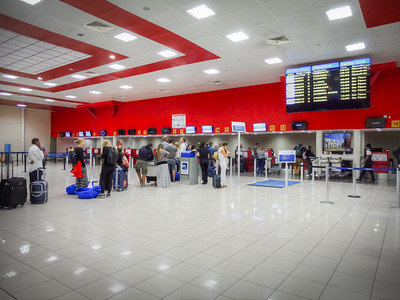
Havana Cuba Jose Marti International Airport

The first thing almost all tourists will need upon arriving in Havana, Cuba’s Jose Marti International Airport, is cash. This is particularly true for Americans, whose ATM cards won’t work; nationals of other countries have no guarantees either. And everyone can pretty much forget about using credit cards in Cuba’s heavily cash-based society.

As a visitor, it’s practically a necessity to take all the cash you’ll need with you for the duration of your entire trip prior to departing for Cuba. Unless you’ve got a prepaid ride waiting to pick you up at the airport, you need to convert some cash (e.g. dollars, euros, etc.) into the tourist-local Cuban Convertible Peso (CUC). Since everyone else has the same idea long, long, lines form outside of the exchange office in the arrivals hall.

Understaffed hardly ever open on time, here’s how you can forgo up to an hour of waiting in arrivals at Jose Marti International Airport after you land.

Go Upstairs To Departures

Walking into the arrivals hall your first stop might not seem like the departures hall upstairs, but it should be.

The departures hall (which will be deserted) has several staffed currency exchange booths and not a single person using them. Walk up, exchange enough money to get yourself where you’re staying, plus some extra. The exchange rate at the airport is often the same, if not better than most of the hotels in town (the primary place to exchange money in Havana) so it’s not a bad idea to convert larger amounts.

cuba old car taxi

Once you’ve converted your money, you can go back down to arrivals. Just past the massive line full of tourists waiting to get CUC will be a taxi that can take you into town. Now you’ve got an extra hour to explore Cuba, which might not be what you think it is.

Small Tips Often Pay Big

Because Havana airport only has a relatively small number of flights, arrivals and departures don’t overlap significantly which is why one is usually empty when the other is not. Keep this in mind when departing Jose Marti International Airport, currency exchange in arrivals is likely to be much less busy.

Many travel tips are as simple as this but go a long way in saving you money, time, or enhancing an experience. For instance, you should do this before visiting the Tesla Museum in Belgrade, find this restaurant in Kosovo, and can save a lot on trains in Japan before ever leaving home.

This Is A Picture Of The Very First Starbucks

very first starbucks

Although I didn’t know it was at the time, this grainy photo of the original Starbucks is one of the worst, but first, from before foXnoMad was even a concept. For some reason taking a picture of every Starbucks I came across (and/or Bill Gates) became a personal photographic scavenger hunt.

Across from the Pike Place Market, I noticed an odd Starbucks, with the wrong logo and colors. Shutter, click, snap. It wasn’t until seeing another picture of it years later did I realize this was the first Starbucks. In terms of multinational coffeehouse sightseeing, I had taken a picture of the Great Pyramids without knowing it.

The first Starbucks opened on March 31, 1971, but didn’t sell coffee to drink, but the beans themselves. Obviously things worked out from there since old or new, there always seems to be a line out the door.

Cuba Is Not What You Think It Is

havana cuba tourists

There’s a romanticism behind most revolutions, particularly those associated with the now iconic images of Che Guevara. In 2015, a record number of tourists (nearly 3.1 million) visited Cuba, sharing stories online of brightly colored buildings with photos of rebellious ladies in their 60s smoking cigars. The allure of a place stuck in time and misconception, is one of the reasons many, including myself, travel to Cuba in the first place.

Lifted Upon Landing

The passport control in Havana’s Jose Marti International Airport is in a poorly lit hall, immediately behind what is a conspicuous search of carry-on bags. (There’s a detailed list of things you can’t bring into Cuba on the immigration form.) But the friendly, if not slightly bored, faces of the passport control officers puts you at ease. Calmly you’ll walk out into the madness that is the arrivals hall, eventually finding the long, confused line to exchange currency. (The much shorter one is upstairs at departures.) Cuba has two types of currency, one for locals the Cuban Peso (CUP), the other, Cuban Convertible Peso (CUC) for tourists. The rate is 25 CUP for 1 CUC.

havana square cuba

Cash in hand, you can see the faces of tourists from all parts of the world light up at the sight of the 1950s Chevy’s lined up as taxis, some colorful, others with fading paint. The car’s seats are boldly taped together, the doors missing interiors, but it’s amazing the vehicles are running as well as they do.

Strict Side Market

Surprisingly, Airbnb is an option in Havana, but you’ll have a less expensive stay at a casa particular. Basically, casa particulares are apartment rooms or sections of homes for rent, since law requires the owner stay on the premises. The particular place in Havana I stayed was an entire apartment floor with multiple rooms, spacious enough for 10 people comfortably.

cuba casa particular

A walk around the street below, the first person I meet is a man asking if I can help carry his bag. Travel scam warnings light up in my head but I do anyway, to see where this is going. Apparently, it’s going about 25 meters because he goes left but before he does, gives me a shot of the rum I was carrying. It’s 9:15 am. Cuba is both confusing, yet convincing, that things are certainly not what they seemed to be.

Many other Cubans are curious, striking up conversations, usually ending with some kind of veiled offer to get whatever (the wink, wink kind) you might want. The first thing that comes to mind is a bottle of water.

Stopped In Time

The heart of downtown Havana is either a rustic rebel against all the nation is deprived of or decades old buildings visibly falling apart despite any contrary effort. People in poverty, including plenty of grandmothers posing with cigars, for a price. The smiles quickly vanish after the photo is snapped or you decline a picture in the first place. Seeing those pictures isn’t ever the same afterward.

old havana

Lunch at Variedades Obispo, a local chicken and rice cafeteria hall, becomes a thought provoking internal debate on Cuba’s food rationing system. People are in a long line for eggs – 5 per month is the allowance – probably the reason small shops aren’t common; there aren’t many local shoppers.

Variedades Obispo

Half-century old cars breakdown. A lot. Those polished, bright, shiny ones you often see in pictures are kept in pristine condition and parked right where tourists can hop in, for $20-30 US dollars, depending on your negotiating skills. Most of the others on the road exhale large plumes of dark smoke, but the ride is still fun, because they often have excellent speakers with good music blasting. Making the most out of the situation is what you see much of in Cuba.

No Time To Scratch Your Head

If there ever were a ride that could symbolize what Cuba is or isn’t, it’s definitely the bright red, double-decker, Habana Hop On Hop Off Bus. What’s an ordinary tour wagon in most major cities, in Havana, the bus an entertaining speedy race around corners at speeds with just enough forward momentum to prevent the vehicle from tipping over. (Watch out if you’re on the sidewalk.) Branches hang low – and I’m serious – if you sit on the top floor without paying attention the best case scenario could be a concussion.

cuba taxi chevy

Some stops are typical: squares, and famous sights but many are big hotels. Aside from housing many tourists, these hotels are pretty much the only places (at least in Havana), where you can find an Internet connection. (And bottled water.) Controlled by access cards that cost about $2 USD for an hour of Internet connectivity, which is, surprisingly uncensored. Many Cubans sit outside of the hotels during the cooler evening temperatures, warming the air with the soft blue glow of their mobile phones. An indication, among many things, that even official salaries aren’t official.

At the end of the wild ride you’re once again slowed to a halt with a confusing reality. An empty Plaza de la Revolucion, with Che Guevara’s determined image looking down. You can’t help but wonder, is this Cuba what he and so many other revolutionaries, romantics, envisioned?

plaza de revolucion cuba

As a traveler it’s difficult to make judgements about something as complex as a society in a short visit. What you see are snapshots from a movie that’s been running for decades. Your Cuban story is colored by critic reviews, and following the advice you’re strongly recommended, talking politics might pose significant problems for everyone involved in the conversation. In a place that prides itself in planning, you appreciate how many long-lived people seem to benefit from an effective and efficient healthcare system. Conversely, the obvious poverty makes you wonder where the lines of premeditation were drawn on who and why.

Cuba isn’t what you think it is. Cuba is not what I think it is. There are very experienced journalists with enlightened insights on Cuba. What I know is what I don’t; a lesson Cuba can teach many of us.

Do Airfare Booking Sites Offer Different Prices Based On The Device Or Browser You’re Using?

vienna international airport

There is a lot of evidence that airline booking sites and airfare search engines offer different pricing to people based on their location – more specifically, by country. There is less evidence for, but many more rumors of, airlines manipulating prices based on the physical machine you’re searching from (e.g. an iPhone 7 versus a Galaxy S7 Edge) and even by the web browser you happen to be on.

It’s pretty easy to change the country you appear to be in using a VPN to find lower prices on plane tickets but is it worth it to go through the trouble to make it seem like your iPad is a Surface Pro? Or obsessively switch between Chrome and Firefox? This is a question more than one reader has brought up so here is what we know – and don’t – about how airlines change ticket prices based on your digital fingerprint.

Evidence Is Hard To Collect

All airfare search prices are the result of many, many, reasonable factors such as how full a flight is, how many people are searching for it, and the number of days before departure. You can search for the same flight and get different prices within minutes for a lot of reasons that have nothing to do with browser cookies, for example.

airport line havana

Added on top of all this is, as the consumer, we don’t really know the actual cost of a seat on a given flight at a given time. The airlines obviously want to profit as much as possible on a given seat (whose costs vary considerably up until the last ticket can be sold) plus search engines take their cut too. Many people logically assume both the flight search engines as well as the airlines, want to squeeze as much out of us as possible.

Conspiracies Fed

I’m not saying airlines working fares in their favor is a conspiracy but like conspiracy theories, when one of them turns out true, it gives credibility to the rest. Orbitz, for example, shows Apple users higher prices first, since they tend to spend 30% more on hotel bookings. It’s not that the lower prices aren’t there, they were just being shown a lot lower on the list.

Test Results

The problem during my testing over the past few months is that prices went up and down, but I was unable to correlate them to browsers or devices. Web browsers in privacy mode (i.e. no cookies, or search history) tended to show lower airfare more than half the time, until it came to actually booking. The infamous “this fare is no longer available” appeared regularly, making me think airlines show (what they think) are new users enticing rates to get them to click closer to a purchase.

istanbul airport activity

Consumer Reports also found anomalies after several hundred test searches but similarly, couldn’t determine a definite pattern. To their credit, Kayak denies they use cookies or other browser information to slyly hike up prices:

“Cookies or no cookies, it is impossible for us to show different prices to different users,” a Kayak spokesman told us [Consumer Reports] when we reported our findings. He suggested that a difference of even a few seconds on simultaneous searches may have affected our results.

You can of course, run your own tests. Web browser plugins like User Agent Switcher for Chrome or Firefox can fool most websites into thinking you’re on a Windows machine instead of a Macbook, for example. (You’ll need to jailbreak or root your phone to do the same on mobile.) When you don’t have the most time, it’s best to stick to the best flight search engines and use a VPN like this to find discounts. Don’t forget that there are a lot more effective ways to get low prices on airfare than by trying to spoof your browser – plus you can stop chasing cheap flights to really save on travel.

How To Download Google Maps For Offline Use And Why You Should When Traveling

google maps offline

Smartphone GPS are great for navigating, especially when you’re traveling, but not terribly useful if you don’t have a mobile Internet connection to actually download the background maps. (Or don’t want to burn through a data plan.) Originally I was going to write about the the best offline map apps but while free options like MAPS.ME (their all caps, not mine) are good, Google Maps is superior in nearly every way.

Until about a year ago, you couldn’t really use Google Maps offline, but they quietly rolled out the feature for iOS and Android – something a surprising number of people still don’t know about. Here’s how Google Maps’ offline feature works and how to download the maps you’ll need to get directions and lookup locations without an Internet connection.

First Step: Human Memory

For starters, you need to download the Google Maps app for iOS (simply called Maps) on Android. Both are free. Google Map files are large, usually at least a few hundred megabytes depending on the specific area you want to grab, so you need to remember to download them when you’re on a solid wifi connection. (I consistently forget to about half the time.)

google maps app

Start Downloading

Unlike MAPS.ME, where you specify specific countries for download, Google Maps has so much more detailed data you can only download a metropolitan area effectively of about 400 square kilometers (~250 sq. miles) at a time. Although the screenshots below are from an iPhone, the process is the same for Android.

1.Open the Google Maps app.

2. In the upper left, tap the three-bar menu icon.

google maps menu

3. Tap > Offline areas

4. Next, you’ll have the choice of either ‘Local‘; which is the area around your current location, or ‘Custom area‘ where you can specify the cities or region you want to download. Pinch to zoom in or out up to 1.5 gigabytes worth of map on iOS or 1.75 GB on Android, then tap Download. You’ll be prompted to name your map, tap Save, and the download will begin.

google maps offline

Be sure to wait for the download to complete because it hardly ever works if you leave it to the background.

You’re Set For 30 Days

After these steps, you’ll have the parts of Google Maps you wanted (you can download multiple maps up to what your device’s storage limits are) for handy things like walking directions, searching for the best restaurants on the fly, and starring important locations (like your hotel) on the map.

google maps offline areas

There are a few other advantages to using Google Maps offline, even in places where you aren’t necessarily traveling. Downloading maps offline obviously reduces the amount of mobile data you’ll use. A nice side effect of which is, like using airplane mode, noticeably increased battery life.

You’ll need to update the maps once every 30 days to keep using them and it’s really unfortunate Google doesn’t make an auto-delete option for maps after a certain period of time. You’ll have to remember to delete saved maps when you don’t need them or want to free up space on your phone. Aside from those two minor gripes, offline Google Maps are probably one of the most useful tools on a travelers smartphone. Unless you forget to download them.

About Anil Polat

foxnomad aboutHi, I'm Anil. foXnoMad is where I combine travel and tech to help you travel smarter. I'm on a journey to every country in the world and you're invited to join the adventure! Read More

YouTube Twitter Instagram Facebook

Image Map

Image Map
10 Shares
Share
Tweet
Pin