Blog - foXnoMad

8 Familiar But Distinctly Bulgarian Foods Your Stomach Shouldn’t Be Sorry It Missed

The depth and variety of Bulgarian cuisine may come as a surprise to many of the nearly 9 million tourists this eastern European country sees each year. I was certainly caught off guard by Bulgaria in many ways and my stomach was overjoyed as a result.

bulgarian bread

Bulgarian food can be described as Turkish-Lebanese cuisine with a spicy Germanic twist. What initially sounds familiar begins to take on a distinctively Bulgarian flavor the longer you spend eating your way through Bulgaria’s national menu.

1. Tarator (Cold Yogurt Soup)

Very similar to the vegetarian Turkish dish ‘cacik’, this cold yogurt, dill, cucumber, and walnut mix is a Bulgarian staple that seems to be most associated with national pride. Tarator was, in fact, the first thing 4 separate Bulgarians mentioned I taste whenever the topic of food came up. The yogurt is heavily watered down and meant to be sipped like a soup – not dipped in like tzatsiki.

bulgarian tarator

2. Shopska Salad

The Bulgarian shopska salad resembles a traditional Greek salad up until you get to the cheese. Instead of feta, a heaping pile of tomatoes, cucumber, and onions is topped with an equally generous amount of sirene cheese. The cheese is much softer than traditional crumbled feta and gives the shopka (named for the Shopi region in the Balkans – not because it sounds “chop”) a milky twist. A simple starter to many Bulgarian lunches and dinners.

bulgarian shopska salad

3. Guvech

A term borrowed from Turkish and named after the clay pot guvech is traditionally cooked in, this hearty vegetable stew is often loaded with eggplant, tomatoes, olives, peppers, and a few other additions. Typically it’s meat, not sausage as shown in the photo below that accompanies all of the other plants you’re eating out of a steaming clay pot.

bulgarian guvech

4. Moussaka

The origins of moussaka aren’t clear although this dish with the Arabic name is most famous in Greek form. The Bulgarian version has a much more adventurous recipe, made with a surprisingly flavorful base of ground pork and beef in a sea of potatoes with a thin cheese layer to top it. Much more meat and potatoes with much less mushy custard top compared to Greek varieties.

bulgarian moussaka

5. Lukanka

Only the top middle portion of meats in the photo below is the dried pork and beef combination salami called lukanka. It’s got a strong flavor and chewy nature that’s gives it a lot of taste in a small bite compared to its Bavarian cousins to the west.

lukanka bulgaria

6. Kyopolou

This is another instance where my stomach got the better of my notebook as tends to happen with my overzealous appetite. Kyopolou is the eggplant spread, in brown, near the top right of this appetizer plate. (And unfortunately the only one of the four I can remember the name of on this plate. The tastes though, I’ve got them ingrained in my memory.) Kyopolou is made with garlic and often spread on bread – which by the way seems to be a requirement of any Bulgarian table with food on it.

kyopolou

7. Sujuk

This spicy sausage that’s tough to chew is common throughout the Middle East and found in omelets, dancing on bread, or eaten straight like this Bulgarian variety below. Not quite as pungent in smell, but with a stronger sumac flavor than its eastern versions, sujuk is one of a long line of meat products Bulgarians have enhanced with simple spice combinations.

bulgarian sujuk

8. Sarma

The single most pleasant food surprise I experienced from Bulgaria was sarma – a variation on Greek grape leaves or Turkish meat dolma. The cold olive-oil version of this common Bulgarian recipe is one of my favorite foods, probably the first thing I’d ask for in a last meal request. As someone who avoids meat in general I wasn’t expecting much until yogurt, grape leaves, and dill combined in my mouth to leave a lasting impression. The key ingredient behind it all is the use of pork instead of ground beef.

bulgarian sarma

A Quiet Twist On Regional Cuisines

I don’t mean to take away from the Bulgarian kitchen, which is refreshing for anyone who loves eastern European hearty dishes or Mediterranean mezes; a careful culinary combination from many diverse cultures. Acting as a gigantic recipe sponge over centuries of rule by the Romans, Greeks, and Ottomans, dish upon dish is layered with even more divergence.

I haven’t even mentioned kebapcheta (slightly spicy meat-tubes), shashlik (vegetarian or otherwise), veal tongue (tastes better than it sounds), or the strong alcoholic drink rakia to wash it all down with. (No relation to raki, it’s made out of fermented plums.)

Bulgaria might be lacking in your general travel psyche – a result of that stern name I’m convinced – and it’s cuisine might be the last thing you’d think of. Especially considering it’s next to palate powerhouses like Greece and Turkey, you might regrettably overlook one of the best menus in the Balkans and beyond.

4 Months After Revolution: Why You Should Take Advantage Of Egypt’s Rare Travel Window Of Opportunity

Several months removed from a dramatic national uprising and a few more before nation elections, travelers have a rare opportunity to take advantage of a low-cost Egypt relatively free of large tourist crowds. Adaptability, ingrained into an Egyptian culture that’s seen waves of rulers, conquerors, and traders has resulted – perhaps unsurprisingly – in a country quickly back to life-as-usual.

great pyramids giza egpyt

That is, except for tourism; still slow to recover mostly due to apprehensions abroad about political instability. Now, on the heels of the January 25th Egyptian revolution, yet before the potentially turbulent fall elections, present a rare time to visit a budding nation without the normal crowds or costs.

egyptian flags tahrir squareEgypt’s Current Travel Stability

The question of whether it’s safe for foreigners to visit Egypt is one that you may still not be able to shake post-revolution. You can read more about whether it’s safe to visit Egypt right now but basically the country is stable, generally safe, and nearly all major incidents are far removed from popular tourist spots. Aside from the unmistakable red, white, and black bands of the Egyptian flag waving from (seemingly) everywhere and the sounds from occasional political demonstrations, you’ll likely be oblivious that Egyptians recently ousted their government.

Egypt is what I like to call travel-stable; meaning there are problems that make headlines, scare some, but are extremely unlikely to affect travelers. Those incidents, like clashes between groups of demonstrators for example, are those you really have to go out of your way to be involved in. The best safety precaution to take in travel-stable places is a dose of common sense.

Keep The Great Pyramids For Yourself

Granted, a Wednesday afternoon is a relatively quiet time even for the only remaining wonders of the ancient world, but I was shocked to count less than a total of 100 people over 2 hours visiting the Great Pyramids of Giza. Even the persistent camel touts, who all seem to speak 15 languages (and had “lived in Istanbul” in my case) seemed pathetic sitting along desolate paths just waiting for anyone to converse with.

khan el khalili souk cairo egypt

There aren’t many reliable statistics on how hard Egypt’s tourism industry has been hit recently but a stroll down Cairo’s famous Khan el-Khalili souk reveals many foreigners have decided to take their vacations elsewhere. Too bad for them, but great for you.

nile river cairo egyptThe Best Of Egypt Is Still There

It’s not the kushari, Sphinx, or pharaohs that will have you drinking from the Nile as they say in Egypt, but the culture of an incredibly warm and welcoming people. While it’s true that anywhere, people are what make a culture, Egyptians seem to have a twinkle of optimism in their eye post-revolution; eager to tell any and all visitors about it.

The government is different and the political future hazy on a cloud day though the food, history, and tourism infrastructure are more than intact. Hotels have lowered prices to help fill their empty beds and food is about as inexpensive as you’ll find anywhere in the Middle East. For all of Egypt’s recent changes politically, hardly any have changed travel there.

The Pre-Election Window

Egyptians are in the process of reconstructing their government and molding a clump-of-clay democracy after rapid waves of change. There is still quite a bit of work to be done with the next set of uncertain changes and steps likely to take place during the upcoming September elections.

Eager-and-open Egypt isn’t the same and won’t be from this point forward. Visitors will get a feeling that most Egyptians feel optimistic at this crossroads in their 4,500 year history. This combination of stability, travel recovery, and breath of historical fresh air won’t last beyond September’s parliamentary elections and the presidential elections a few weeks after.

alexandria yellow cable car egypt

I noticed a few more tourists in the days right before leaving Egypt last month; enjoying the calm sweet spot of travel after a revolution or disaster. Those are the opportunities that get you the best deals and set up travel memories to be had after you’ve left. Head to Egypt right now and you’ll see the country’s future from the beginning, served with a side of ancient temples and shisha along with your Nile.

A Lone Dog Standing In The Ruins Of Ephesus, Turkey

ephesus turkey

First the Greeks 3,000 years ago, then the Romans, now these days the only people with their sights set on conquering Ephesus are the nearly 1 million tourists who visit each year. One of Turkey’s most popular travel attractions (a 20 Turkish lira entrance fee), at first approach the site looks like nothing spectacular. It’s as you walk down the ancient streets, and realize after every turn how extensive the ruins of Ephesus are, that makes it stand out in the “ruin-overload” that can happen in countries like Turkey, Greece, and Egypt.

I try to post at least a photo from every major city and site I happen to travel to but this picture could have been taken from any one of the nearly 4 times I’ve been to Ephesus since I was a child. The first was when I was 15 where I recall nothing but a crowded mess of people taking pictures of stones that looked like ancient footstools.

Having been in and around nearby Fethiye for much of the winter, Ephesus fell along my path several times with me playing unofficial tour guide occasionally. Things start to look and feel the same after a few visits – ruins don’t change much – except when you wander up to Ephesus on a winter’s day right before closing. This dog (who didn’t get me lost like this Cappadocia canine) and a shepherd leading his flock down into the settlement for the night were the only other folks in town.

Once the Roman Empire’s second largest city, Ephesus – Efes in Turkish – is also familiar sight in Turkey as its most popular beer takes its name from the ancient settlement. Strangely enough, I’ve had Efes many [many] more times than Ephesus, but that hasn’t quite lost its appeal.

You can see more of Ephesus right before (and slightly after) closing in the gallery here.

Is It Safe To Visit Egypt Right Now?

What now makes Egypt one of the best travel deals in the world at the moment might also be keeping you from visiting the Middle East’s most popular travel destination. Months after Egypt’s January 25th revolution, the country’s travel slate has been wiped clean and at the surface has begun to return to normal.

january 25th egyptian revolution

Demonstrating and democracy-building aren’t the sort of activities most tourists travel for and by-in-large if you avoid the occasional local flare up traveling in Egypt isn’t any more dangerous than it was in early January.

cairo ministry of internal affairsWhat It’s Like Now In Egypt

Having spent the past few weeks in Egypt, the most common question I was asked wasn’t about the Pyramids but rather if it was safe to travel there. In Cairo, aside from the remnants of the burned out Ministry of Internal Affairs building and the now routine Friday afternoon demonstrations in Tahrir Square, you’ll find the Egyptian variety of normal going on.

  • That normal is the inconsistent variety – a common theme in Egyptian culture.

You’ll witness in remarkably chaotic traffic with incredibly skilled drivers, insincere but slick touts, and a strong sense of community across classes and ethnic groups. Egypt is chaotic but not in a state of chaos.

You don’t really begin to notice the effects of the January 25th revolution until you talk to Egyptians. From them you’ll learn there is a general state of uncertainty that masks a potential instability; one that most travelers will be oblivious to during their stay in Egypt.

Localized Incidents You Can Easily Avoid

Probably the most important element to understand about Egypt, post-revolution, is that the entire nation is not currently in a state of uprising. There isn’t anarchy on the streets and daily life goes on routinely. Two recent clashes in Cairo’s Imbaba and Ain Shams districts were at times and specific places that a traveler would have to go out of their way to get mixed up in.

  • Avoid large demonstrations outside of religious sites or government buildings and stick to pharaohs and feluccas.

egypt nile at night

That’s basically the state of travel security in Egypt at the moment, you’ve got to go out of your way to get yourself caught up in major trouble.


Major Objectives Accomplished

With Egypt’s former president Hosni Mubarek now resigned, the major point of mass protests makes another national uprising unlikely in the near term (before the upcoming September elections). Still, there are loud but peaceful demonstrations of all size and subject popping up frequently in peculiar places like crowded metro stations. All the result of a new found and rather unfocused democratic freedom, these visual clues are the few you’ll witness from the January 25th revolution.

islamic cairo streets

I walked the Cairo’s busy streets at all hours, strolled around Tahrir Sqaure countless times, and drove past heavily armed soldiers outside of a courthouse keeping guard during a controversial trial. When I went to take a picture of them, all I saw were smiles for the spectacle a lone traveler in Egypt has become these days.

Ironically enough, while many think it’s a terrible time to visit Egypt, it’s one of the best. In the coming days I’ll be writing about catching Egypt at it’s best and making the most out of a rare travel window of opportunity.

The Best Comments Of The Month: May 2011

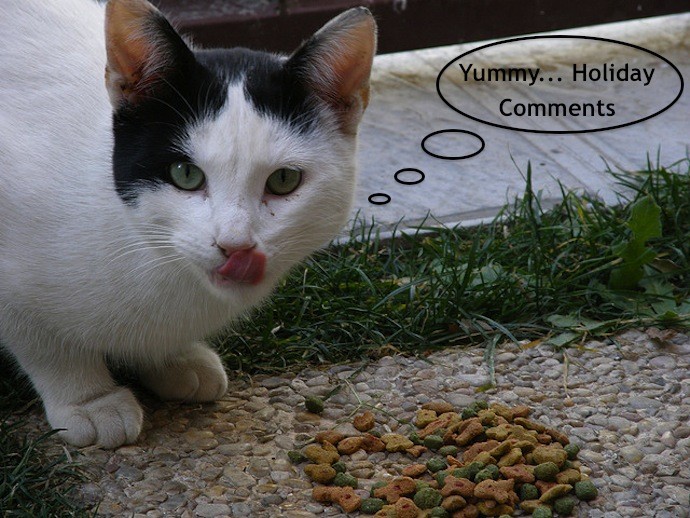
Today is a reduced version of the best comments from May. Yesterday, being Memorial Day in the United States, means that some 65% of you were taking it easy, and likely returning to school or work today. We’ll all take it a bit easy today with some of the best of the best comments from this past month.

cat eating

  • Amy turns irrationality into logic in this comment. Something to keep in mind if you’re scared of flying, it might help reduce your anxiety.

A short but sweet read this month, it took me even longer than usual to put this post together. It wasn’t easy to narrow down the comments even more, each of which I appreciate very much. Your comments are an essential part of this site, and without them things just wouldn’t be the same.

Those of you who were in the US yesterday and celebrated Memorial Day, I hope you had a good one. Feel free to share how you spent your Memorial Day in the comments below, for those who might not know so much about the holiday that began in 1865.

[photo by: josago (cat eating)]

You’re Invited: A Talk On Traveling In Iraq – June 10 In Vancouver, Canada

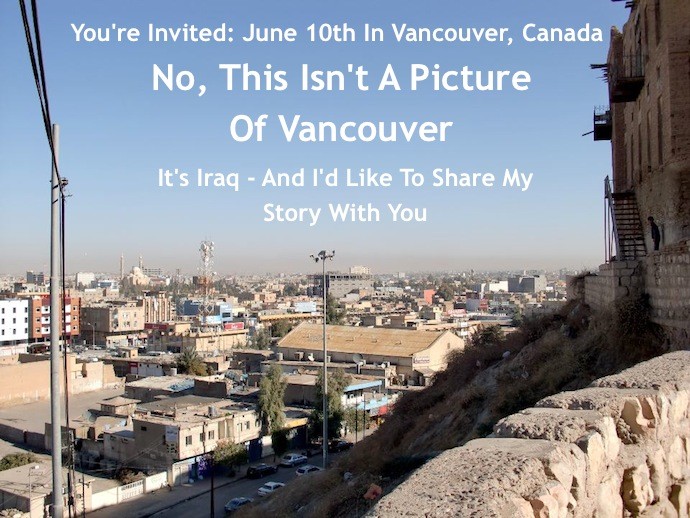
Those of you who happen to be in Vancouver, Canada on Friday, June 10th are welcome to join Wandering Earl and I give a talk about our recent trip to one of Earth’s least visited countriesIraq. That’s right before the Travel Blog Exchange (TBEX) Conference in Vancouver – the same event last year in New York where Earl and I first came up with the notion of meeting up in Iraq.

erbil iraq

From military checkpoints to Chinese restaurants that don’t serve food plus the Boston Celtics at hookah cafes, we’ll share with you what had to be one of our most bizarre travel experiences to date.

It was in one of Sulaymaniayh‘s hookah cafes, over many puffs of shisha, that we decided to help bring a glimpse of Iraq to you. Now, 6 months later, we’ll be at the Persian Teahouse at 4:30pm-6pm on June 10th to do just that. You’re invited to come hang out, swap travel stories, and ask questions about traveling in Iraq over a tea, shisha, or both.

Actually, the very few hookah places in Vancouver (like the Persian Teahouse) use a tobacco substitute, since smoking indoors is nearly completely banned. That’s not very Iraqi but we’ll have to make due. You can use the form below to let us know you’ll be attending, leave a comment, email me, or just show up.

We hope to see you there – for everyone else not in Vancouver or nearby, I’m planning on recording the talk and posting it later for you to view.

Until then, happy travels as always,
-Anil

About Anil Polat

foxnomad aboutHi, I'm Anil. foXnoMad is where I combine travel and tech to help you travel smarter. I'm on a journey to every country in the world and you're invited to join the adventure! Read More

YouTube Twitter Instagram Facebook

Image Map

Image Map
10 Shares
Share
Tweet
Pin