Blog - foXnoMad

Combating 2.5 Million Years Of Evolution – How To Prevent Your Paleolithic Brain From Scaring You Out Of Travel: Part 3

In Part 1 you learned to look past your eyes and in Part 2 of working around your Paleolithic mind, you found out your brain prefers efficiency, often at the expense of time-consuming logic. Today, in final post in this series, you’ll find out how to be wrong but still right; while at the same time turning your brain into a virtual casino of travel gains.
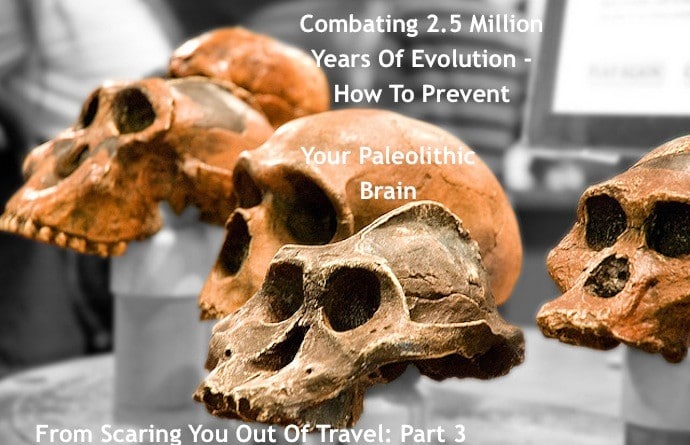
hominid skulls

Dissing Cognitive Dissonance

You’re always right. At least, according to your own brain. Cognitive dissonance, a fancy term to describe that familiar state we find ourselves in when we hold two conflicting beliefs. Those conflicts can come about when we’re exposed to new information or challenges in life. Sitting around mulling why you made a mistake for days isn’t very useful when there are foods to scavenge and large animals that want to eat you.

essaouira streetsFor example, let’s say you really want to go to Morocco, but know it will take 3 months of saving to do so. Instead, you go out every weekend, blowing the money you were saving on one too many beers.

3 months later, you haven’t gone anywhere. To alleviate the guilt and perhaps embarrassment at the failure, your brain kicks into action.

Take a deep breath, you’ll be right at the end of this.

Cognitive dissonance is a complex state but shortly there are two major ways it’s resolved in the brain.

  • Rationalizing: Well, I did have fun and not taking a trip this year isn’t so bad. I mean, I like that bar a lot and drinking is a good time so it was a decent trade off. Besides, Morocco is hot this time of year.
  • Dismissing: Morocco is hot and it’s not like I wanted to go there that badly. It will always be there, besides I’ve heard it’s not that great.

Your brain is trying to alleviate all of the negative feelings you have about not accomplishing your goal. Yet, when you admit to yourself you’ve failed, that same mental defense can work in your favor by making you feel positive about a second attempt. The first time was a bust but you’ll get to Morocco, avoid the guilt by having a few quiet weekends, and save your party for Marrakesh. Being right all the time has it’s perks, you know.
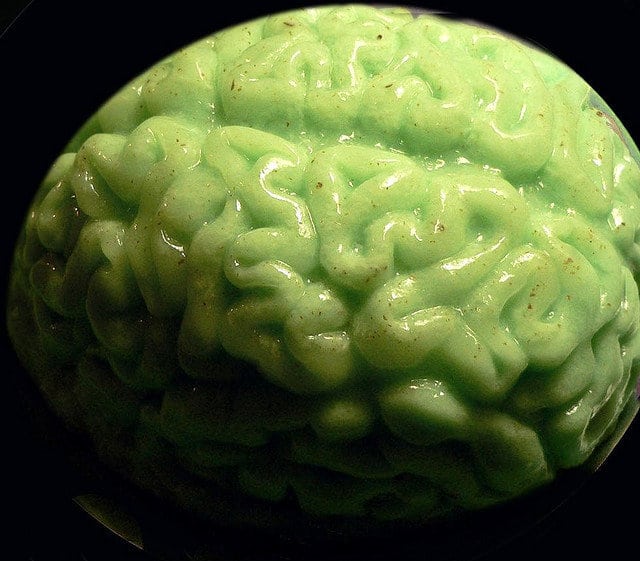
jell-o brainOld Brain Over New Brain

The older systems in our brains tend to take priority over our (newer) higher functions located primarily in the frontal lobe right behind your forehead. That means your emotions can, literally, get the best of you despite all what the facts to tell you. The stronger you feel about something (positive or negative) the less emphasis your brain puts on raw data.

  • Driving to the airport is far more dangerous than flying around the world – but who cares, falling 10,000 meters to a fiery death is much scarier. (At least in your head. Although you’re scared right now and probably won’t listen, 76.6% of people survive plane crashes.)

It goes along with your imagination, emotions heighten your ability to visualize leading to more vivid memories real or otherwise. Most of you probably don’t dream about numbers and spreadsheets at night or have an emotional response to them (aside from dread). Our brains don’t like risk – at least when there’s a perceived loss.

The Ultimate Cave-Brain Shortcut

That is perhaps our biggest Paleolithic shortcut, one that’s easy to manipulate, and the most fun to implement.

muscat oman corniche

We don’t like risk but are willing to throw all the rules out the door for a potential gain. You won’t be able to trick, coerce, or coax yourself into traveling to all the places you want unless you see some value in it. People who try to convince you the world is scary, or traveling is frivolous, do so because they don’t see the gain of expense. Without the experiences themselves to visualize being in your traveling shoes.

tagine morocco Marrakesh

Paleolithic brain isn’t all bad however, millions of years of evolution has made our species quite adept at recognizing patterns (like languages) quickly, honed our social instincts to avoid danger, and embedded nomadic tendencies in our DNA. Human beings are the only species to inhabit all 7 continents (except foxes) and can be found adapted to all of our planet’s land environments because someone – maybe your ancient cousin – decided to step out and see what was beyond the next hill.

Fortunately for you, their genes are still floating around in your cells. The rest, is up to you.

  • Catch up with Part 1 and Part 2 of this series in case you missed them.

[photos by: Brent Danley (hominid skulls), hurleygurley (Jell-O brain)]
Combating 2.5 Million Years Of Evolution – How To Prevent Your Paleolithic Brain From Scaring You Out Of Travel: Part 2

In Part 1 of Preventing Your Paleolithic Brain From Scaring You Out Of Travel, you saw that visualizing is believing and that decision making is often a social affair. In this, Part 2 you’ll see how ancient adaptations an also be useful in the modern world – if focused with a dose of logic. Stereotyping, 47 year old women, and confused deer can actually help you realize your travel dreams…once you understand the processes behind them. Then you can find the ultimate mind hack in the end of this series Part 3.

egg brain

Use The Right Stereotypes

Stereotyping and generalizing come in handy, especially after you see your pal caveman Bob drops dead after eating some red berries. After that, it makes sense to avoid that red berry, and perhaps red fruits all together. Again, it’s your brain playing it safe for your survival and we all stereotype for mental efficiency. Fighting your brain’s natural tendencies is an uphill battle so instead make your stereotypes more accurate and move from there.

This is the safest time in human history to be alive and travel. Nearly 2.2 billion flew last year and nearly a billion people took 1 international trip during that same time. The average traveler is a 47 year old woman. The 4th most visited country in the world is China and Antalya, Turkey is the 4th most visited city. More than 60% of travelers in the US, EU, and Turkey are over 30. Hostels can look like this, or this.

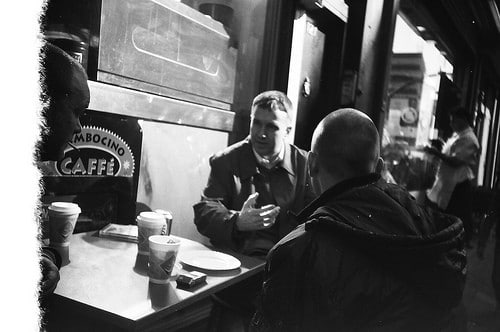
people talking in coffee shopMost people who travel for leisure will tell you they found the experience to be enjoyable, enlightening, funwithout any regrets. You might not like everywhere you travel but chances are you won’t regret finding that out for yourself.
  • Be sure to use your (real, virtual, and otherwise) social networks to get a wide perspective for your ancient brain. Otherwise, on your own you’ll tend to find information that only validates your beliefs. Called confirmation bias, it’s how your brain makes you not feel left out of the crowd.

Combating Active Passiveness And Why People Don’t Flee Burning Planes

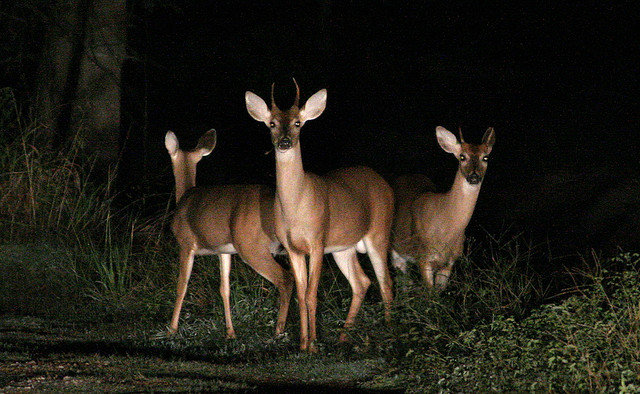
Active passiveness, a phenomena similar to “deer in the headlights” syndrome, is like your computer locking up after you open too many programs at once. What keeps deer from jumping out the way of oncoming traffic, also keeps many people firmly planted in their seats after an air disaster and could – on a less extreme level – keep you from taking that trip you’ve always wanted.

deer in headlights

Active passiveness occurs while our brains are searching for the “right moment” to proceed forward with a decision. In a survival situation those few seconds of decision can mean the difference between life and death; when it comes to a generous lifetime of contemplating, it can mean never realizing your travel dreams. The right time to travel isn’t a decision between life and death, so the right time is when you make it, overcoming the practical obstacles one by one.

Don’t be the deer in the headlights, you can see how well that ancient tactic works out for them under the lights of a modern automobile. Instead, the best way to avoid active passiveness, whether it’s a plane crash or a decision to travel is preparation in advance. Once you have a plan of action, the active passiveness process doesn’t occur, since your brain has what to do ‘preloaded’, rather than trying to think on the fly when stressed. On a burning plane, it could save your life, for everything else it could help you live.

In Part 3 you’ll find out how you’re always right, the reason statistics can’t prove anything to our ancient brains, and the ultimate Paleolithic brain hack. Old and new, by the end of next week you’ll have those neurons firing up in preparation for your next trip.

[photos by: “lapolab” (egg brain), tamara.craiu (people talking in cafe), T Hall (deer in headlights)]

Combating 2.5 Million Years Of Evolution – How To Prevent Your Paleolithic Brain From Scaring You Out Of Travel: Part 1

This is the first in a series of 3. Once you’ve gotten past your deceiving eyes, continue on hacking your Paleolithic brain in Part 2 and Part 3.

Stereotyping, overactive imaginations, and the comforts of familiar surroundings have have brought our ape-species a long way since we came to be millions of years ago. We’re all around now because our ancestors did some things right and for the most part played it safe to survive another generation. You can imagine the fear and anxiety that comes from not being atop the food chain for eons. Yet the adaptations that saved your great-great-great-(you-get-the-point) grandmother’s butt way back when, could today being convincing you the world is a scary place to travel today.

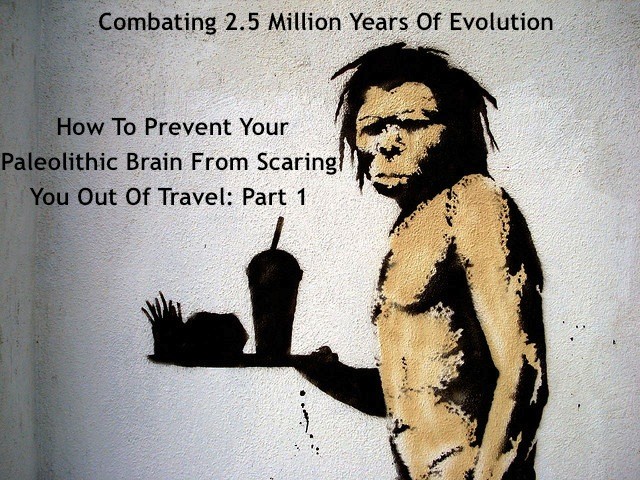
modern caveman

It takes work however to convince yourself otherwise – because, yes, your brain always comes to the conclusion you’re right. Don’t worry though, here’s how you can trick that spear-wielding hunter-gatherer inside your head to use the more recent additions to your cerebral cortex.

girl with wide blue eyesWhy Unlikely Things Seem More Likely To Happen

We are a visually-biased species and what we see is much more likely than other forms of stimulus to be recorded in our memory. Consequently, the act of even just being able to visualize something in our minds makes us feel it’s more likely to happen. Combine disaster-obsessed media, televisions, and graphic online videos being processed by a prehistoric brain and the world can seem like a terrifying place.

Fortunately, the converse is also true. Although conjuring up images of violent demonstrations in Cairo are easier than imagining normal daily life in Africa’s largest city, for our brains, seeing is (generally) believing. Once you visit a place that perception will be paramount to all others – no matter what you see otherwise.

So far, easy enough, but you’ve still got to convince yourself to actually go to that seemingly scary place. Now it’s time to use the media against ol’ caveman (or woman) hanging out between your ears.

Refocusing Your Social Bias

While you might be a fellow introvert like myself, at the core we’re social animals. Other people are extensions of our own brains and we use them everyday to assess risk. The same reason why sites like TripAdvisor and Yelp are popular are also why interviews with people after travel disasters are so poignant. We are biased to follow the crowd, identify with our peers, and put ourselves in others’ shoes.

crowd panorama

  • These days the amount of social information we’re flooded with is difficult to discern, so our Paleolithic brains er on the side of caution. The news (or more precisely the newscaster you can visualize) says Bangkok is a scary place due to protests. Why bother digging deeper if “everyone else” is telling you not to go – surely you won’t be hurt in Thailand if you never go to Asia at all.

Rather than completely shutting out the media, simply switch the social groups you listen to. Previously mentioned TripAdvisor is a good start, but so are other travel blogs, Twitter, your Facebook friends, and language social networks loaded with people who’ve been where you want to go. What you’re after are people like you (i.e. age, personality, etc.) or those who have connections to the places on your travel wish list. They’re out there and you’ll find them; giving you the benefit of interactive eyes on the ground. (Not to mention making it easier to visualize yourself at the destination – remember the point above?)

This is just the beginning of unwinding your prehistoric brain – which by the way has a short (1 minute per web page) attention span. That’s why this post will continue in Part 2 next Tuesday by learning from people who refuse to escape burning buildings and those who drink too much on the weekends.

[photos by: Lord Jim (caveman), L1mey (girl with wide blue eyes), Augustography.com.au (crowd panorama)]

A Bright Display Of Martenitsa In Bulgaria

martenitsa bulgaria

Arriving in Bulgaria during March means witnessing countless wrists covered with the red and white bands of Martenitsa. Worn and exchanged beginning the first of March on the holiday of “Baba Marta” (Grandmother March), these bands are believed to bring health and fortune in the coming spring. The bands are worn by men in business suits, children playing in parks…just about every class and demographic of the population you can imagine.

Not limited to class, sex, or age – Martenitsa isn’t just limited to limbs either. The red and white combinations can be found on the side of buildings, homes, and in trees like the one above, somewhere along the way up Vitosha Mountain.

Martenitsa is one of the first things I noticed in Sofia, so much so that my curiosity – and someone kind enough to indulge it – brought me one for good luck the day after I first inquired about it. Meant to be given and received, the typical Martenitsa is worn until one sees a stork, or a budding tree – although these interpretations vary as they often do with ancient traditions. Whether it’s a stork, blossoming tree, or simply the end of the month, Martenitsas are tied to the nearest tree or bush given the occasion. Or, for travelers, kept in their backpacks for good luck as needed.

Recognizing The Tensions In The Unrecognized Turkish Republic Of Northern Cyprus

girne harbor north cyprusBy and large invisible on many maps and unknown to many travelers, the Turkish Republic of Northern Cyprus (TRNC) sits in political limbo on the island wholly refereed to as “Cyprus”. You won’t find many travel guides to this de facto nation; unrecognized by every country in the world except Turkey, 50 kilometers off the island’s coast.
A few failed peace plans, 30,000 troops, and more than 34 years after a Turkish-lead military incursion in response to a failed Greek coup d’etat, this growing holiday destination is seeing travel unravel its immobility.

In Pieces Since The 2004 Shot A Peace

You can go before 2004 and catch up with a quick background and TRNC travel guide, but that’s the year when Cyprus got its closest chance for a resolution. A plan that would allow both sides to operate together under a unified federation was sent to referendum. The Turkish Cypriots in the north voted in favor of the (Annan) plan while the Greek south voted against the proposal.

Not much has happened politically since then in terms of a permanent plan but the booming tourism industry there has many of younger generation wondering how their future got so far off track.

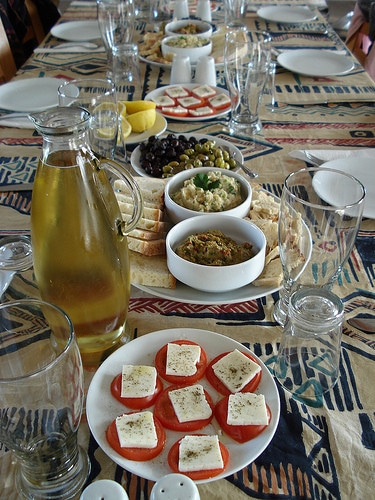
kirbris mezeDependencies Without Power

The TRNC is heavily dependent on Turkey for financial aid, around $600 million dollars a year because its diplomatic status prevents most international commerce. The Turkish military is ever present in the form of troops, signs, and slogans – now, many young Turkish Cypriots voice their frustrations at not being in control of their destiny. Angry at being put in the undefined position they find themselves in without anyone to turn to or away from.

It’s strange to see discontent in places like Girne’s booming harbor, with casinos full down the road, in a place that sees 500,000 tourists a year. The tensions aren’t those that travelers will notice in the sights but perhaps the words of a good conversation with locals fueled by halloumi (Cypriot cheese) with a splash of Turkish raki.

Unrecognized Bargains

The Turkish Republic of Northern Cyprus is a much less expensive alternative for travelers than the Greek south, or at least makes good combination for all that is Cyprus. Stuck in a struggle less with its neighbors and more with itself, North Cyprus’ fine stretches of Mediterranean coast, unique Lebanese-reminiscent cuisine, and multiplying hostels make it an attractive place for travelers; aiding the only independent international industry the north will have for the foreseeable future.

[second photo by: whl.travel (Cypriot appetizers)]

My Ears Are Wide Open – How Would You Improve foXnoMad?

Its’ been a while since I solicited your suggestions, advice, and critique, although I’m incredibly lucky to get your feedback in my inbox regularly. I get many creative suggestions from those who make this site what it is and my travels possible – aka. all of you who read and support foXnoMad.

  • What would you like to see more of on foXnoMad?

two fox kits

As my newsletter subscribers heard recently, I’ve got a number of new features and programs I’ll cooking up in the foXnoMad labs over the summer. Before the kitchen gets hot though, I would really like to know what you’d prefer to see more of. And less.

I’m open to all kinds of suggestions – from more photos or contests, to other creative ones that don’t exist yet because your neurons haven’t fired up the ideas yet. Feel free to leave your ideas on the comments below or alternatively on my Facebook page. Changes are around the corner as the 5th anniversary of foXnoMad approaches – and I can’t think of a better person to help shape them – you!

[photos by: Chris & Lara Pawluk (two fox kits)]

About Anil Polat

foxnomad aboutHi, I'm Anil. foXnoMad is where I combine travel and tech to help you travel smarter. I'm on a journey to every country in the world and you're invited to join the adventure! Read More

YouTube Twitter Instagram Facebook

Image Map

Image Map
10 Shares
Share
Tweet
Pin