Blog - foXnoMad

Seeing The City And Nature Of Sofia, Bulgaria From Vitosha Mountain

Vitosha Mountain, standing imposingly over Sofia, Bulgaria represents much of what I knew about this eastern European nation before I arrived to learn about space tourism at the Travel Trends Summit. That is, very little, considering I had no idea there was a 2,350 meter (~7,770 feet) tall mass of granite overlooking the capital of Bulgaria.
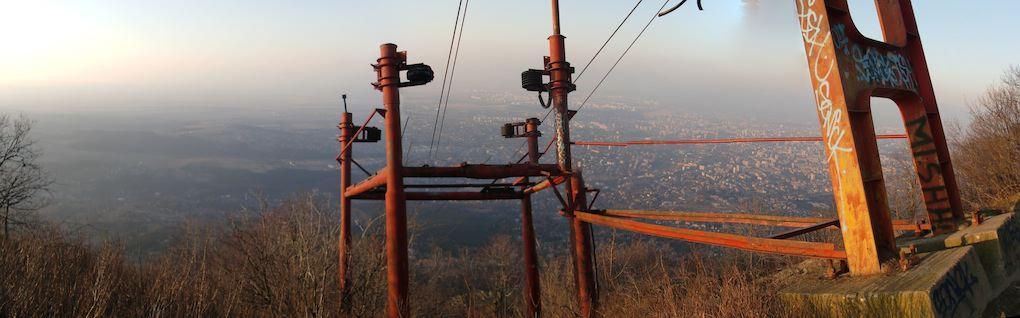
vitosha mountain sofia bulgaria

A popular hiking and skiing destination, along the bumpy car ride up there are plenty of excellent views for the eyes, though not many my camera skills could capture. About midway to the summit is the Vitosha TV Tower, called “Kopitoto”; behind which you’ll find the decrepit remains of a funicular that hasn’t seen action in at least a decade.

Based on the beer bottles, rubbish, and warnings not to visit at night; the area behind Kopitoto apparently morphs into a drug fueled hangout after dark. Those slightly creepy hours aren’t really the best time to visit anyway as the sound of every twig moving seems heightened by several levels of magnitude.
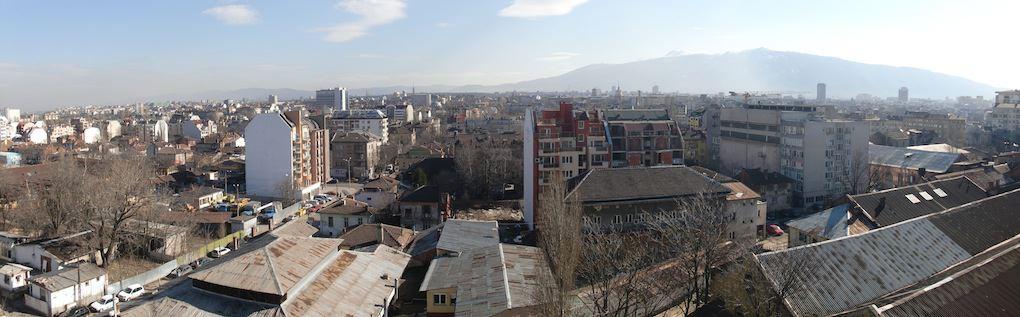
sofia skyline

The trek up to Vitosha Mountain is one of those touristy things to do that can be easily neglected because it’s in that weird travel-hinterland slightly beyond the city limits. Just far enough to consider but close enough that many might regretfully ignore; Vitosha mountain is free to enter and happens to be the home of oldest national park in the Balkans.

You can see more of Sofia from above and below in my photo gallery here.
The Negative Travel Effects Of 9/11 On Your Personal Security – Nearly 10 Years Later

Many people and media reports focus on one security aspect of the September 11, 2001 attack in the United States – defensive reactions against acts of terror. Much of this has come to focus on travel but the effects of that single attack have done widespread harm to your security interests over the past 10 years. From vulnerable luggage to a rapid erosion of your digital rights, 9/11 has put continuing pressure on your personal security as a traveler through the air.

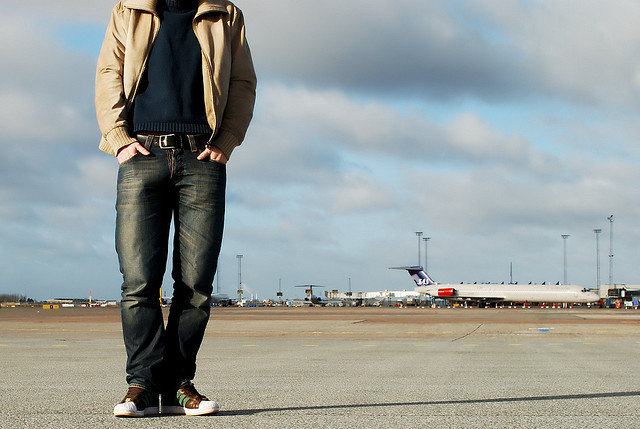
man at airport

Originally I had this post drafted for the tenth anniversary of the September 11, 2001 attacks later this year; however the killing of Osama bin Ladin has turned a focus on reprisals in the hereafter; rather than look back at the more subtle effects terrorism has had on your travels over the last 10 years.

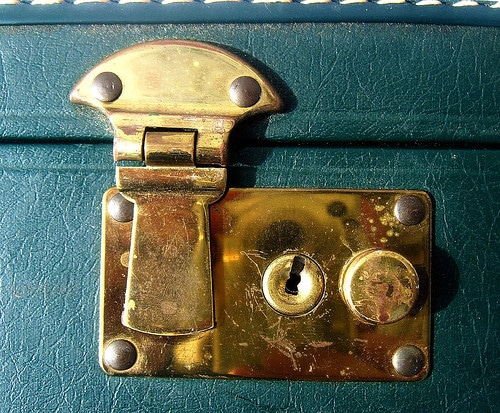
luggage lockNo Locks On Checked Baggage

It’s a common misconception for travelers within and in between the US that you can’t lock your checked baggage (there are a few TSA-approved luggage locks). As the use of luggage locks has slowly declined the incidents of theft from checked luggage has increased, with complaints filed against both security inspectors and airline baggage handlers.

Though there is a correlation (not necessarily causality) the lack of locks makes it easier for one of the average 11 persons per connection to slip inside of a suitcase to fish around for something valuable.

Security procedures at airports often allow personnel to inspect your baggage (legally) behind closed doors without security cameras in place to monitor what exactly is going on. Of course, if you do experience a theft you should report it to the airline as well as file a claim with any security organizations (e.g. TSA) who may have handled your bags along the way. It’s a bigger problem than most think.

The Loss Of Digital Rights

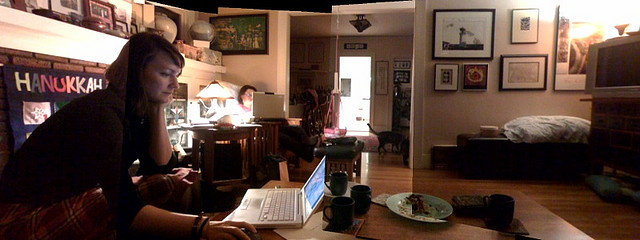
A few weeks back I showed you how to understand your digital rights as a traveler in the free world and protect your laptop from invasive governments. Since 9/11, many governments around the free world have dismantled your rights to privacy – specifically when it comes to your electronic belongings. Primarily using security as an excuse and by bending legal jargon, your travel photos, company documents, and anything else on a digital device can be searched without reasonable cause. That’s the standard in the US, much of the EU, and Australia…which doesn’t get any better in other countries around the world.

women working on laptops

More Money, Nudity, And Time…A Unbalanced Security Trade

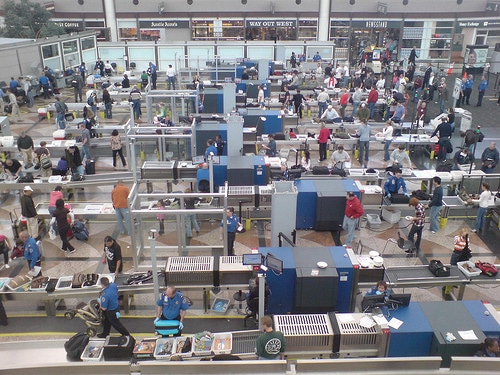
Sairport security linesecurity is a trade off and almost always means adding extra steps to a process, merely to protect you from those who would try to abuse or disrupt a system. The most basic example is locking your front door; a precaution you likely see as reasonable, since it’s a decent deterrent for opportunistic burglary – without forcing you to give up much time or money on a routine basis.

Although the promise of virtual strip searches might be powerful, remember that the airport is the last line of defense. Putting together a plot using explosives requires planning, coordination, money, and the complicated process of actually finding the explosives scanners are supposed to find. Within that process is where the overwhelming majority of attacks are thwarted – by good detective work; airport security catches the stupid and the crazy. Besides, conventional X-ray machines are just about as effective detecting guns and other weapons at much less the cost of time or money.

A Mentality Of Fear

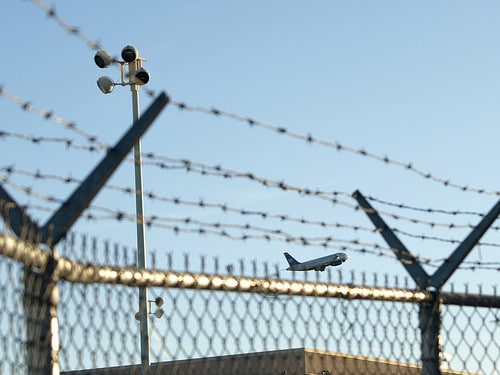
airport barbed wire fencePerhaps the greatest negative effect of 9/11 on your personal security, is the climate of fear under which you travel under. From questioning at the airport to worries about reprisal attacks here and there, many more people travel with fear in the back of their minds – accepting whatever their governments do to (appear) and make them safer. From personal experience I can tell you the effectiveness of security can be measured in countless ways but the aim of terrorism – to incite terror – is much less quantifiable.

[photos by: Pragmaraphr (man at airport), Darwin Bell (luggage lock), j l t (women working on laptops), Inha Leex Hale (airport security lines), gTarded (airport barbed wire fence)]

The Path Of The Lost Above Cappadocia, Turkey

hot air balloon goreme cappadocia turkey

A by product of 10 million years of volcanic activity, the Cappadocia region of Turkey was once where early Christians hid from Roman persecution. Now, the area outside of the Turkish town of Goreme sees 2.5 million tourists a year, drawn by ancient dwellings above and below ground, phallic rock formations, and famous hot air balloon rides.

goreme balloonThe day before I hopped into a similar balloon, in one of the most popular skies in the world to do so, I was lost and wandering on top of those rock plateaus. That’s because I was following this little guy, a stray guide dog who kept running up and back along the trails in a manner my human senses translated as “follow me”. Now some of the hostels and hotels in the area do have guide dogs for guests along with rumors of knowledgeable strays leading people along the hiking trails. Either this little white dog was not one of them, or the muddy paths blocked by trees forced him to come up with alternatives better suited for a canine, not an ape with no sense of direction.

The most common hikes from Goreme are vaguely indirect routes toward the open air museum to the east, trailing north to the town of Cavusin making for an approximate 8 kilometer triangle. Along the way there are a number of great climbs in and out of the rock formations, dwellings, and places of worship like the Cavusin Church. (The entrance fee is 8 Turkish lira.)

Although at one point I was more convinced than not I’d be sleeping in the unofficial open air hotel of Goreme, I eventually found my way down from the rock plateaus, approximately 100-150 meters above the surrounding valley.


After the hike to Cavusin, you can catch a local bus to the larger town of Avanos and eat at one of the plentiful Turkish pide restaurants to recharge as I did. The balloon rides themselves cost about $150 for the well timed one hour trip. Keeping things interesting the pilots also have a knack for lowering the hot air balloons in between the rock formations before taking you back up just under 500 meters (~1,600 feet). At that altitude you’ll get a view to appreciate even more if you hike the paths on the ground first. Then take to the skies to see everywhere you hiked with Cavusin and Avanos in the distance.

hot air balloon kapadokya turkey

A hot air balloon ride over Goreme is one of those tourist attractions that is popular you can’t help but expect disappointment. Yet, after you land, you realize why so many each year tightly squeeze into baskets with 15 other people, in aircraft that lack steering.

You can see the rest of my Goreme photos here.

The Best Comments Of March And April 2011

Due to the hectic March madness travel contest a few weeks back (congratulations again Porto), I wasn’t able to highlight the best comments from last month. So, today for this last post of April, I’m combining the last 8 weeks for a bonus look at the best comments from March…and April.

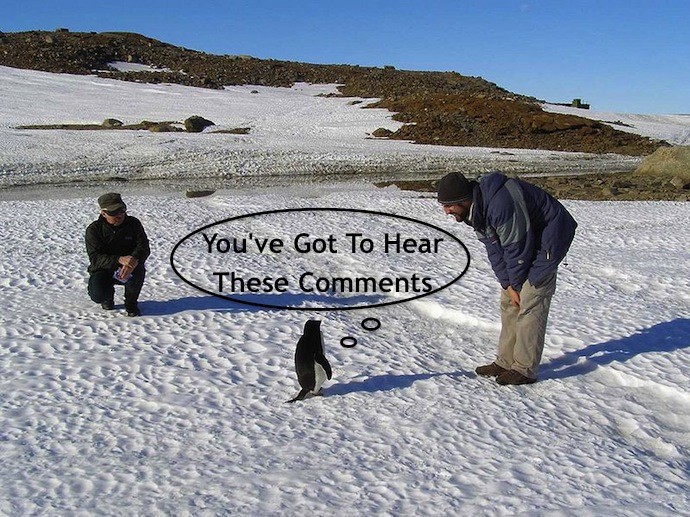
talking penguin

  • Those of you using a Windows desktop back at home for computer support should take this bit of Rich Polanco‘s advice.
  • Tijmen asks and Jose answers – a good example of how blog comments bring foXnoMad, and all of you, together to travel smarter.
  • Thanks Natalie for sparking the idea to do a live feed of the Iraq talk Wandering Earl and I will be doing in Vancouver at the beginning of June. (Anyone who will be around is invited to hear us chat about traveling in Iraq plus hang out with tea and shisha. We’ll also announce details about the video feed closer to the talk.)

My sincere thanks to everyone who left a comment over the past two months. Good conversation, advice, and laughs below each post so if you haven’t already, check out the comments from time to time or leave one yourself. If you’re shy, start by saying “hi” right on this very article to get things rolling 😉

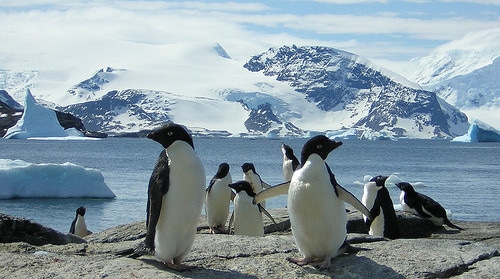
[second photo by: !WOUW!]

2 To 4 Minutes In Dubai

dubai mall fountainDubai, the concrete emirate on steroids in the United Arab Emirates, tends to get stretched out into 24, 48, 96 hours or longer when it comes to travel advice. In a city where everything is larger than normal (even the most inconsequential buildings seem 3 times the size required), why not do the opposite.

Overload your senses before you arrive in Dubai, only to have them shocked again on your 24, 48 hour, or however-long trip to the city that sees over 10 million tourists each year.

Really Big Buildings

Every piece of modern architecture in Dubai seems like it was built with the express purpose of outdoing another (now former) Dubai wonder. For many, the first image to come to mind is the Burj Al Arab – that iconic sailboat overlooking the popular Jumierah beach. Under the imposing luxury of the Burj Al Arab you can surf, get a tan, or simply relax from the steel intensity you tend to find everywhere else.

burj al arab dubai uae

  • jumierah beachDubai Beachwear For Women – Ladies, bikinis and swimsuits are acceptable when laying out to get a tan; however when up and about on the beach a sarong wrapped to cover top and bottom was the norm. (Gourmantic has good information on what to wear for women visiting Dubai.) I also wouldn’t recommend getting romantic in public if you know what I mean.

The Wild Wadi Water Park also happens to be right next to the Jumierah Hotel, of which I inadvertently got an extensive tour of. Having to use the bathroom somewhere, they let me in and a worker escorted me to the toilets on the other side of the park. The way back took around an hour though, as I got an unexpected (yet detailed) tour of over-the-top park by an employee who wasn’t too keen on getting back to work.

I never went in the Burj Al Arab myself; the least expensive way to visit (you must have an invitation) being to book a reservation at one of the hotel restaurants. Spending $50 for a cup of coffee to see a hotel I wouldn’t pay $1,100 a night to stay in didn’t appeal to me personally; though not to put you off, those of you interested will need to book any restaurant reservations an average of 5 days in advance.

The World’s Tallest Building (Soon To Be Third)

Although the Burj Al Arab might be the most famous building in Dubai, right across from the Address Downtown Building and the popular Dubai Mall, is the world’s largest building. The Burj Khalifa stands 828 meters (~2,700 feet) and there is a 3-5 day wait to get entry tickets. It costs about $50 to reach the top of the world’s largest building – a distinction that the Burj Khalifa won’t have for long. Kuwait is currently building the 1,001m Madinat al-Hareer and the Saudi’s plan to beat that several years later with the proposed 1,600m Mile-High Tower.

burj khalifa dubai uae worlds tallest building

The park (yes, it’s concrete too) surrounding the Burj Khalifa, next to Dubai Mall, is full of bustling cafes active well into the weekend nights, with the occasional concert or other free event popping up as well.

burj khalifa park

Travelers with children might also want to check out the aquarium in Dubai Mall which has a number of hands on displays and plenty of sharks up close to keep things interesting.

Take A Ride To Dubai’s Spice Souk

Not quite as built up or obviously in a modern facade as Doha, Qatar’s Souk Waqif, Dubai’s Spice Souq comes as a refreshing reminder that there are layers of reality under the constructed tourism industry all around.

dubai spice souq

The shopkeepers were fairly subdued with the occasional “yes, please” you’ll find in this part of the world, and although the prices are hardly bargains, the boat ride over for the ambiance more than makes the trip worthwhile.

Stuff Yourself Before You Digest

Dubai is a destination that comes at you…and fast. Literally a city designed for tourism from the bottom up, it has every tourist draw in abundance. Shopping in gold souks new and old, any cuisine on Earth, and adventure that lets you shoot desert sand into the skies with 4x4s of all shape and size. Dubai has it for you – pardon the cliche, but most of the tourist infrastructure is created to keep the city running on tourism. In fact, that’s why Dubai is there in a sense, to let you shop and drop while supporting its economy as it moves away from dwindling oil reserves.

How To Protect Your Laptop From Invasive Governments As You Travel Across Borders

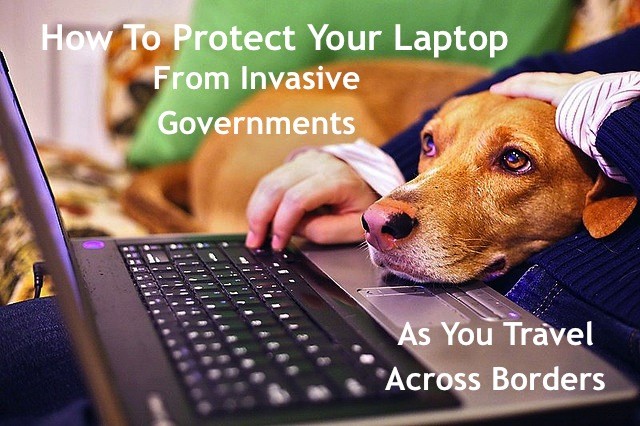
puppy on laptop

As you learned yesterday, you don’t have to be traveling to China or Cuba to have your laptop inspected, downloaded, or confiscated without probable cause or justification. Many countries around the world leave your rights (digital and otherwise) in gray areas right outside of their borders. To even the odds however you can protect your privacy while traveling around the world with a few simple rules and tech tools.

And while you might not be worried about what governments will do with your data, you ought to be concerned with how they might lose store it.

book monkeyBrush Up On The Rules

It’s important to understand your digital rights in the free world and beyond, because the truth of the matter is that most countries view your laptop, mobile phone, iPad, and other electronic devices as imports. This means both physically and digitally they can be inspected for virtually any reason or not; yet what might constitute a problem in one country might not be so in another. Bringing your porn to Australia isn’t a good idea and you probably don’t want these books on your Kindle depending on where you’re traveling.

Governments don’t typically post their digital restrictions online so you’ll have to do some specific digging if you’re concerned or take the following advice to cover your tracks – using shotgun approach.

Change Your Folder And File Names

Lots of times at airport security you’re asked to fire up your laptop so a folder on your desktop labeled “My wild weekend in Cancun photos” isn’t the best idea. (Especially if you’re going to Australia.) Keeping your desktop clean, with any questionable files generically named elsewhere, is generally enough to get you past routine border scrutiny.

  • Separate Your Passwords – This bit of computer security isn’t just good against invasive governments but for all of your online accounts as well. Having worked as a computer security consultant for years, I can tell you the first thing that happens when your (e.g. Facebook, Twitter, Windows login, etc.) is compromised. That password will be tried on all of your other accounts and if you’re like more than 70% of the population; that same password means your email and other accounts are hacked too.

girl with cookie jarAs you never know what may happen to your passwords if you’re forced to give them up (or the recordings of you doing so), keeping your accounts isolated and your personal files out of obvious sight are good computer common sense.

Scientists Be Weary – There is quite a bit of anecdotal evidence to suggest that travelers who work or have backgrounds in the “hard” sciences (e.g. physics, biology, etc.) and engineers are scrutinized disproportionately more than other tourists at airports around the world.

Business travelers may also want to consider using encryption to protect trade or company secrets when traveling abroad. Although in the US, technically labeling something as “confidential” gives you some added protection, it’s a bit like keeping a jar on your kitchen counter labeled “do not eat these cookies”.

Leave It At Home

We keep quite a bit of lives on our hard drives but no border security can find what you’ve left behind. Sensitive company files, important photos, and anything else you’d like to protect can’t be confiscated if they’re not with you in the first place. When in doubt leave that data behind and access it later with some creative use of a desktop.

[photos by: TheGiantVermin (puppy on laptop), Chaymation (book monkey), a.funk (girl with cookie jar)]

About Anil Polat

foxnomad aboutHi, I'm Anil. foXnoMad is where I combine travel and tech to help you travel smarter. I'm on a journey to every country in the world and you're invited to join the adventure! Read More

YouTube Twitter Instagram Facebook

Image Map

Image Map
10 Shares
Share
Tweet
Pin