Blog - foXnoMad

Understanding Your Digital Rights As A Traveler In The Free World

When talking about Internet censorship or unwarranted laptop searches, most travelers’ greatest concerns are before heading to the Middle East, China, or parts of southeast Asia. Although many countries in these regions of the world (among others) are digitally restrictive to put it mildly, you might not know that the United States, most of the European Union, Australia are other democratic nations can leave your digital rights at the door border.
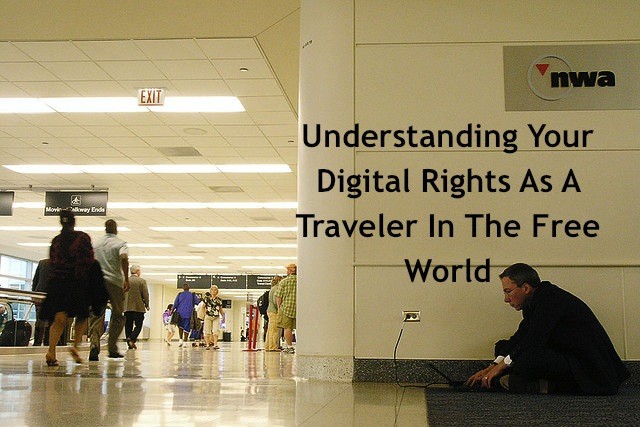
laptop in airport

Maintaining your privacy isn’t about hiding things you shouldn’t be doing, it’s a fundamental human right that is often disregarded in the name of security. You might be thinking, “we’ll, I’ve got nothing to hide” but who watches the watchers – besides, wouldn’t you rather decide who sees your travel photos from Mexico?

“They who can give up essential liberty to obtain a little temporary safety, deserve neither liberty nor safety”. – Benjamin Franklin

copenhagen city centerWhy You Should Care

According to government figures, in the US alone, more than 6,800 electronics devices (mostly laptops and mobile phones) were confiscated, searched, or downloaded for further analysis upon entry into the country since 2009. Roughly half of those searched were US citizens, without probable cause nor authorized by a search warrant. However, all travelers entering the US and many other first-world democracies are subject to the same (lack) of restrictions. Though these are specific examples from the US, many other countries in the free world get around their legal privacy protections by using some version of the Supreme Court authorized “border search exception”.

Basically, this “allows searches of individuals and property entering the United States without probable cause or a warrant.” United States v. Ramsey, 431 U.S. 606 (1977).

You might be subject to a hard drive search the next time you land in London or Sydney and if you’re protecting computer before heading to Beijing, you’ll want to do the same for those places as well.

Your Passwords Don’t Mean A Thing

Even if you’re using one of these free programs to protect your data against thieves and governments, they won’t do you much good if you’re asked to give up a password. In places like New Zealand, Germany, the US and others you might not have expected, refusing to divulge your password can be equivalent to breaking the law and subject you to a fine, hassle, or a flight right back home.
padlock black and white

This Friday I’ll teach you a number of ways to protect your (decent and those spring break college variety) travel photos – even within the 7 days some governments can legally confiscate your laptop…for no reason whatsoever.

scalesProtecting Traveler Rights

Some of you may be reading this and thinking I’m helping terrorists and child molesters fly around the world freely while dismissing world governments’ efforts to protect their citizens. The problem is that often digital border searches and electronic confiscations are done without justification or quite questionably in the free world – much like in places digitally weary travelers tend to focus on like China or Russia for example.

The legal slopes not in your favor as a traveler – more of our lives are on digital devices, and it’s increasingly easy to have your laptop or mobile phone scanned for further analysis after you leave the airport. Tomorrow, I’ll show you how to even the odds against any government that might decide to take your hard drive out for an unwarranted spin.

[photos by: juicyrai (man on laptop in airport), binaryCoco (padlock), hans s (scales)]
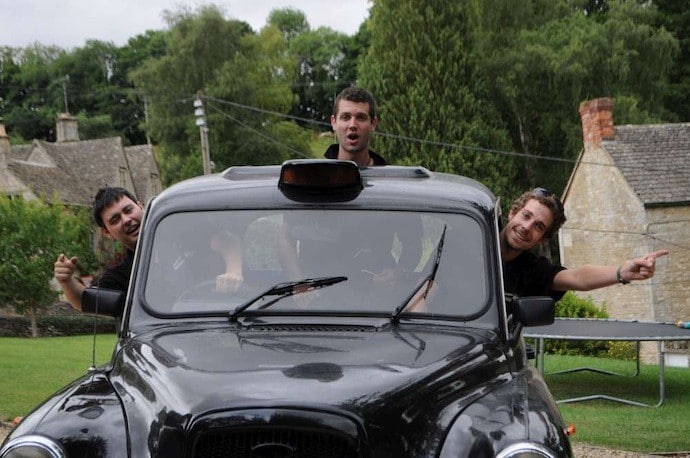
Catching Up With It’s On The Meter: The World’s Longest Taxi Ride

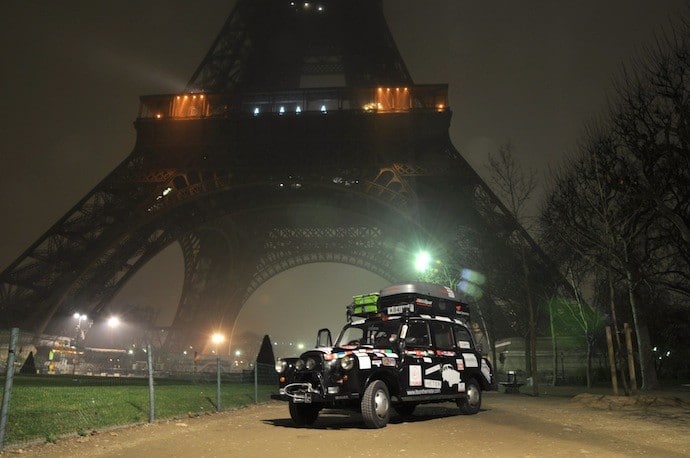
I first heard about It’s On The Meter from Kirsty, in one of the best comments from this past December. Johno Ellison and his two friends are attempting to break the Guinness Book Of World Record for longest taxi journey – in a London classic black cab. Their trip reminds me of The Ultimate Train Challenge I’ll be participating in this fall and I’m hoping to meet up the It’s On The Meter guys somewhere along their path in the next few weeks. Johno was kind enough to take a few minutes to share a bit about the trip which began February 17, 2011.

its on the meter taxi

Whereabouts are you right now?

We’re currently in Geneva, Switzerland after spending the last six weeks driving through Scandinavia, Russia, Belarus, and Eastern Europe. It’s a little strange seeing people on the motorway waving at us and honking their horns and probably thinking we have only been on the road a few days when in reality we’ve covered over 6,000 miles (~9,650 km).

Where did the idea to attempt the world’s longest taxi ride come from?

My team mate Paul was sitting in a taxi going home one night and watching the meter going higher and higher when he thought, “I wonder what the highest ever taxi fare is?”.

He always used to come up with these crazy ideas so we didn’t take much notice at first but after a while Leigh and I got involved and the idea went from a drunken idea to a real project…

its on the meter paris franceHow did you plan the route?

The current record is around 21,000 miles (33,000km) so we knew we had to beat that and we knew we wanted to end up in Australia so we basically sat down for an afternoon with Google maps. We figured that all taxi drivers in the UK never take the shortest route anywhere so that’s how the route ending up going all over the place.

What’s the dynamic of you and your travel companions; how do you plan to get along after so much time together?

We’ve all known each other for about four years and spent a lot of time together so we think we’ll be able to make it to end of the trip without killing each other.

The worst point was actually the few weeks before we left England when we were working twenty hour days trying to get the car ready, sort out the visas, finalize sponsors and sort out a million other things. We had quite few bad arguments but the second we were on the ferry to France on the Launch Day all of our worries just evaporated and everything was forgotten, it was the greatest feeling.

We’ve tried to accept that arguments will happen during the trip and that we’ll have to get over them. We are also Couchsurfing and have friends traveling with us for short sections of the route so the constant injection of new people takes a bit of stress off our relationships with each other.

Any parts of the journey you think might be especially dangerous or difficult?

We have already had to change our route to avoid Libya and northern Africa and are currently keeping a close eye on Syria. It’s a shame because we planned the route specifically because we wanted to see certain places and experience different areas of the world but our cab isn’t exactly inconspicuous so sometimes we have to make compromises.

The other area which may be dangerous is the Iran-Pakistan border close to Afghanistan. However we’re finding more and more that the people who warn us not to go there are the people who haven’t been there themselves; the people who have visited always tell us how great it was and how warm the people are.

Where did you guys get the cab?

We actually got the cab on eBay for £1500 then spent a load of time repairing it, adding new features and getting it ready for the eight month journey. We think it has done about 300,000 miles but the mileometer is broken so we’re not really sure.

You can check out the It’s On The Meter route on their website, and follow Johno, Leigh, and Paul on Facebook and Twitter as well. Johno, thanks again for taking the time and hope to see you guys soon somewhere along the path.

Where To See The Sights And Struggles Of Doha, Qatar

In a nation where more than 75% of the population lives in the capital city, you would think that getting a feel for Doha, Qatar would be a straightforward affair. Developing at a rate unmatched elsewhere in the world yet still in the shadows of Dubai, Doha is a city I’ve struggled to find, yet found it in its struggles. As much as it would like to be, Doha is much more than reflective skyscraper glass and World Cup construction. Rather, Doha is a place to treat your stomach, camera, and lungs by slightly shocking each one.

doha qatar

souq waqif doha qatarStarting With Souq Waqif

The word ‘souk’ – an Arab bazaar – misleads you to believe that one of Doha’s most famous travel destinations is anything close to the modern market is has come to be. Sure, Souq Waqif is wearing an Arabesque veil, but it’s not much cover for the steel construction and freshly dried plaster its shops are made of. Imagine an American strip mall having an “Arabian Nights” theme and you might come up with something close to what Souq Waqif looks like – but you’ll be nowhere near what it tastes like.

1,001 Arabian Nights Bites

The path through Souq Waqif is like eating your way around half the world – Moroccan soup at Tagine, dishes from Yemen, and wonderfully spicy roller coasters of Malaysian curries. You haven’t been to Souq Waqif if you haven’t eaten there. At least several times. Or more.

moroccan tea doha qatar

Nepalese food doha qatarThe Tense Side Streets Of Doha’s Workforce
Over 60% of the people living in Qatar are foreign citizens, mostly coming from southeast Asia to power the machines that are actively building the city. As I mentioned on my night walks along Doha’s deceptive streets, these communities are generally isolated physically and socioeconomically. Both Qataris and immigrants mentioned that living with the other was often an uneasy balance of necessity. Though somewhat intimidating, you should take the opportunity to walk through the Nepalese, Bangladeshi, and other neighborhoods; treating your stomach and wallet at the same time.

You can easily enjoy a meal for less than 10 Qatari riyals (~$2.75) in one of the many ethic restaurants that are filled to the edges after working hours. Your travel budget will thank you while visiting the second most expensive city in the Arab world. I drew quite a bit of attention whenever I walked into one of these smaller places to eat. This actually made it easier to engage people who were curious as to what this (Arab-looking) guy was doing in a neighborhood an Arab Qatari might never eat in.

Great Views And Collection At Doha’s Museum Of Islamic Art

Most museums tend to leave you disappointed; a feeling that’s only amplified the more of them you see. I still go to museums in most of the cities I visit in the hopes of finding a gem and Doha’s Museum of Islamic Art is certainly one of them. Several stories high with an impressive collection of artifacts, artwork, and exhibits from all over the Muslim world, the Museum of Islamic Art also happens to be one of the best places to photograph Doha from.

pearl doha qatar

The museum sits along Doha’s corniche (a close second in my book to Muscat’s version) with different heights and angles to take pictures of the city, Persian Gulf, and the interior of the museum itself.

Using All The Senses You Aren’t Supposed To

It’s not difficult to get stuck on Doha’s concrete forest and glamorous glass in the making, so rather than force your eyes to guide you, take a page from the forgetful traveler’s book. Work with your other senses – tasting the international cuisine and moving away from the lights to give you a flavor of what Doha’s steel buildings are really built upon.

3 Common Personal Deficiencies That Are Valuable Travel Assets

There are several traits many people associate with frequent travelers – excellent navigational skills, a steal-trap memory, with perhaps a knack for organization. The truth is that you can thwart the best intentions of any GPS, forget your middle name on a regular basis, and not know where you’re going until you get there – while at the same time enhancing your travels.

two confused guys

Although some of the following might cause you problems in your day to day existence (forgetting that important client meeting or to pick up your kids from…wait, where did you leave them…?) Traveling is an art of making the most out of anything, including what could be considered weaknesses.

1. A Terrible Sense Of Direction

Being good with directions gets you to where you want to go quicker but getting lost on a regular basis guarantees you interesting and unpredictable routes. Most of my memorable travel experiences have come about because I couldn’t find exactly where I wanted to go. Getting lost not only helps to increase the chances you’ll find a new favorite spot you weren’t expecting, it often forces you to interact with locals. A few hours of trying to find your hostel in central Santiago will have you brushing off your rusty Spanish against all reluctance.

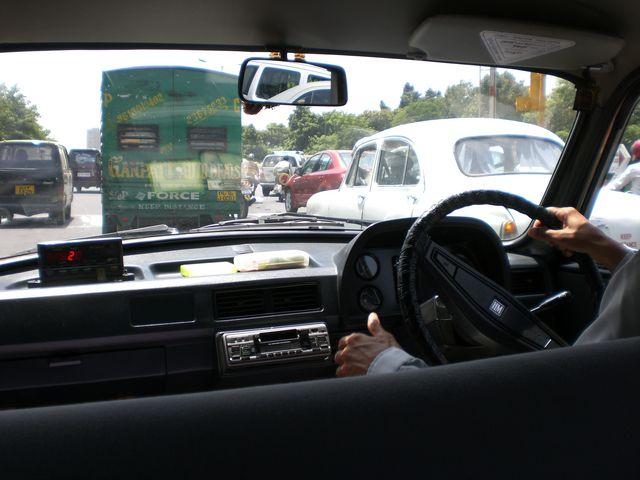
delhi traffic

2. Having The Memory Of A Goldfish

It’s a myth that goldfish have 5-minute memories (rather more along the lines of 3 months) – and having a good memory is not a hindrance in the least. Yet those of you with short attention spans and lazy neurons can take comfort in some research from the University of Chicago [PDF]. Researchers have found those with poor memories tend to have more diffuse attention focus. Simply put, these folks tend to notice things others don’t and be more flexible problem solvers as well. So you might not remember visiting La Moneda Palace quite clearly but can order a lomito backward – in your sleep – with that rusty Spanish of yours.

la fuente alemana

“The advantage of a bad memory is that one enjoys several times the same good things for the first time” -Friedrich Nietzsche

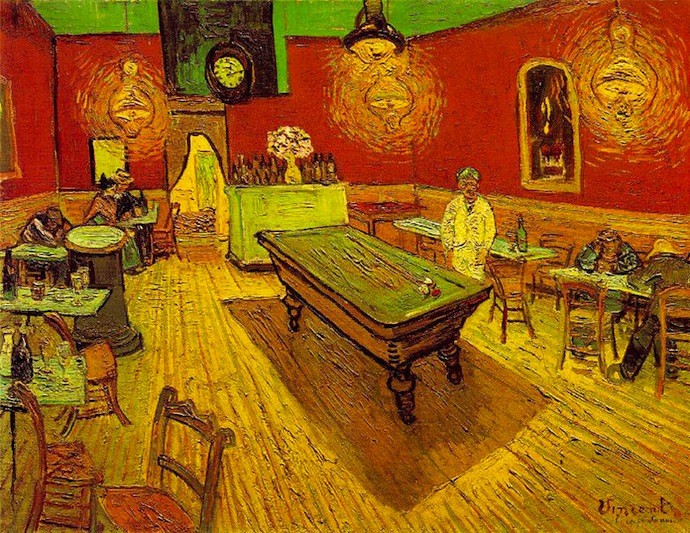
3. Being As Organized As Vincent Van Gogh

Traveling is really much easier than many people imagine or make it to be. I realize that everyone can’t travel but for those who can, doing so is a fairly easy process. Save, travel, and off you go – keeping these 4 things every non-planning traveler should be prepared for in mind. Big or small, you can overcome the obstacles to travel the world, on your terms, by accomplishing your dreams piece by piece.

van gogh night cafe

Being disorganized is a good example of a trait that works against you in an office and many other jobs since it introduces entropy to the system. What makes your work-life less efficient increases the randomness of any trip. Being disorganized lead me to Essouria, Morocco, got me drunk with a group of cab drivers in Argentina, and keeps my backpack on a diet. The less you carry, the less there is to manage.

Rather than try to become more organized, simply have less to organize in the first place. Call it laziness or efficiency, they tend to overlap more often than not.

Don’t Forget To Be Flexible

Much of this might sound like I’m trying to make you us forgetful, disorganized bunch of travelers who can’t read maps feel better but really, it’s an exercise in working toward your strengths. Or, in this case, what might be considered weaknesses in places that are designed to keep you in one place, rather than everywhere you want to be.

[top photo by: JoeBenjamin (two confused guys)]

A Deceptive View Of Downtown Doha, Qatar

downtown doha qatar

Doha, the capital of Qatar, is a a city in the making. For those of you who’ve ever walked the streets of a large city and wonder where and how it came to be, go to Doha to see the entire process before your eyes. There is something being built or totally out of place about every turn around Doha; giving it the essence it’s not nearly complete.

What this photo doesn’t really illustrate well are all of the dark back alleys in between and behind the bright city lights. They take you from modern Gulf architecture overload to slum chic, all within a few footsteps away from the yellow street lamps. The people, mostly workers from southeast Asia (as is common in the region) are, dare I say, guarded. The presence of invisible barriers can certainly be felt between the neighborhoods which can be slightly uncomfortable to walk through at night. I walked as far from the lights as I could, trying to tempt fate to see if those stares might turn into conversation or confrontation, from the groups of young men hanging out into the wee hours of the morning. None such moments materialized, although I did get some answers later that week.

Despite my inclinations in some of the seedier side streets, Doha has a relatively low crime rate, and most of the downtown is alive and accessible to tourists are most hours around the clock. Finding your way around is also particularly easy, since you can see the Fanar Islamic Center (that spiral building on the left) from most angles in town. That also happens to be right next to Souk Waqif, where ever road in town will eventually lead you.

I’ll be writing more about Doha’s invisible walls and manic composition in the coming days, attempting to flesh out a city searching for its identity ahead of a staring role on the world stage.

For those of you who might have recognized this photo, a cropped version was what I used for the banner of The Best City To Visit Travel Tournament 2011 throughout the month of March.

Traveling Around Iraq With Wandering Earl

It’s rare that I travel with anyone but last December I met up with Earl Baron, aka. Wandering Earl, in Arbil, Iraq to explore the northern part of that conflicted nation. I first met Earl in between talks at the Travel Blog Exchange (TBEX) conference last summer in New York City. We quickly realized our fondness of adventure travel and both had a desire to visit Iraq for that very reason – 6 months later we did exactly that.

sulaymaniye iraq

There are few people who tell a travel tale like Earl; his writing is some of the most captivating I’ve ever come across. Of course, having dinner with the Taliban (accidentally), winding up at US Customs with a bullet in your pocket, or having militants steal your car make for compelling content.

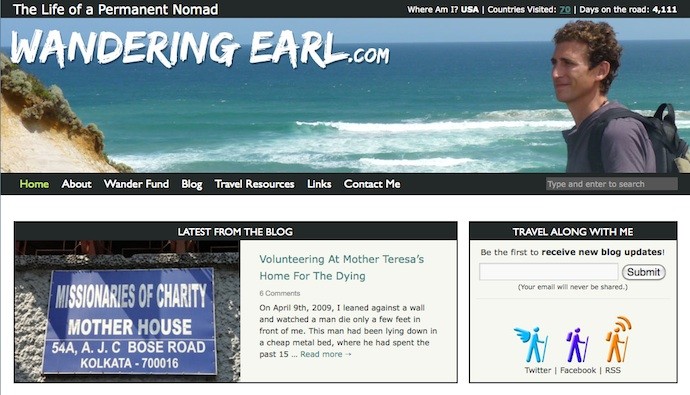
wandering earlEarl’s writing style is personal and there are many of his stories from the trip to Iraq that are well worth reading. I encourage you to take some time, with beer, coffee, or shisha in hand – I don’t think you’ll be disappointed.

Along with those posts, Earl has written a host of others with good information on traveling to Iraq. We’re planning on elaborating on the stories and talking more about this country that took two rather experienced travelers by surprise – in a good way. Those of you who live or will be in Vancouver, Canada during the first part June (right before the next TBEX conference) are welcome to come to a free talk with Earl and I in one of the local hookah cafes (appropriately enough).

The exact date, time, and location isn’t set yet and Earl might not even know I’m writing this. Either way, if you’re interested, feel free to shoot me an email or leave a comment below and we’ll be sure to let you know when things get set.

About Anil Polat

foxnomad aboutHi, I'm Anil. foXnoMad is where I combine travel and tech to help you travel smarter. I'm on a journey to every country in the world and you're invited to join the adventure! Read More

YouTube Twitter Instagram Facebook

Image Map

Image Map
10 Shares
Share
Tweet
Pin