Blog - foXnoMad

Free Award Wallet Upgrade Code For First 50 foXnoMad Readers
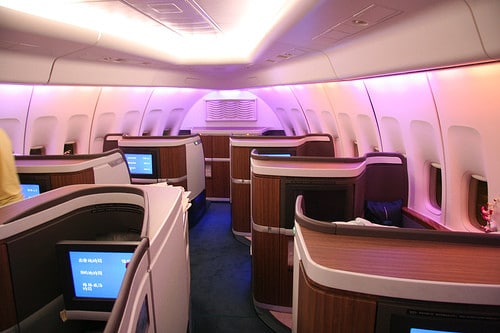
cathay pacific first classOne of the best sites to manage all of your frequent flyer and reward accounts in one place, Award Wallet, is offering a free upgrade to Award Wallet Plus for the first 50 foXnoMad readers using the promotional code: “foxnomad”.

Award Wallet is free, and Award Wallet Plus has no set price (you name your own), but new and existing users can now upgrade for a number of enhanced features.

Sign-Up To Award Wallet Is Free

Award Wallet is my preferred manager for all my frequent flyer accounts since it not only tracks them, but alerts me when any are close to expiring, and can be used for hotel, credit card, and other reward programs as well. One of the major advantages of upgrading to Award Wallet Plus is getting expiration notices on an unlimited number of accounts (the basic version limits you to 3).

  • Some of you had a few questions about Award Wallet security, which creators Todd Mera and Alexi Vereschaga were kind enough to answer.
  • Sign up for Award Wallet here.
  • Use the promotional code “foxnomad” to get a free upgrade to Award Wallet Plus. (Click My Account > Upgrade To Award Wallet Plus > Enter Price $1.00; you won’t be charged > Add Promotional Code)
  • Award Wallet also lets you keep track of miles for other people like friends and family (i.e. your parents who have totally lost track of theirs).

Those of you using Award Wallet already have a great digital tool to track your miles, but there are still some more ways to bump up your frequent flyer earning up a notch.

award wallet

Not Using Frequent Flyer Miles?

One of my 10 pieces of advice for backpacking novices and travelers in general is to get signed up with a frequent flyer program. Even if you don’t fly too often, most of the miles you earn will be on the ground anyway and you can easily get a free upgrade with less than an hour of your time.

The promotional code “foxnomad” is good for the first 50 people to use it (newsletter subscribers got a head start yesterday). However, even if you don’t get a chance to use the code, the basic version of Award Wallet alone is a very good way to keep track of, and encourage yourself to use those frequent flyer miles.

[photos by: Richard Moross (Cathay Pacific first class)]

La Moneda Palace In Santiago, Chile

la moneda presidential palace santiago chile

The Palacio de La Moneda (Mint Palace), has two large open spaces; a small pool and fountains in the front (Plaza de la Ciudadanía), and small park in the rear. The former mint (hence the name), was built in the early 1800s and since 1952 is where the presidential offices are located. There isn’t much to do at the Mint Palace itself, although you can catch a changing of the guard at 10am on most days. Otherwise you can head down to the free cultural center underneath La Moneda and take a look at various art and history exhibits.

Santiago is a wonderful city for strolling and from the Palacio de La Moneda you can easily get to some other popular touristic areas like Plaza de Armas. In fact, most of Santiago’s sights that travelers might be interested in are within walking distance or quick metro ride of each other.

You can see a few more of my pictures from Santiago here.

The Difference Between A Gap Year And Career Break

This is a guest post by Sherry Ott, a refugee from corporate IT who is now a long term traveler, blogger, and photographer. She’s a co-founder of Briefcase to Backpack, a website offering career break travel inspiration and advice. She also runs an around the world travel blog writing about her travel and expat experiences at Ottsworld. She is one of the driving forces behind Meet, Plan, Go! events across the country to inspire more people to get out and travel.

There are many terms for extended travel:

  • Vagabonding, Round-the-World (RTW), Travel Sabbatical, One Year Off, Backpacking, Location Independent, Extended Travel, Gap Year, Career Break.

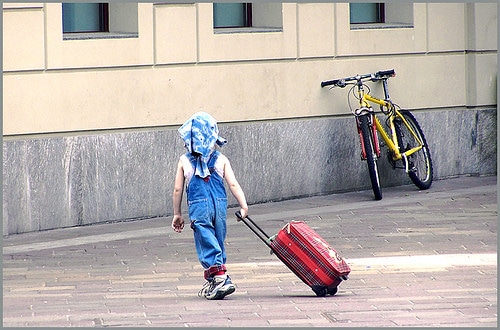
kid with rolling suitcase

They all kind of mean the same thing…don’t they?

I think not.

Let’s take Gap Year vs. Career Break; in my opinion these are not interchangeable.

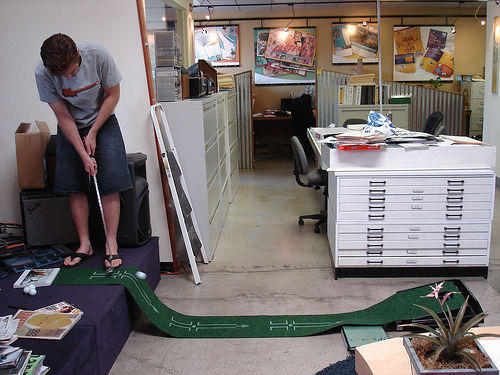
golf in cubicleWhat’s The Difference? – The Foundation
If you are taking a career break that implies you actually have a career to break from. If you are 18 and just graduated high school or 21 and graduated college, then you don’t have a career; instead you take a gap year and go backpacking.

For those of you who are commuting to work everyday sitting in a sterile cubicle answering emails and attending conferences, then you have a career; and you’d probably like a break from it!

The word ‘career’ actually implies progression so for that reason I would say the average career breaker is someone who’s been in their job a while and is in the age range of 27 to 47.

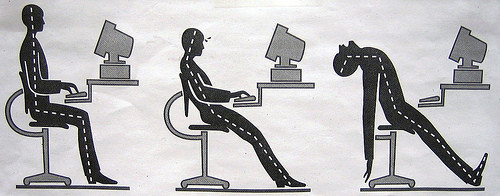
sliding out of office chair

Style of Travel

Gap year travel tends to be about budget backpacking. The backpacking youth of the world stay in hostels, bus station floors, Couchsurf, and party their way through Europe or Thailand. While the career break traveler is also on a budget, it’s a bit more comfortable. One good thing about staring at those cubicle walls for years is presumably you may have some savings; at least more than you did when you were 18. Career breakers also use hostels, but they can also splurge more frequently on a nice dinner, hotel, or a tour.

Itinerary

Whereas the Gap Year traveler is more likely to travel and socialize their way through countries playing beer pong; the career break traveler is more likely to include some sort of educational activity in their travel itinerary. They may take language classes, and most of them build volunteering into their plans.

couple at grand canyonTravel Partners

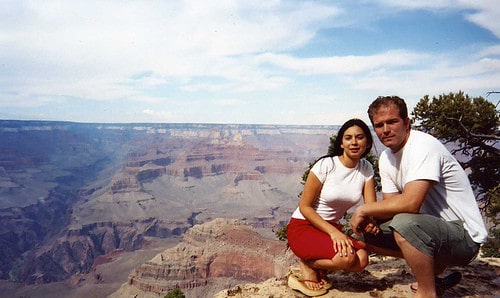
Gap year travelers tend to travel with a friends; or meet friends along the way and travel together for a while. Many gap year travelers even start relationships while on the road. However a significant number of career breakers are couples.

Frequently couples who are burned out on working 9 to 5 and are looking to simplify their life will seek out a year off. Some couples even do career break travel as an extended honeymoon. In addition, you will find full families out doing career break travel; this is more rare, but it certainly happens.

Preparation

Here’s where the real difference lies. Gap year travel preparation is very different than what a career breaker goes through. Typically a career breaker has to consider the fact that they are deeply entrenched in their mid-life pursuits; meaning they have homes, apartments, significant others, cars, pets, kids…and careers. This ‘stuff’ keeps them tied down to their jobs, so breaking away to do career break travel is significantly more difficult than taking a gap year after college.

Because of these differences, career break travel preparation, both mental and physical, require some added thought and hurdles to get over. However the hurdles of career break travel are surmountable.

meet plan goMeet, Plan, Go!

If you are a want-to-be career breaker and need some extra inspiration, then come meet travel experts who have successfully taken a career break and overcame those hurdles.

  • On September 14th, Briefcase to Backpack and Three Month Visa are holding free career break travel events across 13 cities. Meet, Plan, Go! is bringing together experienced extended travelers with those who have only dreamed of traveling to help inspire them in person.
  • In addition to offering inspiration at these events, they are also offering resources to help get them started. GAP Adventures is even giving away a trip to Peru and GeoVisions will be giving away a volunteer trip abroad.

briefcase to backpackView the Meet, Plan, Go! website and sign up for the newsletter for more details! If you can’t make it to a Meet, Plan, Go! event then check out Briefcase to Backpack where we offer travel advice and inspiration to corporate Americans planning a career break or sabbatical year round!

Thank you very much Sherry for this guest post highlighting the differences between gap years and career breaks. For those of you interested in taking some time off from your career to travel, look for a Meet Plan Go! event near you on September 14th or head to Briefcase To Backpack for more information on getting started. You can also follow Sherry on her own travels around the world at Ottsworld, one of my favorite travel blogs.

[photos by: firma (kid with rolling suitcase), ryarwood (golf in cubicle), joelogon (sliding out of office chair), airtrent (couple at Grand Canyon)]

What Type Of Luggage Do You Travel With?

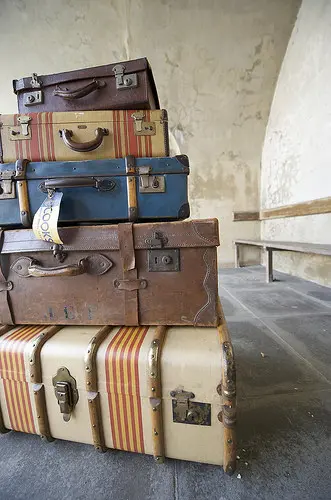
antique luggageI was thinking of titling this post, “what type of backpack do you carry” (and I likely will ask this in a future post), but remembered in your comments that a backpack isn’t necessary to be a backpacker.

So, I’m curious, what type of luggage do you typically travel with, whether it be a backpack, wheeled suitcase, or something else?

Right now I’ve got a Kelty Redwing 3100 that I use, a Wenger Synergy Backpack that keeps proving its usefulness to me, and an REI Travel Zip that fits inside of that. Please let me know what you travel with and I’ll share some of the responses in an upcoming post. I suspect you’ve got an eclectic set of luggage styles and look forward to hearing what they are – as well as a bit about what’s inside too.

[photo by: geishaboy500]

4 Things Every Traveler Without A Plan Should Be Prepared For

Some travelers shun plans and wing every part of their trips – and you can continue to do so, while focusing your limited plans, to have more time for your impulsiveness. If you’re a traveler without a plan, these 4 minimal-planning-required preparations will save you money, time, and often a headache or two.

1. Getting From The Airport To Where You’re Staying

It can be fun to try a new or challenging mode of transportation when visiting a new city. A simple Google search or phone call to your hotel or hostel though can give you an idea of how much it will cost, what your options are, how long it might take, and what you can expect. It’s also a good idea to have an address or some basic walking directions with you in case you don’t get dropped off quite where you expected.

airplanes waiting at gate

2. Basic Currency Conversion

Again, this is where some simple Google hacking can come in handy. Find out how much your local currency is worth at your destination and what the symbol for that currency is. The US dollar sign ($) and variations on the British Pound symbol (₤) are common and can be confusing if you’re unaware. Along with the symbol, find out some common costs for things you might typically buy (bread, soda, bottle of water, etc.) to get a better idea of how much those bills are really worth.

various currencies

3. Learn A Few Words

You don’t need to know an entire language or every bit of the local jargon to visit a new region or country, but not knowing (or using) any thing can make you feel quite the outsider. It might also help you out when bargaining or perhaps trying to make new friends so get started with these 4 word combinations you shouldn’t neglect to translate and make use of one of the many free online language resources.

girl with mouth open

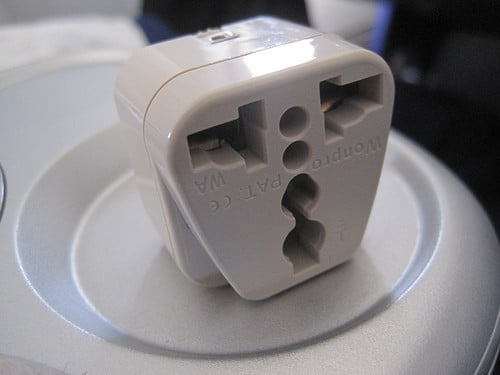
4. Buy A Universal Adapter

Incredibly cheap, universal adapters convert most any electronic connection to another. You don’t want to be bumbling around for electrical socket connectors, and won’t have to with a universal adapter (best get two for a backup). Purchasing plug adapters from airports are expensive and locally difficult, since they’re often designed to work outside of that particular country.

international outlet converter

Create The Structure At Home, Improvise On The Road

By setting up a even the most vague road map of your next trip before you leave, you’ll see and do more even with a minimal planning style. Rather than transforming yourself into a good planner, make your laziness more efficient.

These minimal preparations will hone your travel stress, especially if planning stresses you out. No matter what your travel style though you can harmonize your planning and spontaneity to get just the right amount of preparation that makes you comfortable while still saving you money and time.

[photos by: Visualist Images (airplanes at gate), bradpio (various currencies), tea.. (girl with mouth open), Wayan Voa (international plug converter)]

How To Get Around Flaky Internet Connections While Traveling

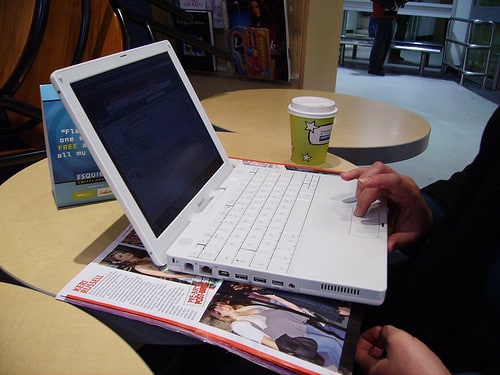
Internet connections can be unreliable when traveling and while it can be an inconvenience, more and more lack of a good wireless connection means missing out on work, contact with family, and figuring out just what to do on your short trip to Istanbul. In most cases however you can plan to stay connected to those barely-there signals and find out where Internet might be hiding right under your nose.

laptop in coffee shop

Research Before Your Trip

You’ll need help yourself out here, so first thing’s first. Check to make sure your hotel or hostel has a wi-fi connection, preferably free. Most hotels will say they offer Internet, which usually means a “business center” or pay-by-the-hour wireless. Also, many hostels tend to say “wi-fi” but be sure to see if it’s only in the lounge area or in each room as well. Typical wireless routers give you a range of roughly 46 meters (~150 feet) indoors and any physical barriers (like walls) will reduce that even further.

  • on the lookoutAsk – Don’t be hesitant to email the hostel or your Couchsurfing host to find out exactly what the digital environment is like. The review section of most booking sites will also have good information.

  • Scope For Connections – Use WiFinder or WeFi to find out if there are any buildings nearby the place you’re staying that might have free wi-fi.
  • Increase Your Range – Extend your wireless radius with long-range USB antenna, a tool that has saved me on many occasions. (They can also be used to crack encrypted wireless networks as well.)
  • Find – Hidden wireless networks using NetStumbler.

Finally, if you do get stuck at a hotel that charges for wireless Internet access you can try looking around the walls for an Ethernet jack (you’d be surprised). These connections are expensive to restrict, so if you’ve got an Ethernet cable (an inexpensive yet essential travel gadget) you’ll be good to go and can even set up wireless connections for your travel mates.

Make The Most Of What You’ve Got

man sticking out tongueSo you’ve got that tiny wireless signal, taunting you with an Internet connection every few seconds. You’re close but just not enough to get online for any meaningful amount of time so try these minor changes be just efficient enough.

  • Prioritize Your Connection – When you do connect to a wi-fi signal, all of your open applications are going to try and get a piece. Instead, make the most of what you’ve got by shutting down bandwidth hogs (i.e. Skype) and using only one Internet-needy application at a time.
  • Find The Wireless Router – If the wireless router – they look like this – is positioned in the left side of your hotel hallway (look along the edges of the ceiling), you’ll want to sit on the side of your hotel room that’s closest.
  • Move Other Nearby Wireless Devices – Your iPhone, wireless mouse, and other radio-enabled devices should be moved away from your laptop. Turn off the iPhone, use your laptop’s trackpack, and don’t use any wireless devices right next to your computer.
  • Use Google Gears – Many of you using Gmail, Google Calendar, or Google Reader can use all of these services offline. (Go to Settings > Offline > Enable Offline Mail For This Computer.) You can read and respond to emails (which will be sent when there’s a connection), check your RSS reader, and review your schedule all without the benefit of a good Internet connection.
  • Try To Get Something For Nothing – Let’s just say you wanted to play around with getting hotel wireless without paying for it, but just sayin’.

You should also try and avoid mirrors – it’s a long shot but these metallic surfaces can reflect wi-fi signals so try adjusting to various angles to see if you can get a stronger signal (tin foil hat optional).

typing fastTake Initiative And Become Proactive

Often part of a flaky connection means you can see a wi-fi network, have a strong signal, and yet nothing happens. You can become your own traveling tech support by doing what the hostel or hotel may not be able or willing to do.

  • Reset The Router – Many hostel routers don’t have passwords, or use the default. You can reset most routers very easily from your own laptop with this technique.
  • Skype Credit To Access Hotspots – Many wireless hotspots now accept Skype credit if you have any. Launch Skype to find out, it will automatically tell you if it’s possible with any nearby hotspots.
  • Tether Your Mobile Phone – Your “jailbroken” iPhone or Android phone can be used as Internet connections for your laptop. If you’re using this method outside of your home country, get a local SIM card otherwise you might pay massive data roaming charges.
  • Renew Your IP Address – Here’s how on Windows and Mac.

Try as you may, despite your best efforts you might not be able to get online or connect to that flaky Internet connection. Rather than make it a complete bummer, turn off your wireless card to extend your laptop battery and try to connect again late at night or early in the morning when less people are likely to be online. There just might be enough bandwidth for you then to send out those remaining emails and let mom know you arrived at your destination.

[photos by: Mr Munnings on Tour (laptop in coffee shop), CB Photography (on the lookout), eloquentlight (man sticking tongue out), John Flinchbaugh (typing fast)]

About Anil Polat

foxnomad aboutHi, I'm Anil. foXnoMad is where I combine travel and tech to help you travel smarter. I'm on a journey to every country in the world and you're invited to join the adventure! Read More

YouTube Twitter Instagram Facebook

Image Map

Image Map
10 Shares
Share
Tweet
Pin