Blog - foXnoMad

Discovering The Hidden Europe With Author Francis Tapon

francis taponFrancis Tapon is the first person to do a round-trip hike on the Continental Divide Trail and has backpacked over 20,000 kilometers since he made a life-altering decision after earning his MBA from Harvard Business School. Recently Francis spent 3 years visiting Eastern Europe’s 25 nations and has released the ebook version of his upcoming hardcover, The Hidden Europe: What Eastern Europe Can Teach Us. Francis was kind enough to send me a copy and I’m glad he did.

hidden europeThe Hidden Europe: What Eastern Europeans Can Teach Us

amazon buy now

Eastern Europe has something of a travel-image problem and often is seen as bland or a gray spot on the map. You may be wondering if a travel book about Eastern Europe could be interesting beyond a superficial level – and I was skeptical too – as it turns out, The Hidden Europe is one of the most interesting books I’ve read in a long time. Beyond interesting, the book is ultimately about a journey, one with a very specific purpose, to learn why engineers are the Lady Gaga of Hungary and what we can learn from the least serious Muslims in Europe. (And no, he’s not talking about Turkey.)

Francis is able to weave humor, history, and himself in such a way throughout the pages that you don’t realize just how much information you’re absorbing. Over each of the 25 chapters you feel as though you’re getting to know individual Eastern European countries (with some you might not expect, like Finland) as personal friends.

The Hidden Europe is extremely detailed, incredibly well-researched, and in no way a “things to see in Bulgaria” type book. Francis works from various angles, through the nerdiest country – take a guess – and details the lessons we can all learn from their tax structure, for instance. The facts inside The Hidden Europe aren’t of the “oh, that’s interesting” type but more of the “wow, I had completely no idea” variety, over and over again. And the experience doesn’t stop there, Eastern Europe’s influence goes well beyond its borders. The Hidden Europe: What Eastern Europe Can Teach Us can help you learn some of its finest lessons.

The Hidden Europe: What Eastern Europe Can Teach Us ebook is $7.99 and available now. The hardcover will be released on December 12, 2011 and is available for pre-order on Amazon.com. (Francis Tapon will also be donating 15% of the royalties to 3 non-profit organizations outlined in the book, including Wikimedia Foundation and Kiva.org.) I can’t recommend this travel book enough, it’s a wonderful read.
How To Get From Your Desk To All The Places You Want To Travel

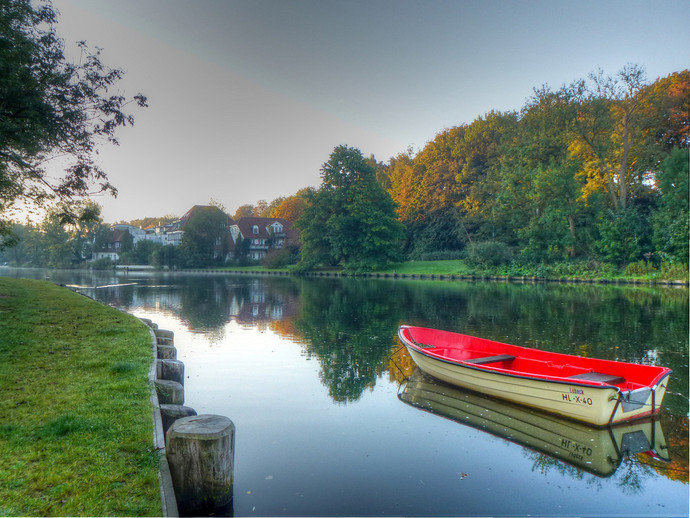
a boat on the trave river germany

Sometimes the distance from your office desk to a place you’ve been dreaming about, like Spain, can seem further than the moon. Sure, you want to go places but how do you actually get from that desk you’re reading this from to those far-flung destinations? It’s easier than you think and it’s not your wallet, family, or job that’s stopping you.

lubeck street germanyNarrow Down To Get Out Of Town

The hardest part psychologically of any task is getting started; yet ironically, that’s exactly the best way to combat procrastination. Sounds quite easy but you’ll need to create short, artificial deadlines to get yourself moving. When it comes to travel, these are the first fun steps to overcoming your mental obstacles.

  • Where do you want to go? Everywhere isn’t an acceptable answer, even I had to define that for myself.
  • Make memorable lists. The average human short term memory can only hold 5-9 items at a time and we tend to chunk items into groups of 2 or 3. A short travel list (and short lists in general) help you stay focused and let you visualize your traveling goals – a tactic that greatly improves your problem solving skills according to Penn State University [PDF]. Pick 3-5 countries or cities and we’re on to the next phase.
  • Your death is not an appropriate deadline. Pick a better time frame than some vague concept of a “bucket list” and then shorten it by 25%. Much like backpacks, our plans tend to fill all of the time allotted for them.

You now know roughly where you want with have a timeline for when – putting you about 90% closer to actually hopping on that bus, plane, or train. To increase your chances of success further, tell your friends the specifics you’ve come up with. Peer pressure is a powerful motivator for a social species like ours and using Jume.in you can share your goals and progress with friends online.

beer in rhodes greeceStop Convincing Yourself You Don’t Have Enough Money
Our brains are frightfully biased and we tend to only see the information that confirms we’re right. Think you don’t have enough money to travel? You’ll probably convince yourself just that while smoking a cigarette before heading to the mall to buy a new pair of shoes you don’t need. Two tactics from above will help us get over that monetary hurdle – getting some actual costs and chunking the total into short goals you check off along the way.

Traveling isn’t nearly as expensive as you may think it is. Try flying in the off-season, staying in a hostel, and ditching these 7 things for boosted savings.

Wait, I’ve Got A Job!

Well, good for you! Jobs typically pay us in stuff called “money” which can be exchanged for cool things like flying in hot air balloons. Having a job generally helps you travel due to disposable income it can provide you with. That said, it might be a good time to ditch that job altogether with a career break you can put on your resume to get a better job when you return. Those of you in the United States can get personal peer pressure (the good kind) with the Meet Plan Go! events happening across the country on October 18th.

Only You Can Do What’s Due

Digital assistants like Remember The Milk can keep you focused and get you traveling by tracking your planning-saving-traveling process but only you can put those tools to use. National Geographic’s travel photos of the day can keep you inspired on those long days at the office before a trip and Boss Key can make you seem more productive than you really are.

Just don’t slack on yourself or the future. Traveling is enlightening. And nobody returns regretting having seen the world.

8 Days In Fethiye, Turkey

fethiye harbor turkey

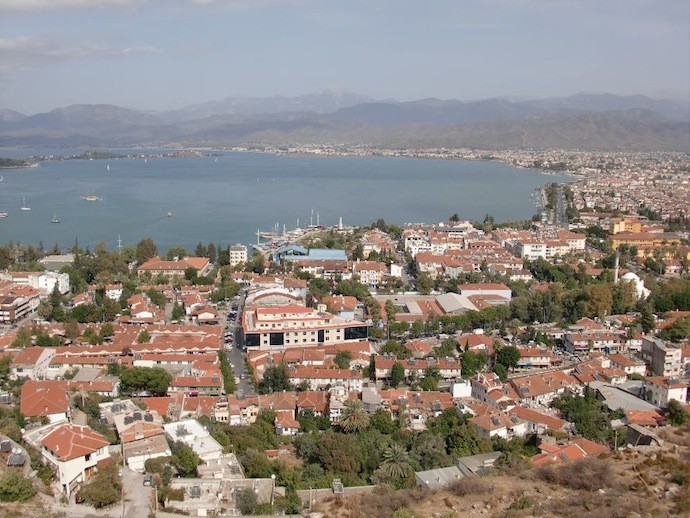
The place where the god Apollo supposedly fell from the sky, the start of the Lycian Way, and home to some of Turkey’s most famous beaches, Fethiye isn’t your typical resort town. You could treat it like that, using it as a brief stopping off point on a boat tour, then jetting off to the next Turkish Riviera stop.

Fethiye is different. I spent most of the past winter there, using Fethiye as a hopping off point to (relatively) nearby destinations like Oman and Bulgaria and came to greatly appreciate why it’s not Bodrum or Antalya. And to be frank, why it’s so much more interesting than either. Even if you took away Fethiye’s famous beaches it would hold its own as a major tourist destination for a large range of travel styles. This city of 70,000 on the southwestern Mediterranean coast, much like a good tan, takes time to soak in properly.

Markets For Shopping, Fish, And Dinner

The neighborhoods around Fethiye have their fair share of markets but the two I frequented most are Fethiye’s fish market in the center of town, and the Calis market nearby. Calis, a strip of beach about a 15 minute dolmus ride (at ~1.50 Turkish lira) away, has a large produce market set up every Sunday for shopping, strolling, and shooting photos.

calis fethiye pazar

The Fethiye fish market has an organized feel amplified by the brick and mortar restaurants surrounding the fresh seafood located in the small center square. Chances are if you’re visiting Fethiye, you won’t be lugging a sea bass (“levrek”) back to your hotel room, but luckily for you the surrounding restaurants will cook it up for you. The basic procedure is sit down at one of the nearby restaurants, let them know it’s seafood you want, then head over to the center square with fish laid out to pick exactly what you want to eat. Throw in a kilo of prawns and drink raki like a Turk so you’re in for leisurely evening of food over conversation.

kayakoy fethiye turkeyVisit The Ghost Town Kayakoy

Less than 10 kilometers from Fethiye is the abandoned (now museum) town Kayakoy. What was once a small Greek village of about 3,000 is now hills of empty dwellings deserted after a population exchange between Turkey and Greece around 1922. Wandering around parts of Kayakoy is free but the small fees to visit both the large Catholic church in excellent condition and library standing on top of one of the highest hill peaks are worth the views.

Finding Saklikent, The Hidden City Gorge

The second largest in Europe behind the Verdon Gorge in France, Saklikent runs about 20km long with a 4km hiking trail (excluding in winter). Its 300 meter deep canyon created by water erosion can also be viewed, dipped into, or ridden over via white-water raft. Getting to Saklikent from Fethiye is easiest done in my opinion by rental car as it gives you the opportunity to stop and take photos along the way as you enter the gorge area.

Though if your sense of direction is anywhere near as terrible as mine is you’ll want to get good directions beforehand. The “I’ll figure it out along the way” method failed for me several times before I switched to more reliable “do anything but listen to myself” navigation system.

telmessos theater fethiye turkeyHow About That Ancient Theater Just Sitting There?

The number of large Lycian, Roman, and Greek ruins simply laying around Fethiye is a sadly hilarious sight. It’s almost like they’ve got too many ruins to bother taking care of, the archeological equivalent of Kanye West losing a diamond earring or Silvio Berlusconi misplacing a mistress. In fact, most of the people in Fethiye hadn’t realized that many of their homes were sitting right above one until an earthquake in 1959 and excavations in the early 1990s uncovered the Telmessos Theater.

If the Telmessos Theater were in many other countries it would have been restored and would most certainly have a fee to enter. Fortunately for your budget the Telmessos Theater is free, sitting just behind the Fethi Bey statue facing Fethiye’s harbor.

12 Islands Or The Budget Boat Tour Taxi

Practically all of the boats lined up along Fethiye’s harbor offer a 12 island tour hopping for the better part of an afternoon to the local lagoons and snorkeling sites. Typically lunch is included and the rates vary around 20-30 TL though it might take a bit of Ferengi bargaining to get there. The poor person’s boat tour is the 5 TL water taxi between Fethiye and Calis beach. Sure you won’t go to islands or get a meal but it’s a relaxing 20 minute boat ride with scenery on your way to new sands.

fethiye boats on stilts

Still Dead Seas, Lycian Ways, And More Fethiye Resources

One of the top walking trails in the world, the 509 km Lycian Way is an ancient travel route that follows Turkey’s Teke peninsula along the Mediterranean Sea – a route that happens to cross near Oludeniz and its well-known Blue Lagoon. (But I won’t hold it against you if you simply catch a mini-bus there.) You can still work your legs out by climbing the stairs of these Lycian Amyntas rock tombs then ascending further to catch the views from Fethiye Castle.

To get even more insight on what to see and do around Fethiye you can check out what I consider the best resource online for the area, Turkey’s For Life. That travel blog, written by my friends Julia and Barry, is continually updated, detailed, and easily accessible via Facebook as well.

And there is a lot travel “stuff” to sort through in this little corner of Turkey’s coast that’s been growing in popularity with tourists over the past 20 years. Though cast your net a bit wider to Santa’s house or Myra’s theater and you’ll see how any 8 days in Fethiye could turn into a trip much, much longer.

The Mafia Beginnings Of Las Vegas’ Most Successful Failure

las vegas blackjack table

Throughout its short history as a city beginning in 1829, a lot of people have bet on Las Vegas and lost. Beginning with the Southern Paiute native peoples’ displacement during the mid-1850s, the Mormons tried their hand around the same time in an attempt to make Las Vegas a refueling destination for western travelers. That idea lasted 2 years before the environmental hardships created enough tension to split up the inhabitants.

It wasn’t until Benjamin “Bugsy” Seigel, a Genovese crime family associate, was lured to the area around Las Vegas in 1937. Seigel was originally sent to there to create illegal entertainment opportunities for the thousands of workers building the Hoover Dam in 1934. That was a much riskier venture than Seigel preferred, rather deciding to use Nevada’s legalized gambling laws to create a lucrative, legitimate business front.

las vegas airport terminal

five families book  Five Families: Rise, Decline, & Resurgence of America’s Mafia Empires

buy from amazon

The Great Depression and World War II both created the economic incentives for Nevada to further liberalize its gambling laws and gave Seigel the momentum he needed to seek investment from various mob bosses. Motivated by greed, the investments by Charlie “Lucky” Luciano and others were huge, topping out around 6 million dollars. And Seigel made sure to spend every cent of it on his casino The Flamingo. Although the old adage goes you can’t cheat a cheater – that’s exactly what happened to Seigel. Organized construction workers ran up costs nearly 10-fold mostly by not delivering supplies but making it seem as they though they had. Unions, being manipulated by other crime families, went on strike to delay construction or simply be used as bargaining chips.

It also turned out that Seigel was stealing money from the investments he had received, quietly stashing some of it away in foreign banks. When investors found out – it was the financial success of The Flamingo that would determine Seigel’s life. In a rush to get The Flamingo open, Seigel neglected to finish the hotel, but threw one of the most expensive grand openings in the world. Celebrities chefs, actors like Clark Gable, and entertainers were brought in from around the globe.

bellagio casino las vegas interior

The press was incredible – the stars were the biggest – but nobody else showed up. It was right after World War II and few people had the expendable cash to spend. And the celebrities couldn’t stay at The Flamingo since there weren’t any rooms.

las vegas strip

Approximately 6 months later however, the glamorous press coverage along with a rapidly improving economy made The Flamingo a gold mine allowing Seigel to payback nearly a quarter of the loan. By that time though, he had stolen too much and made too little. Bugsy Seigel was killed by gunfire in his home on June 20, 1947 – just 5 years before 10 more casinos opened and the Las Vegas strip was born.

Much of this Las Vegas history is covered in great detail in the book Five Families, a fascinating read about organized crime’s relationship with the United States over the 1900s.

5 Ways To Take Better Sunset Photos When Traveling

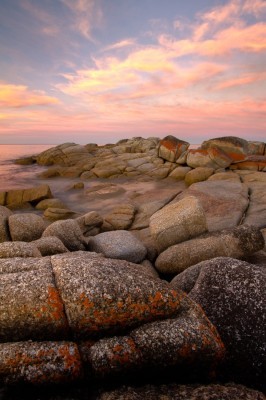
sunset Tasman Sea, Bay of Fires, AustraliaThis is a guest post by Darin Rogers, a freelance photographer and writer who specializes in culture, travel, and architecture – with a bit of everything else thrown in for good measure. Darin sent me his latest ebook, Capturing The Journey, a wonderful primer to making your travel photos better using the techniques that are second nature to photographers and shares some sunset specifics with us today. All of the photos in this post were taken by Darin.

Sunsets are one of the most photographed subjects on the planet. And for good reason. They are pretty, often made up of colors not commonly seen otherwise on a daily basis in the natural world. But because they are so photographed, sunsets have become a bit of a photographic cliche. Although every sunset is unique, it can be a real challenge to capture them in a unique way.

It’s difficult to completely escape the cliched aspect of sunset images, but here are 5 things you can do to improve your odds of capturing something interesting.

1. Look Behind You

We tend to go through life moving forward.  Biologically, much of this comes from our physical makeup with our feet pointed forward and eyes in front of our heads. We don’t spend a lot of time looking behind us (or above us), unless of course we’re being chased. Sometimes, however, the best things really are behind you. And this can be true of sunsets. The sun may be setting in front of you but maybe it’s those clouds behind you where all the visual action is happening, or, importantly, where there just might be a more interesting composition.

2. Make Use Of Leading Lines

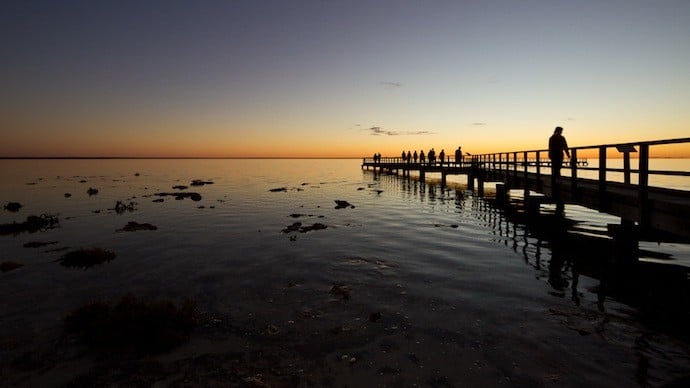
Not familiar with the concept of leading lines? Well, they are elements within your image that are used to compose and draw your viewer into the image. Notice in the first example below how I’ve used the line of the boardwalk, and to an extent the rocks on the left side, to give your eye a ‘path’ to follow into the image. This is a classic way to engage the viewer.

sunset hamelin pool australia

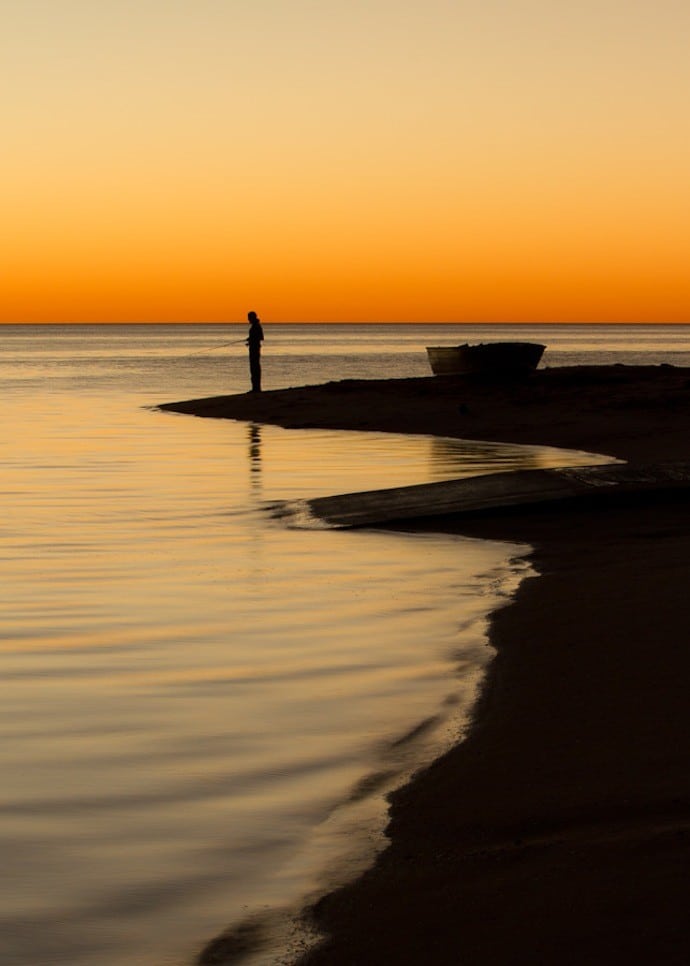
In the second example, see how the lines of the beach ultimately draw you to the fisherman and boat in the distance?

sunsire at monkey mia australia

Monkey Mia, Western Australia (Technically this is a sunrise, but the concepts are the same.)

3. Look For The Story

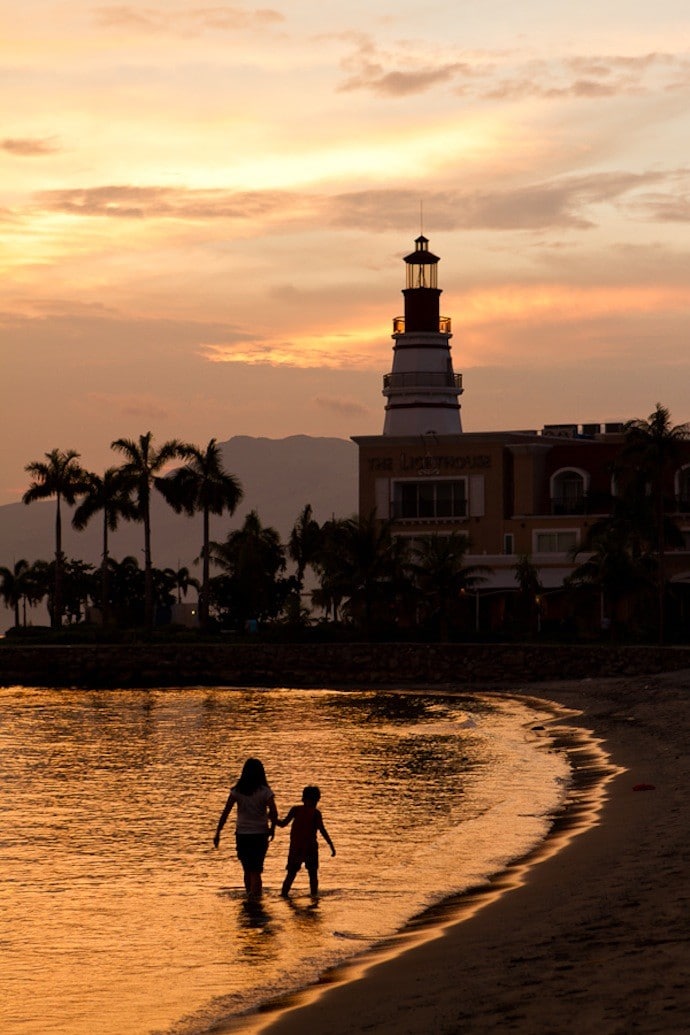
A pretty picture is, well, just a pretty picture. Instead of simply a static image, what kind of story can you tell? Is there something going on around you that you can incorporate into the image to provide some interest for your viewers, make them think or ask questions? This is possibly the most important tip I can give. Again, it’s about engaging your viewers.

sunset subic bay philippines

Subic Bay, Philippines

4. Look For Silhouettes

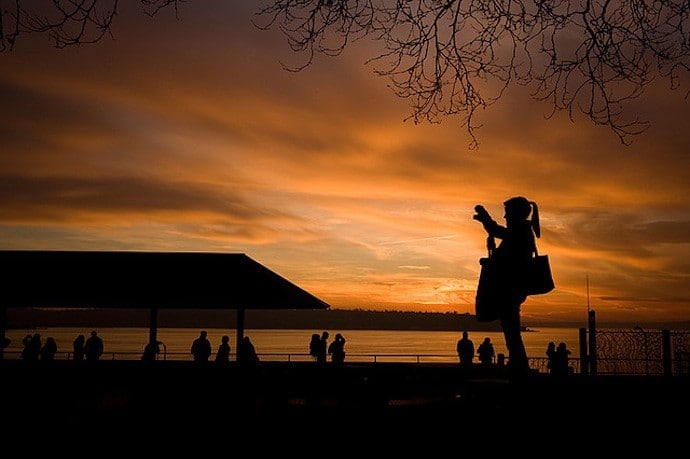
Sunsets are great times to look for and make use of silhouettes. Silhouettes often come about naturally when including objects in sunset photos, but if you keep your eye and mind open, you never know what less obvious idea you might come up with. Many things can make great silhouettes, especially if they are recognizable or create interesting patterns. Trees are often good subjects for silhouettes, particularly in winter when all the leaves are gone.

Sunset Silhouette Steinbrueck Park Seattle USA

Elliot Bay from Victor Steinbrueck Park, Seattle, USA

sunset mangrove Puerto Galera Philippines

Lone mangrove, Puerto Galera, Philippines

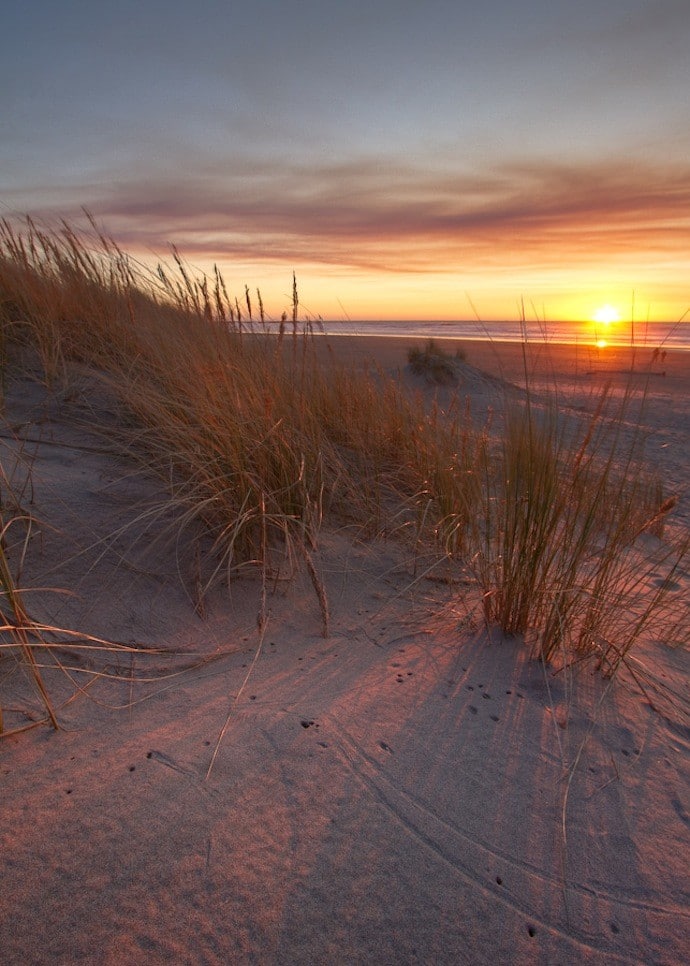
5. Place Something In The Foreground

You may be witnessing the most brilliant sunset in the world but if all you’re showing in your photo is the sunset, your image is likely going to feel rather static, like something is missing. Try placing something in the foreground. Foreground elements can add additional interest to a composition. Sunsets are rather distant subjects so placing something in the foreground can help to balance the composition as well.

sunset in newport oregon usa

Grass and sand dunes, Newport, Oregon, USA

In the end, it’s possible to move beyond the cliche and get a good sunset photo. Remember, a good sunset photo isn’t necessarily about the sunset, but rather, how well you engage the people viewing it.

Darin, thank you for the guest post. Darin Rogers is a freelance photographer specializing in culture, travel, and architecture. Originally from the States, he currently bases himself in Australia and the Philippines. He regularly travels the world, searching for awesome shots that will contribute to his becoming world famous. You can see more of his work in a copy of his ebook, Capturing The Journey and read his blog at http://www.darinrogers.net/. Darin can also be found on Facebook and Google+.

What Is The Best Travel Laptop?

laptop on outdoor desk

A laptop is the single most versatile piece of technology you can travel with. Despite the gains that tablets like the iPad and Nook Color have made, they don’t have the hardware flexibility or storage capacity (not to mention computing power) of a most laptops quite yet. Though that day will come (I’m guessing in about 2 years), for the moment, many of you are probably still carrying around some type of portable computer when you travel. Perhaps you’re in the process shopping around for one right now.

I’m asked “what is the best travel laptop” and it’s a topic I’ve covered from other angles before; though that specific question is much like “what will make me happy?” The answer depends a lot on you so let me be your digital therapist and together let’s find your laptop nirvana.

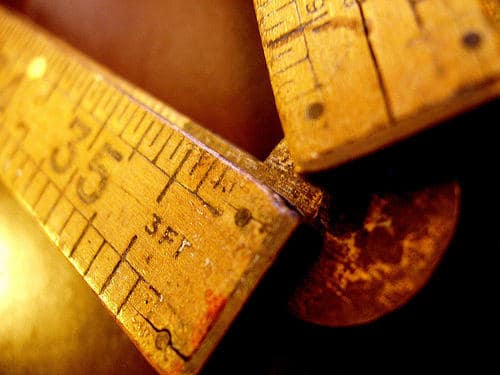
ruler close upGet Your Categories Straight

Your basic laptop comes in one of 3 travel flavors: netbook, PC, and Mac. There are others but this gross oversimplification is most of what you need to find a good machine to travel with.

  • Netbook – What defines this class of laptop is size. Typically less than 25 centimeters (~10 inches) across and less than a kilo in weight (~2.2 lbs). All standard netbooks run Windows or Linux; the closest laptop in size Apple has is the Macbook Air. (I can help you hack that netbook to run Mac OS X however.)
  • Laptop PC – Larger than netbook size and everything not Apple, often referred to as notebooks.
  • Macbook – Apple laptops coming in the Macbook Pro and Macbook Air varieties, running some version of the operating system OS X.

So how can we break these different types of laptops into he simplest terms without going into much detail at all?

Netbooks are cheap, small, and have long battery life but can be a pain to stare at the small screen for too long. The keyboards aren’t the most ergonomic either. Laptops have more comfortable monitors and keyboards but are typically 20-40% larger and heavier than a netbook. Part of that added weight are built-in components you might use, like a DVD player or hard drive with lots of capacity to store more travel photos. Finally, Macbooks and their operating systems are built to work together. That means increased reliability but at higher cost.

The programs that run on Windows, Mac, and Linux all vary and while some are made for all, others may not. CNET’s version tracker can tell you which applications run on different platforms. (Use the “Search” tool in the upper right and select Windows, Mac, or both.)

What Would You Really Use A Laptop For?

Many of us don’t like to admit we’re part of the Facebook, email, occasionally type some documents crowd. It’s uncool and nerds like me might try and convince you a more powerful laptop can do magic – letting you run Photoshop smooth as butter or open 15 applications at a time. That’s all fine and good but if you have never opened Photoshop in your life (and don’t plan on it) or aren’t playing graphic intensive video games on while you travel – save yourself the money.

london library

Those of you using a laptop for more than 2-3 consecutive hours a day while traveling probably want to avoid the some of the repetitive stress injury postures common with netbooks or consider getting something larger altogether. Gizmodo has rated the best notebooks of 2011 if you’re leaning in that direction. As a general rule you’re not looking for the best laptop in terms of power – you’re looking for the best laptop to meet your needs and budget.

hoover dam electrical linesCheck Multiple Sources For Realistic Battery Life

The battery life manufacturers list on their websites and manuals are theoretical maximums inflated by 50-100% in many cases. That’s not very accurate if you do things like use monitor or travel to places are aren’t constantly 21 degrees Celsius. Battery life also degrades over time an within about a year of typical use you’ve lost 10-20% of original capacity. All of that said, you should deduct 40% off any battery life stated by an manufacturer and flex some Google muscles to get comparisons from reputable tech sites like PC World.

That will help give you an accurate measure of battery life – second to weigh in importance (in my opinion) if you travel frequently. If you want a head start, PC World has a good rundown of the top 10 ultra-portable laptops.

Replacement Parts And Other Things To Consider In What Is Ultimately A Personal Decision

Macbooks are great (a 15-inch Macbook Pro is one of the two laptops I travel with) but finding replacement parts for Apple products is difficult. Aside from being hardware specific as I mentioned earlier, the fact remains than only 10-15% of people use Macs worldwide. Parts are typically more expensive so many smaller computer stores around the world don’t stock Mac components like hard drives that may go bad. (Here are 2 ways to get advance warning of hard drive failure.) That’s where PC users have an advantage and something to consider if you’ll be traveling for extended periods of time and a dead laptop could effect your business or general mood.

Along those same lines reliability is important. Research by SquareTrade has found one-third of all laptops fail within 3 years and netbooks are 20% less reliable than their bigger cousins. The full report by SquareTravel, including the top brands (available as a PDF download) can help you make the sturdiest decision. Once you have that laptop be sure to protect it from the effects of traveling.

I could have come up with a list of what I think are the top net, lap, and Mac books (and still may) but those tend to get dated quickly. This advice is much more consistent over time; at least until we start bringing in tablets for a serious discussion.

What laptop do you carry and recommend? Have any opinions for those who may be shopping around or looking to upgrade? Share your best laptop tips in the comments below!

[top laptop photo by mikecogh, ruler photo by Auntie P]

About Anil Polat

foxnomad aboutHi, I'm Anil. foXnoMad is where I combine travel and tech to help you travel smarter. I'm on a journey to every country in the world and you're invited to join the adventure! Read More

YouTube Twitter Instagram Facebook

Image Map

Image Map
10 Shares
Share
Tweet
Pin