Blog - foXnoMad

How Can I Best Prepare For My First Backpacking Trip?

backpacking tips

Dear foXy blogger guy, I’m getting ready for my first backpacking trip ever, what’s the best way to make sure I’m prepared for everything?

Sincerely,
Soon-To-Be Backpacker

Backpacking can be an intimidating undertaking the first time you decide to go for it, but honestly, it’s not all that complex. I have been traveling full-time for the past 4 years and before that frequently on the road. These years have given me the chance to narrow down the minority of things that are important and discard the majority that aren’t.

You can’t prepare for everything but there are a few fundamentals you should take care of to ensure your trip is a happy one, letting the wind take you from there. Consider this your first-timer checklist.

How Far Have You Gotten Already?

I’m assuming you’ve already bought your plane, train, or bus tickets but if you haven’t make sure you use the best ways to find cheap tickets yet realize there’s a lower limit on how much you can actually save. Transportation tickets, as an upfront cost are temping to focus on, but you can save much more money once you arrive at your destination. Also, before booking anything (if going on international travel) be sure you’ve got the proper visa(s) and a passport that’s valid for at least 6 months as most countries require.

moldova corner storeEverywhere Pretty Much Have Everything – Don’t Stuff Your Bag

I’ve previously covered picking the right backpack for you and don’t forget a second day-pack (I like the REI Zip Travel Pack and Swissgear Computer Backpack) so you can separate your valuables if you need to check-in your bags prior to a flight. Speaking of valuable electronics, free programs like Skype can save you on calling home so at the very least a tablet with microphone and speakers is a good idea.

Pack Daily Items – Generally speaking, if you use it everyday you’ll need it when traveling – but that doesn’t mean you need to bring said items with you. A toothbrush, contact lens solution, etc. it varies depending on your personal routine. I pretty much run everyday so I always travel with extra shoes to do just that. Don’t worry about forgetting things and over-packing as a result. You can buy basics (e.g. shampoo) anywhere in the world. Do not bother with large liquid containers for long trips, you can get them at your destination and it also eliminates the risk they’ll end up leaking in your bag en route. Pack what you need for about 2 weeks of travel no matter how long your trip is.

The one mistake most experienced travelers will tell you they made initially was bringing too much useless stuff. Use the 80% rule to both avoid airline fees to save time when packing in a rush.

scooter in germanyBudget And Insure Yourself

I’ve found that many first-time backpackers don’t know about travel insurance, two varieties of which you should be familiar with. One is medical travel insurance (prior mentioned recommendations) that covers you in case you need to see a doctor or visit a hospital in a foreign country while the other protects your valuables in case they are damaged or stolen.

One more commodity to budget is your most valuable one – time. Pad your temporal estimates (i.e. what I can sight-see in 4 hours) by 66% and your monetary budget by 33%. Think you’ll need 6 hours to explore the heights of Quito? Plan for 9 or 10. Calculating $1,500 a month? Expect $2,000. Consider any extra leftover a bonus on an estimating job well done.

Get Out Of The Hostel – The Only Planning You Need Is Getting To It

Most of the learning you do when backpacking is after you’ve arrived. Experience is something that can’t be taught, so really all you need to do to be prepared for your first backpacking trip are these 4 things. Contact the place or person you’re staying with and find out the best way to get there; have expected costs from airport to accommodation in mind, and in the case where foreign languages are involved, brush up on these 4 phrases. The rest happens at your destination if you let it. Get away from your hotel or hostel, talk with locals, trust you gut, and be prepared for the unexpected.

The Abandoned Synagogue Inside Europe’s Largest Jewish Cemetery In Chisinau, Moldova

chisinau jewish cemetery synogogue

One of the odd facts about Moldova is that it’s home to Europe’s largest Jewish cemetery. On the outskirts of the capital city, Chisinau, it’s a place many Moldovans I spoke with vaguely knew existed but had never visited. In a city with so few sites of touristic interest it was a bit stunning that this place where 23,500 people lay is nearly forgotten.

Prior to World War II, Moldova (then “Moldavian SSR“) was home to nearly 110,000 Jewish people before the Axis powers in 1941, including Romania, began an invasion of the Soviet Union. Estimates of the those who died as part of the Holocaust during the 3 years before the Soviets were able to occupy present-day Moldova vary widely. According to the Romanian government, 280,000-380,000 Jews may have been killed in what is a very complicated regional story. Like the history of this synagogue, only pieces of the story remain. And it seems there may not be enough left for it ever to be accurately reassembled.

Walking around the grounds of the cemetery can easily take more than an hour as it did for me; especially if you walk toward the graves that are quietly being eaten by the surrounding earth and trees deep inside. Several headstones stuck out, a pilot’s with a large propeller atop for instance, along with this synagogue that barely remains. Aside from the few beers bottles around and those who had drank them, it’s evident these graves don’t get many visitors.

Entry to the cemetery is free and to find the synagogue you’ll have to make an immediate left and walk about 10 minutes following the exterior wall.

Travel Serendipity: An Honest U-Turn In Azerbaijan

Azerbaijan roads

Traveling around the world quickly confirmed my belief that people are primarily good; and surprisingly human cultures generally agree upon the fundamentals of what “good” is. That formula was easy to work out – I am loyally optimistic about humanity – but never noticed that the equation of society is skewed. The results are tipped in the favor of positive events because of people, not despite them.

My personal life scales are also tipped in favor of last-minute planning, disorganization, and a level of forgetfulness that often lead me to my most memorable travel experiences.

atashgah fire templeHitching A Ride In An Unusual Trio

Baku is a fairly expensive city and some of the sites around it, like the Gobustan mud volcanoes, can’t be reached without a car. Fortunately for me, a German man staying at my hotel in Baku happened to be headed to the airport, stopping at the Atashgah Fire Temple along the way.

The driver agreed to let me hitch a ride and take me to a few sites around the Absheron Peninsula for a small fee. We arrived at the Fire Temple, snapped a few photos, and drove off to Heydar Aliyev International Airport. From there I said goodbye to one of the many friends for a day I’ve made in my travels, wishing him well on his way.

The Detour To The Story

Azerbaijani is the closest Turkic relative linguistically to Turkish; so instead of an awkward silence that’s common on such trips, I chatted with my driver. (My memory devoured his name weeks ago.) In his early 60s, we talked about family, Azerbaijan’s Soviet days, and his life; while I occasionally made him laugh with my best attempts at an Azeri accent using words I picked up on a Turkish comedy show. We headed to Nardaran Fortress.

A somewhat unremarkable structure built 700 years ago, Nardaran Fortress has a small indoor and outdoor museum adjacent to it. Before we left in the morning, I neglected to stop by an ATM for cash, relying that the small amount of money in my pocket I didn’t bother to count to last me the day. It didn’t, so I had to borrow for entrance from my driver who gave me a bit extra in case I needed it. Around 20 manat (~$25) before arriving to the museum; I put it in my wallet.

Nardaran Fortress AzerbaijanMy Mistake Or Yours?

We walked up to the office by the entrance and I pulled the single bill from my wallet cluttered with receipts, expecting about 18 manat back from the woman casually sitting behind a desk. Instead, I got 80, a large sum in Azerbaijan (and no small change for a budget traveler either). I told her that the change was wrong several times and eventually the entire office was involved. She was persistent that there was no error, I had handed her a hundred bill.

After some back and forth, my driver suggested that perhaps I had the bill in my pocket and gave it without realizing it. My pockets were, after all, cluttered with paper. There were 4 people telling me I counted wrong – completely believable to myself. Perhaps I was, or maybe there was some underground drug money going around? Much stranger things have happened to me.

The Numbers Don’t Add Up For Me Good Or Bad

Along the drive I counted the money over and over; something wasn’t right. Everyone had told me I was mistaken before we left – now more than 40 kilometers away, my driver said, “you look troubled.” We pulled over and counted again. He said he didn’t think it possible the woman would give such a large sum incorrectly but it didn’t matter, “we’ll go back and find out. Even if we’re wrong, at least out consciousnesses will be clear.” We turned around.

Confirming With Our Eyes

As we pulled up some time later to the Nardaran Fortress museum, the woman and her staff were waiting outside. She was visibly shaking yet profusely thanking us as we got out of the car. Had we driven off she told us, she would likely have lost her job. Convinced earlier I handed her a 100 bill, after we left the mistake became apparent.

To be honest, I was half expecting to look like a fool upon arrival. I’ve mixed up money many times before. Or my driver could also have easily convinced me he had handed me a 100 bill, keeping the discrepant change for himself. Of the many things that could have gone wrong, the few things that could have gone right, did. My driver later told me he thought I was wrong yet didn’t want me to leave Azerbaijan with any doubts. Rather, it further solidified what travel has been showing me over and over – things always work out – with a strong tendency for the better.

8 Travelers I Wish Could Have Had Travel Blogs

ibn battatuWe often forget that travelers throughout most of human history often risked their lives and stories to take trips that usually spanned significant portions of their reduced life expectancies. Most of the travelers below are known to me and humanity because they’re written some sort of epic detailing their journeys. However, daily updates from these travelers whose voyages amaze me, nearly to the point of disbelief, would be fascinating to read today in modern media.
1. Evliya Çelebi (1611~1683)

Bosporus boats

Born in Istanbul, Turkey during the Ottoman years when the empire was at it’s largest, Celebi spent 40 years of his life exploring the territory it covered. Celebi’s 10-volume book, Seyahatname, covers his travels from places as disperse as present-day Azerbaijan, Austria, Sudan, and Saudi Arabia. Over the course of his life he also took part in several Ottoman battles; adding another fascinating element to one incredible travel blog had it existed.

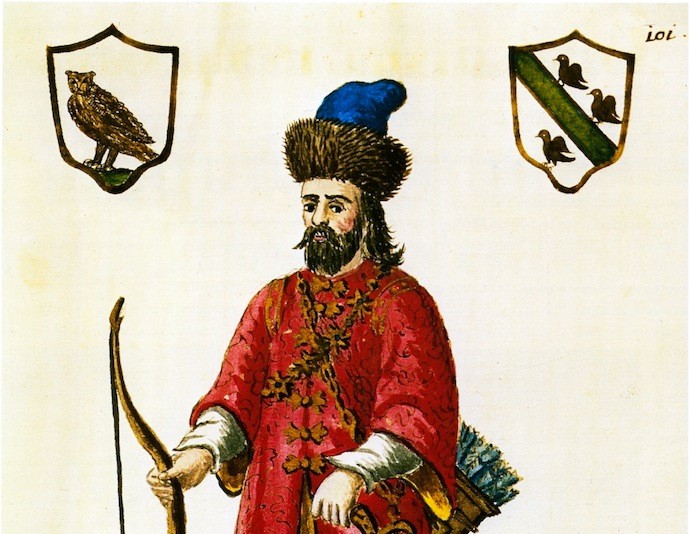
2. Marco Polo (1254~1324)

marco polo tartar outfit

Although The Travels Of Marco Polo are somewhat questionable in their entirety, some, like meeting Kublai Khan ruler of the Mongol Empire are tales almost too ridiculous to be fiction. Still, Polo’s story was passed down by hand, ear, and transcription, likely further weaving a wonderful tale. A series of travel blog posts recounting his imprisonment upon returning home to Venice (at war with Genoa) would be fascinating. Talk about culture shock.

3. The First West Coast Colonizers Of The Americas (~12,500 Years Before Present)

pacific sunset

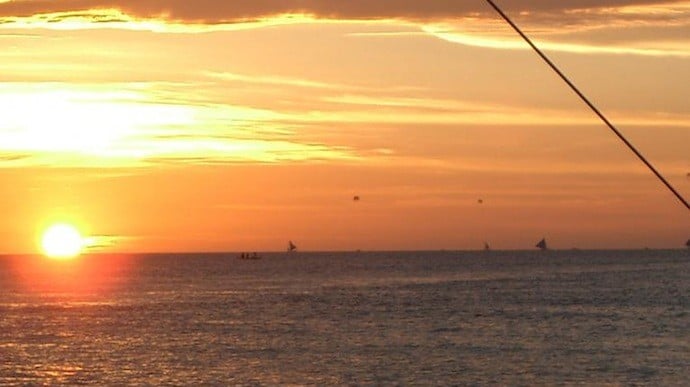
There is a great deal of debate about this among anthropologists, but it is thought that the Americas were colonized by humans in several waves – one of those possibly being from the Pacific islands. Fishermen who may have intentionally (or not) ended up far out to sea and riding the currents all the way to present-day California. They were truly going where no one had gone before – and perhaps in the most terrifying way possible.

4. Dave, John, And Pete Kunst (1970-1974)

Brothers Dave and John Kunst set out to walk around the world in 1970 from Waseca, Minnesota with some basic supplies carried by a mule. Two years into the journey, John was shot and killed during a robbery in Afghanistan. Dave was shot in the chest as well but survived. After his recovery, their brother Pete came to Afghanistan to help Dave finish the trip. It would be the first recorded walk around the world. I first learned about Dave’s book, The Man Who Walked Around The World, on the recommendation of Wandering Earl.

5. Theresa Wallach and Florence Blenkiron (1935)

the rugged road

This is list is quite lacking of women I’m ashamed to say, likely a combination of history’s general omission of them and my own ignorance. Theresa Wallach and Florence Blenkiron were the first two people to cross the Sahara Desert on motorcycle, which they did in 1935 on their drive from London to Cape Town. Their story is one of the best motorcycle books to ignite your wanderlust but I can only imagine a video series of their trip; especially the captured looks on people’s faces upon hearing their story en route.

6. Ibn Battuta (1304~1369)

new delhi red fort

A traveler I believe I had confused for Al-Masudi, until reader Mina mentioned him in a recent conversation on my Facebook page. Battuta, a Berber from Morocco, is believed to be one of the most widely traveled human beings ever – prior to the technology of the Industrial Revolution. Verifying anyone’s life is difficult after a 700 year paper trail, but if Battuta’s writings are accurate, he visited the modern equivalent of more than 40 countries, including India.

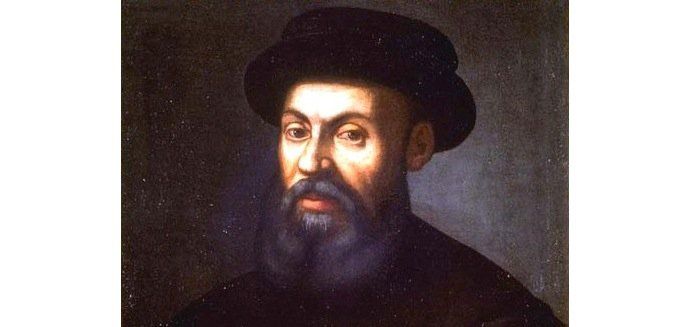
7. Ferdinand Magellan (1480-1521)

ferdinand magellan

There is something I find moderately terrifying about the ocean in its raw form. Thankfully we’re living in an age where, for the most part, staying in contact with humanity is relatively easy. (In the cases your boat sinks or is captained by this guy.) So when I think of Magellan, who nearly circumnavigated the globe by ship without the benefit of GPS, radar, or someone to save him and his crew should the boats spring a leak, I am in awe. Blog posts from the middle of the Pacific, after weeks at sea and what that does to the crew, would be fascinating.

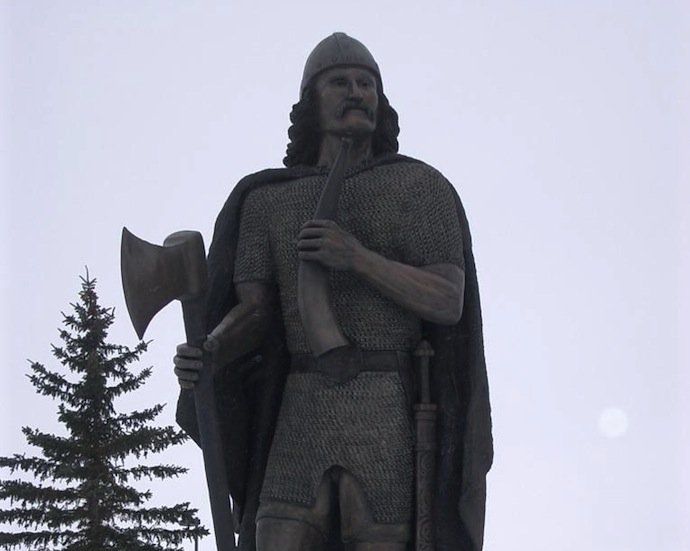
8. Erik The Red (950~1003)

scandinavian heritage museum viking

Any man who is the creates a settlement on an island of snow and names it Greenland so more people will settle there is my kind of explorer with a bad attitude. Erik The Red’s twisting of the truth somewhat worked, except everyone who settled in Greenland kept dying and bringing diseases, which likely killed the Norse traveler himself. I can only imagine his top 10 reasons to visit Greenland now: 1. It’s Green! 2. Less Ice Than Iceland! 3. It’s Green! (Except When There’s Snow On The Ground)…

Whose Blog Would You Like To Have Read?

There are, of course, countless travelers that history never recorded whose stories are lost forever and several other good suggestions, like Nicolae Milescu (thanks Cezar) I’ve yet to read up on. Though it makes you wonder, with our collective Internet addictions, how would blogging, Facebook, and the technology we live with today change those ancient travels? I’m curious which travelers you would have liked to see a digital glimpse of if you could and what you think they’d be saying.

How Long Do You Stay Offline When Traveling? [RESPONSES]

sleeping tabby cat

It seems we’re a mixed bag of Internet addicts who do our best to stay offline when traveling but have a hard time agreeing on what “offline” means. Some of us, *cough, cough me* feel like any day without a minimum of 3 hours online is like living in the Stone Age while others routinely don’t connect to the Internet at all when on the road. These are some of your responses the question I asked a few weeks ago, how long do you stay offline when traveling?

  • maddy gravatarMaddy: “When I was a wilderness guide in Tasmania, I somewhat downplayed the availability of phone signals to customers, urging them to leave their phones at home. Maybe that’s wrong, but when guiding people on a tranquil walk in a remote rainforest, the last thing I wanted was for one of my clients’ phones to ring and an ensuing conversation about shares or the like…” [reply]
  • jaime gravatarJaime: “…the two longest times I have been off line during my RTW trip have been two of the most amazing memories of the trip. The 1st time was 4 days while doing a Sahara expedition in Morocco & the other was 3 days while on a houseboat exploring the backwaters of Kerala.” [reply]
  • turkeys for life gravatarJulia & Barry: “Afraid to say we’re the people who lug the laptop, tablet, phone everywhere with us. Quite sad really, I guess, as a chunk of our time in Rome was spent hunting for wireless connections…” [reply]

  • joanna gravatarJoAnna: “I’m really saddened by all of these responses. It seems like most people can’t go more than a few hours without checking in online. I take pretty much every weekend off – so that’s two days out of every seven – and I have no problem unplugging for a week if given the opportunity.” [reply]


There are a host of other responses in the full thread here and whether your online addiction follows you on your travels or your gawk at people that do, it’s well worth a read. I suspect that ‘offline’ doesn’t quite draw the line at talking and texting on mobile phones so perhaps the more ubiquitous the technology, the fuzzier things get for our travels.

The House Where Stalin Was Born, Eerily Preserved In Gori, Georgia

stalins home gori georgia

I showed up in the sleepy town of Gori, Georgia to visit the J. Stalin Museum; instead stumbling upon the enshrined home of Joseph Stalin in the town square just in front of it. This house is where Stalin was born in 1878 (possibly 1879) and spent the first 4 years of his life, supposedly in its original location. It’s something of a running joke in Georgia that their most famous compatriot happens to be dictator who may have killed more people than Adolf Hitler. But unlike the Germans, who’ve done their best to erase signs of their Austrian despot, Georgians have a more pragmatic and complex relationship with their notorious hometown boy.

stalin avenue gori stalin statue gori

Statues in Stalin’s honor have been taken down as recently as 2010 (not far from this home above in Gori) while others stand just behind this home. Special thought was given to the detail around the marble tomb, built in 1937, with several communist symbols adorning the ceiling. Yet this past, protected especially in Gori, isn’t and hasn’t been easily accepted. Most people I spoke with don’t condone his actions but consider them a product of that Soviet era. The major line being drawn between whether or not it was a necessary era in Georgian history. A that line that happens to fall right down the middle of Gori.

Entry to the home is a nominal fee (roughly $1.75 ~3 Georgian Lari) and a separate charge from J. Stalin Museum entrance.

About Anil Polat

foxnomad aboutHi, I'm Anil. foXnoMad is where I combine travel and tech to help you travel smarter. I'm on a journey to every country in the world and you're invited to join the adventure! Read More

YouTube Twitter Instagram Facebook

Image Map

Image Map
10 Shares
Share
Tweet
Pin