Blog - foXnoMad

Time For Wine In Madrid, Spain At Mercado De San Miguel
mercado de san miguel wine madrid spain

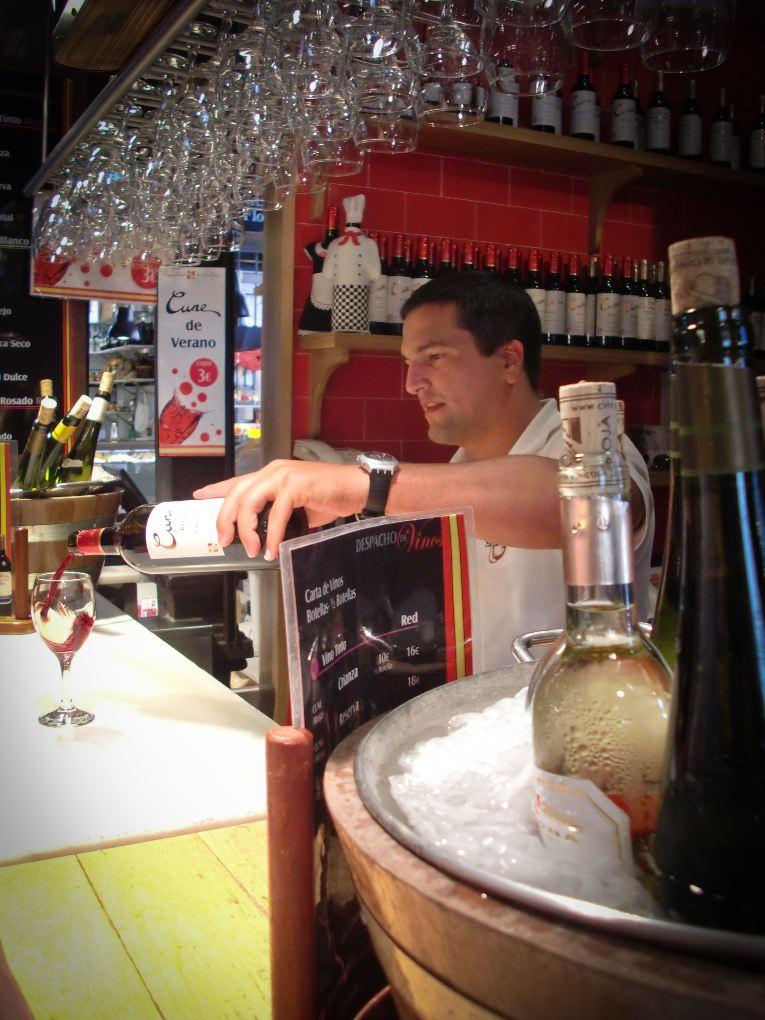
Markets aren’t supposed to have walls; rather cluttered open-air spaces with sheets of cheap plastic or scrap metal barely protecting the commerce below. That’s at least in my colored impression of them, mostly from Turkey but reaffirmed in places further away like Ecuador. Mercado de San Miguel in Madrid, Spain is really quite the opposite of that traditional term “market” but there’s a good reason for its modernity. Located in the middle of Madrid, Mercado de San Miguel was reborn in 2003 to pump some life into the city’s heart while concurrently boosting the local economy.

Originally opened in 1915 and left to die a death of neglect some years later, what breathes vigor into this modern version of market is variety. It’s not 33 vendors selling variations of similar dishes but a wave of Spanish cuisines so enticing the first hungry steps inside can have you frantically and un-decidedly bouncing from one end to the other. It’s almost not fair, especially when you stop by on a short visit from Valencia before heading to the airport as I did. Mercado de San Miguel nearly caused me to intentionally miss my flight altogether, I hadn’t even gotten around to the seafood after trying some caprichos de embutido, bastones de fuet (both types of dried sausage), and a glass of wine.

And the wine is what slows things down it seems for the hungry folks and plentiful tourists lounging in front of tubs of shrimp while occasionally being cooled down by automatic sprays of water mist. (There is no air conditioning inside which is a nice old-school market touch.) The prices too, are surprisingly economical when compared to eating out in the rest of Spain for food of such high quality – walls or not. The Mercado de San Miguel is open Monday-Thursday from 10am to midnight, and two hours longer the other days of the week.

You can see more pictures in my album from Madrid here.

Taking A Detour From The Ultimate Train Challenge And Updated Travel Plans

kings cross station london england

I was to be knee-deep in Portugal right now making the final preparations for The Ultimate Train Challenge which I announced back in June. As it were, a few personal obligations plus detours through the early part of September have caused me to change my plans and withdraw from what is sure to be a compelling adventure. I strongly encourage you to follow The Ultimate Train Challenge’s (UTC) participants Michael Hodson, Jeannie Mark, and Nora Dunn as the roughly 30-day race kicks off September 1rst. You can find them via the UTC tracker, on Twitter (@trainchallenge), and on Facebook.

ultimate train challengeThe UTC is also partnering with the Vietnam Veterans of America Foundation to support the charity organization Da Nang Association of Agent Orange Victims in the hopes of raising $10,000 during the race. You can help by making a donation directly; or if you’re planning on using Eurail anytime before October 1rst, purchase your tickets through the UTC site (shown right) and Eurail will donate $10 on your behalf.

Riding Two Travel Waves

As for myself, I’m looking at one of several new-to-me destinations (i.e. Alaska, Honduras, Dominican Republic) in my immediate future to explore, relax, and turn some new travel projects from electrical signals in my brain into actual real stuff. That’s the first wave, the second begins in Porto (the best city in the world voted by you) sometime in October. From there, let’s just say it gets a bit more dangerous challenging.

Finally, if you’re interested to learn more about my travels in Iraq this past winter, I’ve recently made two appearances you may be interested in:

How To Take Better Travel Photos Without Getting A Better Camera

You might be browsing through travel photos in magazines or travel blogs and wondering why some pictures turn out so much better than yours. Surely it must be the camera you think – but almost all of what makes a picture good happens after it’s taken. Just like a new car won’t make you a better driver, the fanciest camera in the world won’t give you better photos, not initially anyway.

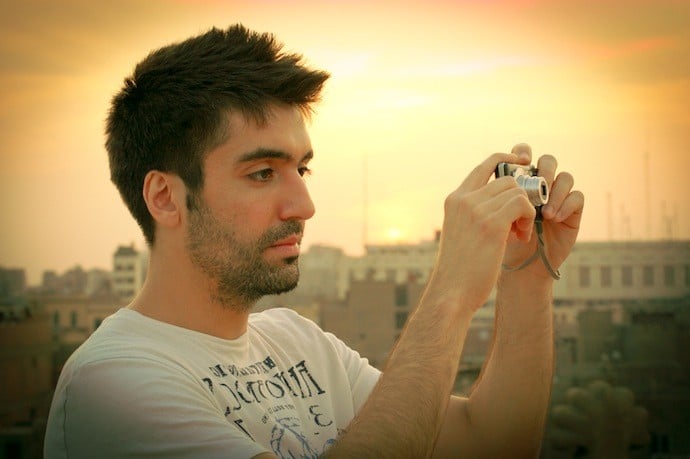
anil in cairo

That’s not to knock DSLRs or the photographers who wield them like samurai’s do swords, but you’ve got quite a bit of potential in that point-and-shoot or smart phone of yours. Perhaps want to spice up some Madagascar photos for your friends on Facebook, whip up a scrapbook, or take something worthy of hanging on your wall. These are the tools that can help you get there no matter what you’re shooting with.

Don’t Skip This One: You Need To Edit Your Photos [You Want To Improve]

Some people feel that editing photos – especially digital ones – is cheating somehow. Although computers and digital photos have streamlined the editing process, photography has always been a manipulated medium. These days however, instead of darkrooms and developing chemicals, it’s keyboards and mice. There’s nothing to be ashamed of – I mean, Shakespeare didn’t publish his first draft, second, or 5th – and good pictures, like any other art, take time to perfect.

al alam palace muscat omanCropping Isn’t Just For Exes On Facebook


One of the simplest things you can do to make a picture better and easiest function to find in just about any editing software is cropping. As a general rule you want to shoot more in a photo than you actually want. You can always adjust the composition after the fact but adding stuff you didn’t take is impossible.

We tend to focus on getting closer to a subject but many times taking a step back can give you a better photo to work with later. You’ve got the luxury of digital so if you’re not sure what to do, take two pictures. You can always delete the one that’s inferior.

Cropping can help you get rid of washed out sunny skies or a stray camera straps along the edges of your photo. (Vignetting is also a technique that can help overcome those issues. Here’s how to achieve vignetting using a variety of software.) What to crop is certainly the most difficult part about the process but luckily John Thomas Smith has a nifty rule for you to follow.

Use The Rule Of Thirds – Easy To Do Even If You’re Terrible At Math

The word “thirds’ throws many people off (must be those fractions) but it’s a simple photography concept that can improve your pictures at cropping time. (The Rule of Thirds is also a good habit to get into when shooting the pictures as well.) Basically, use your imagination to break up the frame by thirds horizontally and vertically. Then, try to place the important parts of your picture along the lines or at the intersections as shown below.

rule of thirds

Keep in mind this is a raw explanation of a general rule that has a number of variations and isn’t set in stone.

holding kitchen knifeStart Culling The Crap

One of the great advantages of digital is being able to take countless photos you can later choose the best from. That advantage also means you might be taking pictures of any and everything you see, no matter how relevant you actually find it. Not every picture is worth keeping or editing; and all those digital images take space up on your hard drive which might be getting bloated with photos you don’t really care for anyway.

That time consuming process of eliminating pictures that are eerily similar to many others you’ve taken can be shortened using the free Duplicate Image Finder Windows or Duplicate Image Detector for Mac (free to try, $29.95 to buy). Those programs can sift through your pictures files and help you detect and decide which ones to delete for good.

Another added step you can take to save space is to compress your photo folders. It’s a two-click process on Mac (here’s how) and just as simple on Windows.

Auto-Edit On Your Smart Phone

The most popular photo-beautifying app you’ve probably come across lately is Instagram for the iPhone (iPod touch, and iPad). Instagram adds a slightly aged, retro-tinge to your pictures giving them a more interesting look and feel. Android users can check out Pool Party for a similar effect and you can instantly Instagram any image using Photoshop.

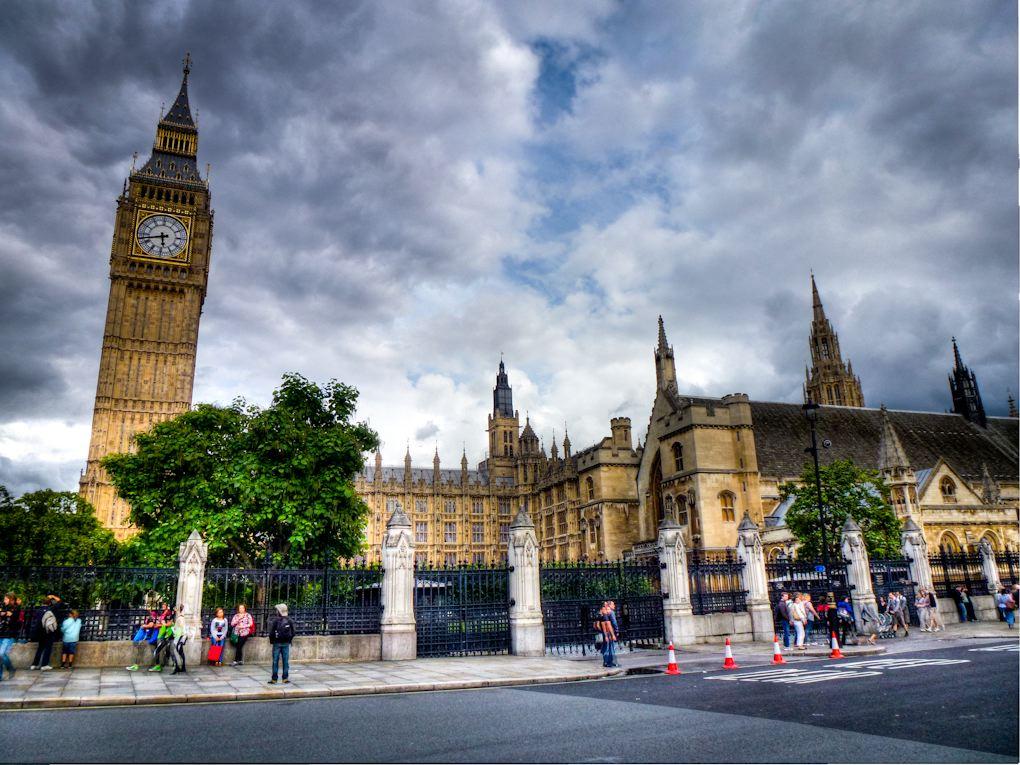
big ben london england

ColorFX for Android lets you do neat things like selective coloring (seen in this photo of a soldier in Ankara) and ProHDR (for iOS and Android) can give you pictures with high dynamic range, like this one of the Hoover Dam in the US.

Panorama Amazing Views That Make Dull Photos

Long stretches of beach, mountain views, and sports arenas provide our eyes nice views but don’t often translate well into a standard digital picture. More and more digital cameras are coming with a panoramic modes yet still many aren’t intuitive or very time efficient. Rather, you can take 3-6 slightly-overlapping pictures over a wide angle and use (the free) program Hugin to blend them into a single panoramic. Hugin also does a good job of aligning the pictures for you, which is much easier that having to do it on the back of a digital camera LCD.

valencia f1 race

iPhone users can check out AutoStitch ($1.99); Android users, Photaf 3D (free) can give you similar panoramic results.

cliffs of cappadocia balloonsBackup Your Photos Automatically And Often

The best digital photos in the world won’t do you any good if you lose them to a bad hard drive or drop your laptop off the cliffs of Cappadocia. The simplest way most people already use to some extent is by uploading a few to Facebook (be sure to read their terms of service first though). Picasa Web is a more robust online sharing and photo backup tool (here are 4 more) but ideally you want to automate the process.

There are plentiful ways to get backups done but one surefire way to screw it up and set yourself up for disaster. We’re far enough into the digital age that most of us have lost a file or two to a corrupted drive by now but in case you haven’t, spare yourself the grief. Backup!

Don’t Diss The People Or Yourself

Sometimes the only way to insert more personality into a picture is to put yourself in it. We often want to be the invisible observer, avoiding other people around popular tourist sites yet we tend to look at those photos most when flipping back through an album. Ones with people in them – especially people we know and particularly ourselves. This is a habit I have trouble with as well – not taking pictures of myself at places – but gets to be secondhand nature with brute force practice.

  • The XShot Extender will give you much better angles if you’re traveling solo so your head isn’t always tilted and the background cutoff or non-existant.

Finally, you don’t want to discredit the person taking all of these pictures while you’re traveling – aka. you. Not everything you take will be a masterpiece and it doesn’t have to be, but there’s more talent in those fingers than you could giving yourself credit for. By changing your focus with and without the camera you can vastly improve your travel photos even without professional software.

[kitchen knife photo by: bionicteaching]

Traveling Behind The Borders Of Islam

Admittedly, I don’t like my own title for this post, one that’s far too generic for such a complex and intricate part of the world. There are no real borders of Islam, but having spent much of this past winter and spring traveling through the Middle East, I find many people who haven’t been put off by this invisible barrier. Ironically enough, there isn’t even a consensus on the geographical area the Middle East encompasses, somewhere that intimidates many, for a variety of assumptions enough to prevent people from visiting.

Istanbul Camii

Perhaps in no other part of the world does religion take such a prominent role in people’s lives – but it’s only one facet of of life, much like everywhere else. And that simply can’t go for everyone, because the entire Middle East isn’t Muslim with many variations within the religion itself.

coptic cairo egyptThe Middle East Isn’t A Homogeneous Place

Although Islam is the major religion across the the Middle East, it’s far from the only one. There is of course Israel; but large Christian and Jewish minorities exist in many countries across the region. (Not to mention Druze, Yazidism, and others beliefs as well.) Lebanon, for example, only has a 60% Muslim population, Qatar 75% (though more than half are foreign-born), and Egypt has a Christian population of over 5 million; more than the entire citizenry of Ireland. There are also 4 major denominations within that religion itself to break things down even further. While we’re at it, the entire Middle East isn’t Arab either, Turkey and Iran being the two notable examples.

Land Of Images And Wu Tang Clan

When you arrive at some airport in that loosely-defined area behind the imaginary borders of Islam, you’ll almost certainly encounter women wearing a hijab (headscarf) but at the same time in places like the United Arab Emirates you’ll find them walking the streets with women in western attire. You’ll also find a very young population, with nearly 65% under the age of 30 who are absorbing the world through the Internet at a phenomenal rate. A greater percentage of the population in Dubai is online than all of Spain, France, or Italy and Iran has more people online than Egypt, Jordan, or Israel…combined.

dubai mall uae

There is Internet censorship but it’s easily circumvented by a generation that’s more tech savvy than the censors themselves. Even when the government of Hosni Mubarek in Egypt completely shut off that country’s Internet connection – people still found ways to get online. Where there is the freedom of information there is change, modernity, and hope. All of which are gaining momentum across the Middle East right now along Ethernet cables and wireless signals.

It’s not necessarily assimilation of Western culture, it’s an adoption of that technology in a very Iraqi, Omani…specifically local way. Whether it’s young Egyptians blasting their car radios and rapping along to the beats of Busta Rhymes or organizing a Twitter revolution; it ain’t all camels and carpets. In fact, it’s hardly that. Many of the friends I made in Egypt and Oman might occasionally do their daily prayers (sheepishly admitting it’s not as often as they’d like) and afterward have their money on their mind, at least vicariously through Snoop Dogg and Dr. Dre.

tea in egyptA Touchy Subject That’s Not Quite So

Religion is often a charged subject, particularly in the West, that’s deflected or avoided, often arousing tension when brought up. Generally speaking in the Middle East people aren’t as shy to talk politics or gods; to do so would be a glaring omission of its presence all around. People want to talk religion here, particularly with foreigners and travelers, mostly to get and give opinions about themselves they know are often misrepresented around the world. It’s what’s happening at a digital level on a personal scale, usually over tea and musty clouds of flavored shisha smoke.

Reading about a place allows your imagination and mind to visit; but actually traveling there invites all of your other senses. So much of the culture in the Middle East goes beyond religion, which sits atop thousands of years of history and nuance. As I found in Iraq, what can be so unusual about a place is how normal it turns out to be. What sticks out is all you got wrong prior to arrival and what fascinates you is aligning that new truth with previous misconception. Few parts of the world can set you up for such a swing in perception and those experiences tend to shine brightest in our travels.

The London Eye And A View Of The City During The Riots

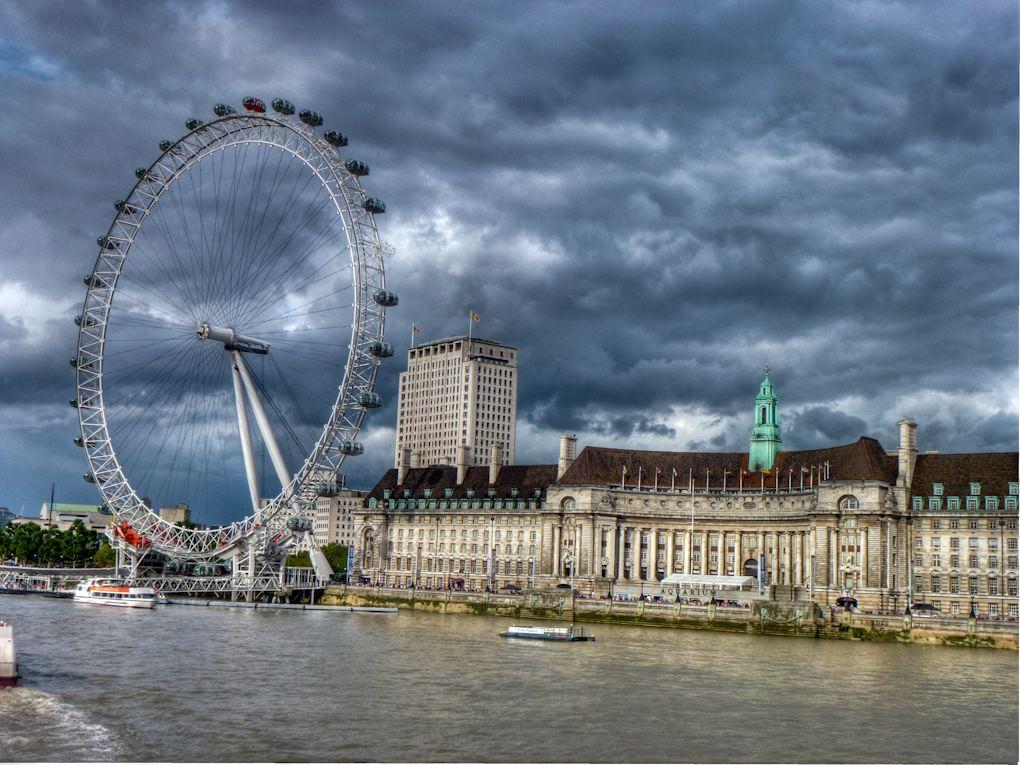
london eye

In what has become something of a recurring theme along my travels, the quick weekend trip I recently took to London, England to participate in a documentary coincided with several days of looting and rioting. I say recurring theme, because general mayhem tends to follow at an uncanny rate quickly upon my arrival to cities around the world lately. There was the uprising in Bahrain and destruction of the Pearl Monument 2 days after I left, my failed flight to Egypt on January 27th (when I finally arrived in May there were several religious clashes), and hockey riots in usually peaceful Vancouver among others.

Coincidences aside, (I just left Las Vegas and it’s still standing, though I think it’s baseline state is abnormal), what particularly struck me about the violence was the flip-side; how quickly Londoners coalesced to condemn and combat the destructive outliers in the community. At times in large cities it’s easy to feel as though everyone is marching to their individual tune, tiny egos oblivious to their environment – or feel that way about the world in general. Earth seems such a large place when we focus on the negative but so small and manageable when we focus on humanity’s good. Over those few days of violence, London felt like one of the smallest towns I had ever visited.

You can view more of my photos from London in the album here.

Are My Electronics Covered? A Travel Insurance Cheat Sheet For Geeks

Many of us who travel with our laptops, camera lenses, and other gadgets are often more worried about protecting them while traveling than breaking a leg. You might not be aware that your travel insurance probably isn’t covering your electronics – expensive companions in just about everyone’s bags these days. Theft and accidental damage to your gadgets are common threats you should consider insuring just as well as your ass…ets.

macbook pro keyboard

Typical Travel Insurance Coverage Isn’t Enough

Companies that specialize in travel insurance are generally good at covering your body parts and other accidents that can happen to your person but treat electronics as an afterthought. A monetary cap average of $750 is generally what you’ll find travel insurance companies will spring for – hardly enough if you’re traveling with a laptop and smart phone. It is also important to remember that insurance companies will need your receipts to properly reimburse you in case of theft. If you haven’t kept those receipts or have access to them, having a claim approved is nearly impossible.

Many times people assume that some part of their electronics and other expensive items are covered by travel insurance that may come with their credit cards. Coverage is almost always for your bags at a flat rate – not anything inside of them – so don’t rely on it if you don’t know for sure what protection you have.

magnifying glassWhere To Find The Best Coverage For Your Gadgets

Unfortunately, insurance companies being the deliberately convoluted entities that they are, don’t make it easy to find out the extent of their coverage for things like stolen camera lenses or crashed hard drives. Almost always you’ll need to call the travel insurance company to flesh out the details – a process that applies if you’re traveling with a laptop, digital camera, iPod, Kindle, GPS – any or all of the above.

What I’ve found is the companies that provide the best coverage for electronics are those that don’t specifically focus on travel insurance, ironically enough. That’s not to say they’re not out there but larger general insurance entities’ personal property plans are a good place to focus your efforts. (Brooks On Break recommends State Farm’s single-item insurance for those of you from the US).

You might be wondering how much all of this insuring will cost you and with a huge “it depends” estimate around 5-10% of the total cost per item. Also, there are companies out there which specialize in insuring specific items – especially when it comes to photographic equipment – which might end up being less expensive. Either way, a phone call will give you concrete prices.

How To Prepare Your Search For Electronics Coverage

While reading the fine print is a good idea to formulate a general idea about a company’s coverage for electronics, it should not be your sole source of information once you narrow down the list to potential insurance providers. As I mentioned above, you’ll need to pick up a phone, use Skype, or swing by an office – but talking to a human being is essential.

girl in red on phone

Begin by listing each of your specific gadgets and breaking them down into individual parts if you have them. Camera lenses are a good one to note separately for example, as are chargers. (Remember, they’re not cheap either – especially if you’ve got a Mac.) Be as detailed as you can be and find the receipts for them – noting which ones you don’t have and adding up the total cost.

  • If you don’t have the receipt for something, check if you’ve registered the item with the company for a limited warranty. It’s usually a good way to get a copy or your email inbox might have a sales receipt buried away in there as well.

dslrNow you’ve got a good foundation of information to provide the insurance company if and when they ask you about the electronics you’ll be insuring. Before you make a decision however, get as many details as you can from the agent. Be sure to note the employee’s name and identification number if they have one for some insurance of your own.

Although you should tailor your questions to your specific travel situation and gadgets, some good questions to focus around are:

  • What exactly is covered and what components constitute my property? (For instance, is a failed hard drive covered if my laptop is? What about chargers? That’s the general idea anyway.)
  • How do I file a claim and what proof (e.g. receipts) is required for each item?
  • How is value assessed for each item – am I reimbursed what I paid for each item or some other value?

Don’t forget to mention to the company when you’ll be traveling and find out if there are any clauses for the places you’ll be visiting.

Ask Yourself If That 5 Year Old Laptop Or That’s So 2004 Needs To Be Insured

Electronics are a lot like cars except they depreciate even faster. They also tend not to last as long as automobiles, particularly when they’re bouncing their merry little way around the world in your backpack. It’s infinitely more expensive in some cases to insure a netbook that’s so old that insuring it ends up being more than the cost of the item itself. (Beside you’ve been dying for an upgrade.) Don’t just insure all of your electronics because you feel that’s what you have to do. Exercise a little cost-benefit analysis before cracking open your wallet to decide whether or not you should get travel insurance in the first place.

Finally, remember that your data won’t be covered by any company and in digital terms it’s much more valuable than the equipment itself. Don’t make the mistake of not backing up your data (or photos) and lock down your gadgets in case they do get nicked by some unscrupulous types so you can insure what no company will.

[magnifying glass photo by Auntie P, girl in red by oli.G, DSLR by Photo Extremist]

About Anil Polat

foxnomad aboutHi, I'm Anil. foXnoMad is where I combine travel and tech to help you travel smarter. I'm on a journey to every country in the world and you're invited to join the adventure! Read More

YouTube Twitter Instagram Facebook

Image Map

Image Map
10 Shares
Share
Tweet
Pin