Blog - foXnoMad

Should You Get Travel Insurance?

The question of whether or not to get travel insurance tends to come at three main traveling junctures – right at the beginning of a trip, following a mishap (like getting robbed in Guatemala), or after years of traveling without incident. Travel insurance is one of those services you hope to never use and when you don’t, it can seem like you’re not getting a return on your investment.
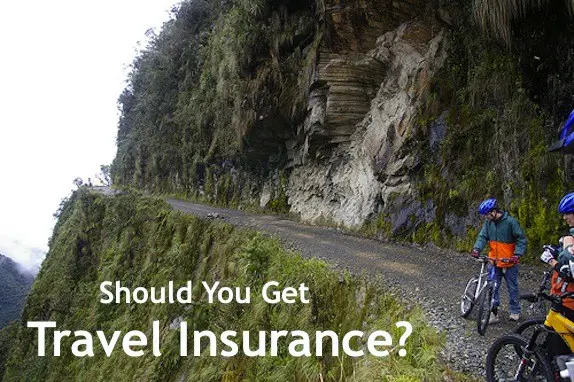
worlds more dangerous road

Solving the conundrum of saving a bit of money against the (generally) unlikely event of incident while traveling isn’t simple and best answered with a big “it depends.”

woman in thick black glassesUnderstanding Travel Insurance Basics

There are several travel insurance ground rules to begin with, keeping in mind that medical and coverage for your belongings are the two primary things people buy travel insurance for. I can’t stress enough that coverage varies and any policy or plan comes with a heaping tablespoon (or two) of exceptions, exemptions, and fine print.

  • No Coverage At Home – Short-term travel insurance (less than 6 months especially) usually doesn’t cover you in the country you’re a resident of.
  • Get Insured For As Little As A Week – Plans are generally flexible enough to provide coverage for your specific trip dates so you don’t have to purchase more time than you’re away for.
  • stack of papersPreexisting Conditions – Most travel insurance plans won’t cover any preexisting conditions and others will require you to be a member for up to a year or more before providing it.
  • Caps On Electronics – Many travel insurance plans limit what you can claim on electronics (~$500). They also don’t cover your data so be sure to protect your laptops and setup a backpack security plan. (Limits on stolen cash float between $100-300.)
  • Paperwork Is Required – You’ll need receipts for big-ticket items that might get stolen, police reports, and documentation for any claim you make. Your DSLR can’t be reimbursed if there’s no proof of you ever having one.

There is no shortcut to understanding a travel insurance plan. It’s always in your best interests to read the fine print, not hesitating to call or email the company for anything you’re not clear on.

Some Other Big Caveats

Don’t get me wrong, there is likely a travel insurance plan out there for you (at a price) but these are the common restrictions that are expensive to get around. Aside from the caps on electronics and restrictions on preexisting conditions, travel insurance isn’t likely to cover the following:

inside iraq arbil citadel

  • Travel To Every Country – Travel insurance companies cover the major travel destinations along with many others but don’t count on countries like Iraq to be on the list. Generally speaking, international borders define coverage, so trouble in a small section of a country might eliminate it entirely.
  • Certain Situations Not Covered – Unpredictable events like political demonstrations (e.g. Thailand’s Red Shirt protests), riots, terrorist attacks, outbreak of war and what might happen to you during them aren’t covered.
  • HIV, Pregnancy, And Mental Conditions – Sexually transmitted diseases (STDs), in particular HIV and related costs, are not usually covered.
  • Travel Warnings – If a travel warning is issued by your government for a particular nation your coverage may change. Find out what criteria prospective insurers use to determine how safe a country is.
  • Prescription Drugs – Usually requires special coverage, if at all possible.

Travel insurance policies don’t cover immunizations for the most part and you’ll have to be careful with the wording of any specific coverage. The word “theft” may mean many things to you but for most insurance companies having something stolen from a hostel locker or a friend’s car won’t count.
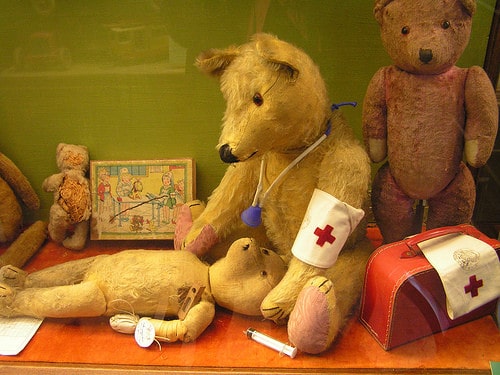
teddy bear nurseYou May Already Have Coverage

Making online reservations with a credit card may entitle you to some basic insurance, covering the cost of a canceled flight or car rental. Business travelers and contractors should never fly without knowing who’s insuring your personal belongings. Chances are if they’re used for work (even just a tiny bit), you can get them insured by your company.

Local Emergency Service – Some countries, particularly those in Western Europe, will provide emergency medical coverage if you, let’s say, break a leg. Do not take that to mean that you’ll be treated and sent off on your merry way for free however – typically all this means is you’ll be treated, even if you don’t have proof of insurance. A few stitches might not dent your travel budget but emergencies that require surgery or hospitalization are almost never covered – so you might be stuck with a huge bill once you recover from that coma.

  • Reciprocal Agreements – Your country may have reciprocal health care agreements with others – Australia has 8 – which means another government might provide you with (some) health insurance coverage while visiting. Check if your country has any reciprocal agreements with the places you’ll be visiting and call your embassy for details.

Don’t ever assume you’ve got coverage – unless you can verify otherwise. Check the national department of health equivalent or the embassy website if you think there’s a reciprocal agreement in your case. Otherwise, ask your boss if you’re on the company dime and give your credit card company a call to see how they might (already be) able to protect you.

dollars and centsHow Much Basic Travel Insurance Costs

Take these prices with a grain of salt and like all things insurance can change based on many factors. That said, generally you can insure a 1 week trip for around $50-75; a 6 month trip for around $300-500; and find plans for a year of extended travel starting at $800 on up. That unscientific sample was drawn from prices for a single traveler using the US, India, South Africa, and a few European nations as home and averaged out across several popular companies.

A decent rough calculation of how much travel insurance will cost you is to take your total travel costs and add 20% for an upper value.


do you use travel insurance

balancing actSo, Is Travel Insurance Worth It?

Travel insurance, as you can see, is a complex solution to a simple problem. (Multiplied for traveling families and older travelers.) Start by considering the things you want to insure – laptops and other electronic devices that depreciate quickly probably aren’t worth the capped protection but for appendicitis or a dislocated ankle it might save you tens of thousands of dollars.

It’s presumed that new travelers are more prone to theft or certain types of mishaps while it’s easy for experienced travelers to get complacent. The fact remains the chances of you suffering a medical catastrophic or otherwise are remote whether at home or on the road. The longer you travel however, without any insurance at all, the greater the odds of bad luck hitting you without a backup.

That misfortune could be a stolen camera or getting hit by a car. It’s a gamble of if it happens and how lousy. You can only look at unused insurance as money lost, or being on the road without it as cash saved – until something bad occurs. The difference is in the first case you’ll likely be much better off afterward.

[photos by: liako (bikers on world’s most dangerous road), Teeejayy (woman in thick glasses), HB Art (stack of papers), tatiana.nyanko (teddy bear nurse), Jeremy Brooks (dollars and cents), orangebrompton (balancing act)]
Your Personal Introduction To The Travel Blogosphere

The universe of travel blogs that comprise the gigantic, loosely organized travel blogopshere make Earth seem like a tiny place to explore in comparison. Travel blogs are an incredible source of information about and at your destination. Although you’re reading a travel blog right now, grasping just what a travel blog is and how they can benefit you can be a tough concept to wrap your brain around.

blogosphere

The travel blogosphere is best looked at through a telescope, not a microscope, and once you start putting the constellations together your begin to uncover a vast travel tool at your disposal.

laptop on a planeWait, What Is A Blogosphere?

Don’t be thrown off by that term, “blogosphere” simply means a large group of blogs that are related by topic. In this case it’s travel, but even that’s a pretty liberal definition as you’ll see shortly. There are no entry requirements to having a travel blog – there are many free and inexpensive options – but if you’re blogging about anything even close to travel you’re in.

There are also corporate travel blogs, those attached to some business entity, usually designed to promote a specific brand.

Some Of The Big Players In The Travel Blogosphere

There are over 7,000 travel blogs that focus on a variety of topics like photography, eco-travel, and others about specific destinations like Medellin Living. Much like living organisms, travel blogs are born, live, and die – with the average life cycle lasting about a year. Many travel blogs pop up around RTW trips and peter out once the travels come to an end.

Regularly updated travel blogs older than 18 months are the exception, not the norm.

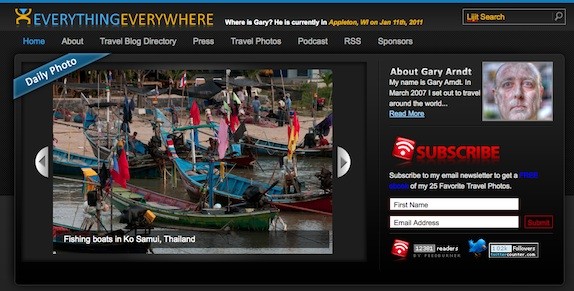
everything everywhere travel blog

Though many metrics can be used to measure travel blog success, there are a few personalities with large audiences you’re likely to come across quickly without much digging.

  • Everything Everywhere – Named one of Time Magazine’s Best Blogs of 2010, Gary Arndt is a “one man National Geographic” who’s blog concentrates on photography from his travels.
  • Nomadic Matt – A well-known full time blogger and backpacker, Matt Kepnes’ blog focuses on budget travel.
  • Almost Fearless – Christine Gilbert has documented her transition from corporate manager to digital nomad to help others wanting to make the same leap.

To find even more blogs you can see what I was reading in 2008, 2009, and the full list. (Travel bloggers feel free to leave your links in the comments.) From the biggest sites to the smallest, most travel blogs are run primarily by a single person or traveling couple. Despite their prevalence, travel bloggers are interconnected enough to give the large online community a small-town feel.

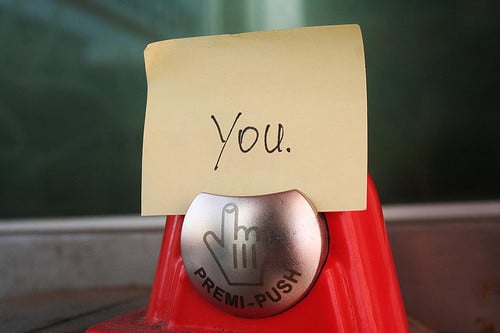
you buttonHow Travel Blogs Benefit You

The strength of travel blogs is in their variety. Chances are, on one Google search or another looking for travel information, you’ve stumbled upon a travel blog. The individual nature of travel blogs (not the corporate ones) generally means you’re getting unbiased, firsthand travel advice.

On top of that many travel bloggers are very accessible through contact pages, comments, Twitter, Facebook, or all of the above. As cheesy as it sounds, there’s a travel blog out there with the information, stories, or pictures for you to learn from or be inspired by.

Tapping The Resource

The state of the travel blogosphere is changing on many levels but one certainty is that it’s growing…and fast. Travel blogs are much like the modern version of paper newspapers and magazines with audiences in the hundreds of thousands. Blogging is steadily replacing conventional media because it’s a direct – however navigating the travel blogosphere isn’t – at first. Look directly to the right and you’ll see a few of my favorites under “Links”, check out this list of best travel blog lists, ask away in the comments below to get started.

You’ll not only get my response but probably those from several other readers as well for your very own gateway to personal travel advice, photography, and videos.

[photos by: Dave Bleasdale (blogosphere), ShaneRobinson (laptop on a plane), pieremario (you button)]

Free Programs Your Laptop Shouldn’t Travel Without

Like any traveler heading out on a trip, your laptop needs to be packed with the essentials most likely to come in handy on the road. While it’s true good anti-virus software (I’m looking at you Windows users) and applying updates are essential whether you’re traveling or not – there are some applications that are the digital equivalent of a travel toothbrush.

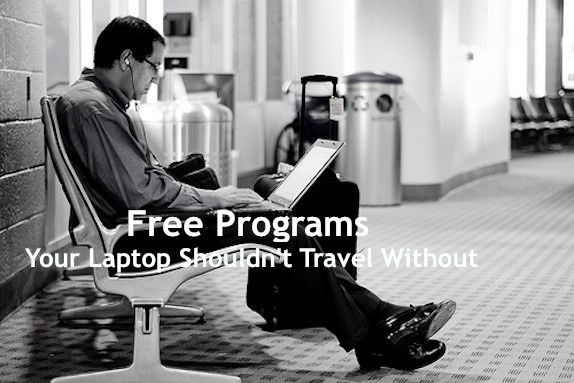
man working on laptop at airport

Many of these programs can probably be downloaded at your destination, except by then it might be too late for them to actually be useful. Load up these applications so your laptop is ready against unscrupulous governments, worried mothers, and premature hard drive death.

mom tattooKeeping Mom Happy: Skype

Family members, in general, like to hear what you’re up to from time to time, be reassured that you haven’t been eaten by an alligator, and see what your riad in Marrakesh is like. One of the most versatile, useful, and often taken-for-granted applications – Skype – can help you do all of that…and securely to boot.

Those are Skype’s free features but for a few more bucks you can call landlines, do group video calls, and get access to thousands of wi-fi hotspots worldwide.

Buy eBooks, Beat The Censors, And Watch Hulu: Hotspot Shield

There are plenty of ways to get around local Internet censorship when traveling abroad yet the most straightforward method is to use Hotspot Shield (original post). Though it’s ad-heavy, featuring some annoying pop-ups with video that runs automatically, Hotspot Shield is the simplest free proxy available. Hotspot Shield makes your computer seem like it’s in the United States, letting you get access to sites that are blocked by region.

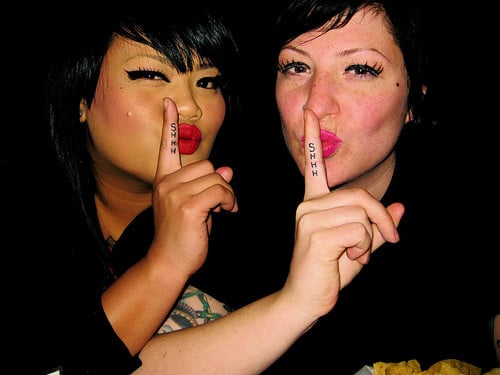
shhh

Purchasing ebooks and getting around annoying censorship are worthy proxy-causes but let’s get down to entertainment. Sites like Hulu, Netflix, and others that stream your favorite TV shows are almost always restricted – good thing Hotspot Shield works for them too.

Maintaining Your Privacy From The TSA, China, And Thieves: Truecrypt

Encryption is an important step to digitally protecting the information on your laptop but in many countries around the world (United States included) you can legally be forced to give up your passwords. That fact negates even the strongest digital codes – your best bet is to hide the fact that you’re encrypting in the first place.

  • Truecrypt Hidden Folders – Encrypt your files and folders without making it obvious you’ve done so. On top of that you’ll have a password to give (if forced to do so) that will decrypt files you set as non-sensitive.

private sign

Truecrypt works equally well against anyone who would be willing to search your digital property without just cause or a thief who wants to steal your identity. Of course not everyone agrees that this type of protection should be common knowledge; just remember that privacy isn’t about hiding a wrong.

brain the mouseDon’t Be Sad When Your Hard Drive Goes Bad: S.M.A.R.T. Monitoring
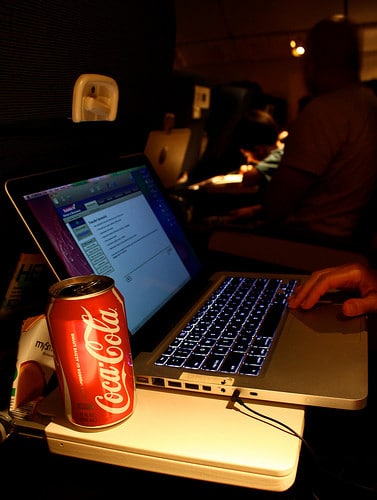
Hard drives are designed to last 3-5 years but bouncing their way around the world in your backpack can significantly shorten that lifespan. Hard drives built within the last 3 years likely have Smart Monitoring Analysis and Reporting Technology (S.M.A.R.T.) that can tell you if things aren’t looking good. Be warned of impeding hard drive failures with these programs and have a backup just in case (my personal favorite is Crashplan).

Your Bread And Butter

There is much, much more technology you can load up on your laptop to keep in touch with home, lock down your laptop, and backup your critical files. These programs are the foundation for your laptop to pack around so you can avoid digital equivalent of not packing enough socks. As these things go, you’ll only really miss them when you need them most.

[photos by: hensever (man working on laptop at airport), nrrjr (mom tattoo), evansent (shhh), maxcady808 (private sign), Axel Buhrmann (Brain the mouse)]

A Mosque In Sulaymaniyah, Iraq

sulaymaniyah mosque

Sitting adjacent to Sulaymaniyah, Iraq‘s main bazaar to the rear of the (surprisingly Chinese-influenced) Kaso Mall, this mosque is much more artistically impressive than the Great Mosque on the opposite side. The open square in the center of the mosque is a quiet oasis from the acoustically chaotic streets right outside and open to the public. So calming was the interior that I (regretfully) neglected to jot down the name of mosque.

One thing I found interesting was the frequency of what appeared to be Ottoman tughra’s inscribed around the mosque’s minarets. This visually distinctive style of calligraphy, well-known as the signature of Ottoman sultans, is thought to be based on the style of an Abbasid calligrapher (approximately 1000 AD). I was unable to determine the origin of these specific tughra’s, although the Abbasid Caliphate was in control of Sulaymaniyah for around 400 years, suggesting a potential connection.

You can see more of my pictures from the city, including what some of the local cuisine looks like, in my Sulaymaniyah gallery here.

Would Traveling Be Quite As Fun Without Borders? [RESPONSES]

Passport stamps are fun and borders quite a rush, but many of you could do without the hassle of travel visas. When I asked last month if traveling would be less fun without borders, it turns out much of it depends on the ease of the crossing.

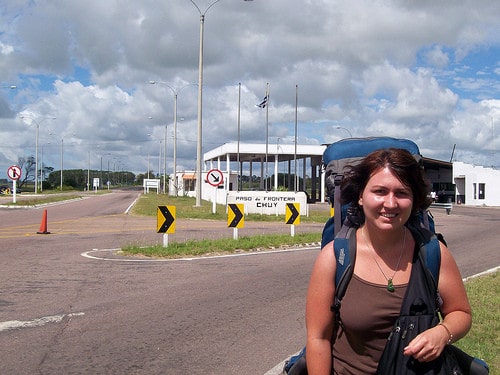
brazil uruguay border crossing

Whether it’s the cost of time to go through border control or the pressure of extortion, many of you would probably have more fun counting places without an involved process.

  • Turkey’s For Life: “I quite like them on a superficial level. In an ideal world, everyone would be free to come and go as they please. No borders, visas…we’re allowed to dream.”
  • Linguist In Waiting: “I actually would prefer that there would be no borders. I know why they exist, and I also know that if the borders were to disappear, we’d see a big wave of migration, since living conditions in our planet are not the same everywhere. But as a Filipino citizen, my passport doesn’t allow easy travel and most of the time, I need a visa to go to places. That is just a hassle. Why do I have to pay $85 for a Schengen visa when an American citizen doesn’t need it?”
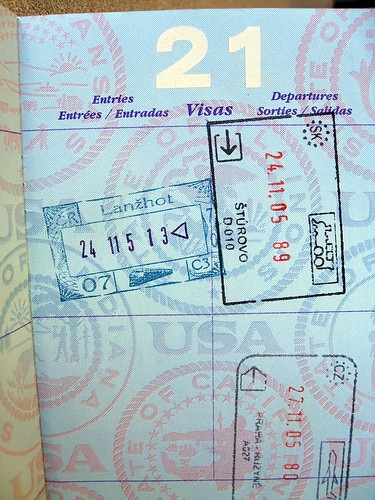
  • Ayngelina: passport stamps“When my passport was stole in Vietnam the one thing I missed the most was the big communist visa sticker. Sigh, I guess I’ll just have to go back!”


  • Kirstin: “One of my biggest travel dreams is visiting Samarkand and Bukhara in Uzbekistan, and as an American, I would sure love it if there weren’t any sketchy Uzbek border guards (and hefty bribes) preventing me from my dream!”
  • Priyank: “I do secretly enjoy looking at my colorful passport with all the visas in it. The fact that I cannot go anywhere on a whim (having an Indian passport) makes things challenging, which I don’t mind because then it feels like I have worked hard for the holiday.”
  • Gourmantic: “It’s not only great to see the proof and collect these stamps, but they serve as a memory jogger of the dates we traveled to certain countries.”
  • Phil: “Interesting question, but one that I realize I do not need to spend much time thinking about…Most of my traveling is in Africa where borders are a nightmare.”
  • Barbara Weibel: “Although it’s nice to get that new stamp in my passport, I don’t think the lack of borders would make the least dent in the fun of traveling. For me it’s all about the people I meet, and culture varies widely, even within a single country. In some places, I only need cross a street to enter a new world; for me that’s the fun of travel.”

main street panorama

There are some other benefits of official boundaries, like cheesy pictures as Annie points out, and many wonderful stories from border crossings around the world in the comments of that previous post. The stories from some experienced travelers like Akila, Justin Morris, Fabio, and JoAnne, might have you changing your border tune – or at least seeing it in a new light.

[photos by: Xaiozhuli (Brazil Uruguay border crossing), the queen of subtle (passport stamps), DTrigger05 (Main Street panorama)]

Quick Answers To 5 Common Questions New Backpackers Ask Most

Many backpackers setting out on their first trip tend to have questions that revolve around the same few concerns, many of which end up in my inbox. Traveling for the first time can bring up all kinds of anxieties about handing the basics abroad that you’ve comfortably gotten down pat at home.

question mark

As with many travel questions it’s good to get down to specifics and while these answers are certainly not comprehensive, they should help you get off to a good start.

1. What Is It Like Traveling Solo?

Traveling for the first time alone can seem like taking a trip into disaster before you ever hit the road. There are many advantages to traveling solo, ways to ease into it, and the advice of experienced travelers from all walks of life to alleviate some of your anxiety.

lone traveler

The truth is that when traveling, you’re often not alone and being without others eventually becomes a great motivator for getting social.

2. How Will I Overcome Language Barriers?

Much of that depends on your mother-tongue but assuming you know enough basic English to read this post you’re off to a good start. Although the notion is controversial, English is the universal language and widely spoken in enough key places where (relatively) clear communication is necessary. Airports, hotels, and ordering food from most menus will be straightforward.

To help yourself out with or without English though, you can learn these 4 word combinations for free using these resources, language social networks, or get digital with one of several nifty mobile phone apps like Word Lens.

3. How Can I Save Money And Travel Longer?

Most backpackers and budget travelers have at least heard of hostels (in case you haven’t) but there are many more ways to save before and during your trip. Although it seems counter-intuitive, flying more, on multi-city flights can often be less expensive than booking a simple round-trip fare. Where you go makes a big difference too so figure out the cheapest places to travel with your currency before you lose them.

leather wallet

Finally, if you’ve got the time, travel slower to see more and use a simple travel budget to track your spending.

4. Where Should I Go?

I’ve gone into resolving not knowing where you want to go before at length but the gist is to go where you want based on why you travel.

fethiye coastline

Don’t limit yourself initially, life is short so go visit the places you’ve always wanted to.

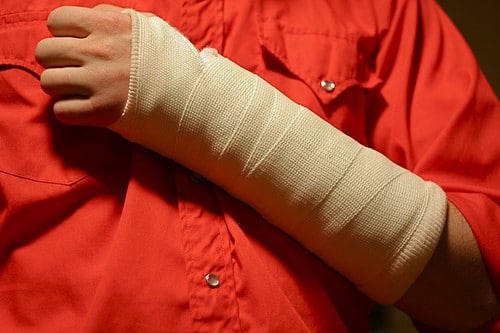
5. Should I Get Travel Insurance?

The answer depends on where you’re going and what you want to insure. Medical insurance and coverage for your valuables (including cash and passports) are the main two reasons people consider travel insurance.

arm in cast

(I’ll be covering this topic in a more detail post in a few weeks.) There are several big caveats to coverage so be sure to read any policy carefully and check if emergency health care is covered by the government of the countries you’ll be visiting.

Answering The Next Big Question And Realizing It Doesn’t End There

Almost always entwined in backpacking questions are how to choose the right backpack, pack light, and cope with being far away from home. The fortunate thing is that you’ll find plenty of opinions online about all of your first-timer questions that manifest themselves in various ways after your first jaunt. That’s one of the beauties of travel, that these questions have endless answers and discovering what works in each place keep the journey interesting.

[photos by: niznoz (question mark), Kamal H. (lone traveler), fotograf1v2 (leather wallet), santheo (arm in cast)]

About Anil Polat

foxnomad aboutHi, I'm Anil. foXnoMad is where I combine travel and tech to help you travel smarter. I'm on a journey to every country in the world and you're invited to join the adventure! Read More

YouTube Twitter Instagram Facebook

Image Map

Image Map
10 Shares
Share
Tweet
Pin